POV
The Execution Gap: Between Planning and Doing
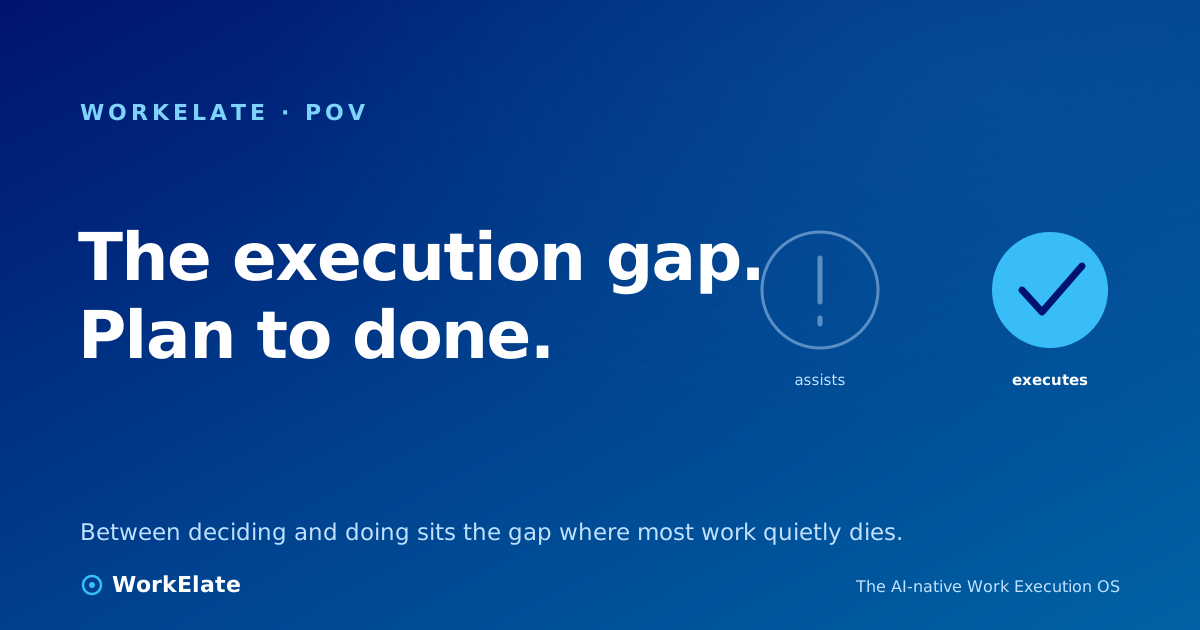
Between deciding and doing sits a gap where most work quietly dies. Naming it is half the fix. Closing it — AI that acts on your confirm — is the rest.
Between deciding and doing sits a gap where most work quietly dies. Naming it is half the fix. Closing it — AI that acts on your confirm — is the rest.
You decided. The meeting ended with a clear "yes, do it." Everyone nodded. Owners named, deadline set, the plan crisp enough to put on a slide.
Three weeks later, it isn't done.
Nobody refused. No one fought it. The work just sat in the space between deciding and doing — and quietly died there. That space has a name, and once you can see it, you can't unsee it. It's the execution gap.
Planning feels like progress because it produces an artifact. A roadmap. A board full of cards. A doc with owners and dates. You can look at it and feel the work is half done.
It isn't. The plan is a photograph of intent at one moment. Execution is the messy, moving thing that comes after: the follow-up nobody sent, the dependency nobody flagged, the handoff that lost half its context on the way over, the decision that needed one more person's sign-off and waited four days for it.
None of that is on the slide. The slide assumes execution will simply happen. It doesn't. Between the plan and the outcome sits a layer of coordination — chasing, nudging, re-explaining, sequencing — and that layer is where things go to die.
Here's the strange part: most teams don't have a word for where their work dies. They blame the people ("follow-through"), or the plan ("we should've scoped it better"), or the calendar ("too busy"). None of those is the culprit. The culprit is structural — the gap exists in every team, and it's invisible precisely because no tool is responsible for it.
Your project tool owns the plan. Your chat tool owns the conversation. Your calendar owns the time. Not one of them owns the crossing — the act of turning a decided thing into a done thing. So the crossing falls to your people, and your best people spend their best hours being the glue that carries work over the gap by hand.
Call it what it is: the execution gap. The naming matters because it moves the problem from a character flaw to a system flaw — and system flaws can be fixed.
A folder of files waits to be read. A board of cards waits to be moved. Both are inert; both assume a human will notice what's stuck and do something about it. That's the gap, built into the tool.
Closing it means the work itself carries its own next step — and something acts on it. This is what WorkElate is built to do. WAO, the orchestrating brain across all your apps, watches the work-graph: it sees that this card is blocking that one, that this handoff went out missing its context, that this thread has waited six days for a reply nobody sent. Then it does the coordination work — drafts the follow-up, sequences the dependency, flags the drift — and brings it to you in one move: Three things need you. Two I already handled.
You stay in control. Nothing irreversible happens without your confirm — that's the reflex, suggest then confirm then execute. But the default flips. Work no longer waits for a human to remember it. It moves, and you approve, instead of you remembering and the work waiting.
That's the whole difference between a place that stores your plans and a system that runs them.
▶ Watch on WorkElate See WAO carry work across the gap — on your confirm youtube.com/@WorkElate · videoId: TODO — swap when publishedThe teams that win the next decade won't be the ones with the best plans. Plans are easy; everyone has good ones. They'll be the ones who closed the gap — who stopped treating execution as a thing humans heroically push through, and started treating it as a thing the system carries. Because planning is easy; getting things done is hard, and execution isn't optional — it's the only thing that matters.
So look at your own team's last big decision. Is it done — or is it still sitting in the gap, waiting for someone to remember it?