Planning is the most pleasant work there is. You sit down, you think clearly, you arrange the future into a tidy column of next steps with owners and dates. Nothing breaks. Nobody pushes back from the
WorkElate Team
May 14, 2026 · 8 min read
Planning is the most pleasant work there is. You sit down, you think clearly, you arrange the future into a tidy column of next steps with owners and dates. Nothing breaks. Nobody pushes back from the real world, because the real world hasn't shown up yet. You can plan all afternoon and feel like you accomplished something.
You didn't. You made a plan. That's the easy part, and we keep mistaking it for the hard part.
The hard part starts the second the meeting ends — when that clean column of next steps has to leave the room and actually move. From one person to another. From one tool to another. From "decided" to "done." That stretch is where the real work lives, and it's the stretch almost no software helps you cross.
The plan is cheap. The carrying is expensive.
Anyone can make the plan. A junior with a whiteboard can make a defensible plan in an hour. That's not a knock on planning — it's the point. The plan is the cheapest artifact your company produces, which is exactly why everyone has one and why having one wins nothing.
What costs you is the carrying. The plan said designer hands off to engineer Thursday. Here's the true story: the design was done Wednesday, dropped in a folder nobody pinged, noticed the following Tuesday, and by then the spec had drifted and the engineer had to re-ask half of it. Five days gone. Not one person was lazy. The handoff just lived in the gap, and the gap belongs to no one.
That's the whole asymmetry. Planning is bounded and finishable. Execution is a thousand small acts of carrying — a notice here, a re-explained why there, a wait on someone's reply — each one a place momentum quietly leaks out.
01
The plan is free
Anyone can produce a clean roadmap in an afternoon. It costs nothing, which is why having one wins nothing.
02
The handoff is the work
Every time work crosses from one person or tool to the next, a human has to notice it and push it along by hand.
03
Context evaporates
The why and the priority were obvious in the room and gone by the time the next person opens the task.
04
No tool sees the arc
Plan in one app, build in another, review in a third. No system holds the whole path, so a person becomes the glue.
We bought planning tools and called it progress
Walk through any team's stack and count the surfaces that help you decide: the board, the doc, the roadmap, the tracker, the goals tool. Now count the ones that help you carry the decided thing across a handoff with its context intact. The first list is long. The second is empty.
That's not an accident — it's the shape of every productivity tool ever sold. Each one is a beautiful place to write intent down. Not one of them can advance it. The board holds the card; it cannot notice that the card is done and tell the next person. The doc holds the spec; it cannot walk the spec to the engineer with the why still attached. The software stores the plan and then waits for a human to be the connective tissue. (Why most work dies between intent and action.)
So the carrying falls on your best people. They spend their day chasing replies, re-pasting context, and reminding each other what's blocked — doing the work of glue instead of the work you hired them for. When that work stalls, the reflex is to blame the people: we're not aligned, we need more accountability. Almost always wrong. The work stalled because the system asked a human to manually stitch together tools that don't talk to each other.
THE POINT
Everyone can make the plan. Almost no one can carry it.
The unsolved part of work was never deciding what to do. It's moving the decided thing across the handoffs to done — reliably, without a human stitching it by hand.
The expensive part of a task is the coordination around it
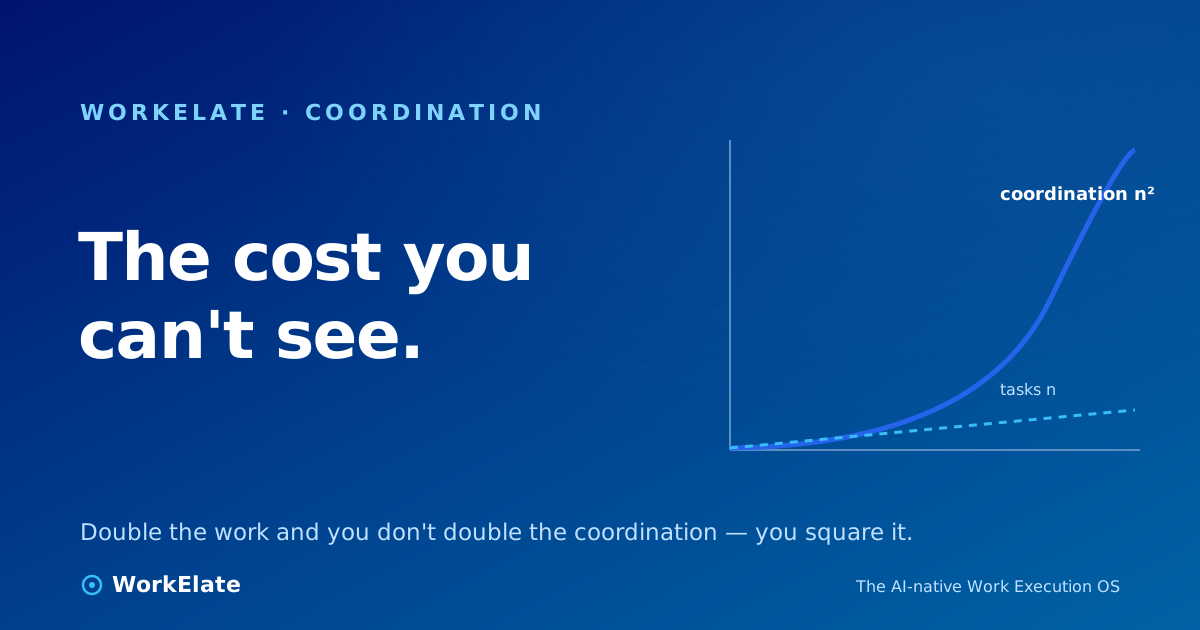
Here's the reframe that changes what you should buy. The task itself — write the copy, build the screen, approve the budget — is rarely the bottleneck. The bottleneck is everything wrapped around the task: knowing it's your turn, having the context to start, the wait between your part and the next person's, the re-asking when the context didn't travel.
A two-hour task can sit dead for a week, and the week is the cost, not the two hours. That's why a team can be busy all day and ship almost nothing — the busyness is coordination overhead, not output. The real cost of a task is coordination, and coordination is exactly what no planning tool touches. (The real cost of a task is coordination.)
This is the gap where work goes to die, and it's the one place AI can finally help — but only the right kind. An assistant that drafts a summary or suggests a next step is still leaving the carrying to you. It's a faster planner, not an executor. It hands you one more clean column of intent and then steps back at the exact moment the hard part begins.
What it takes to actually close the gap
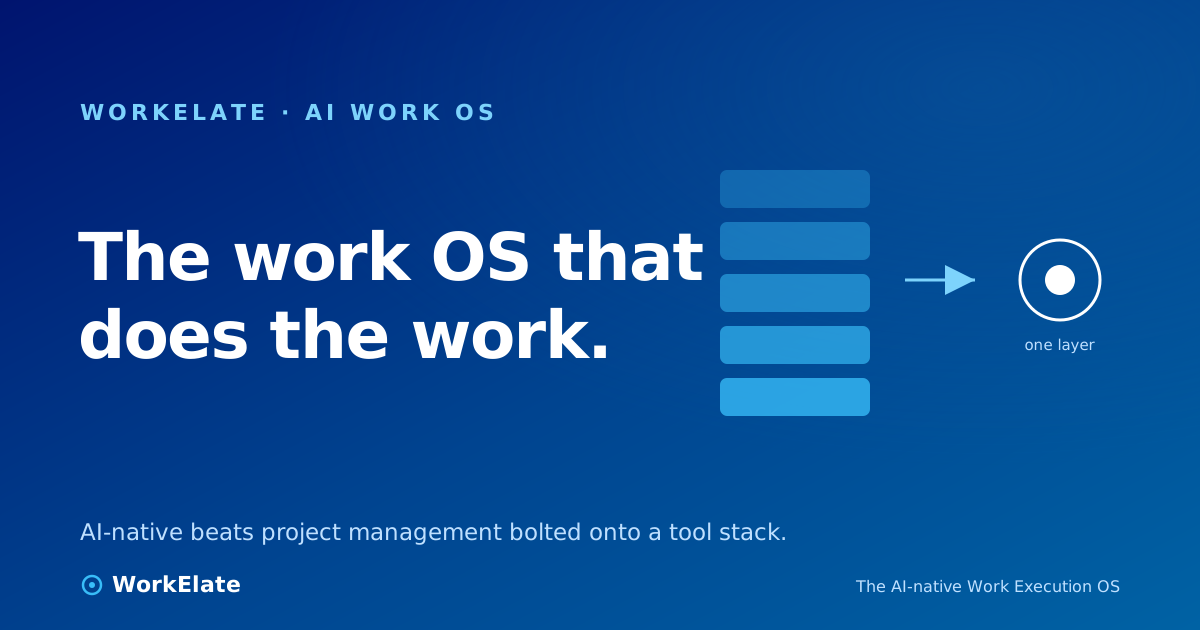
Closing the gap means a system that does three things software never did: see the work across every tool, understand what needs to happen next, and move it — not store it, move it.
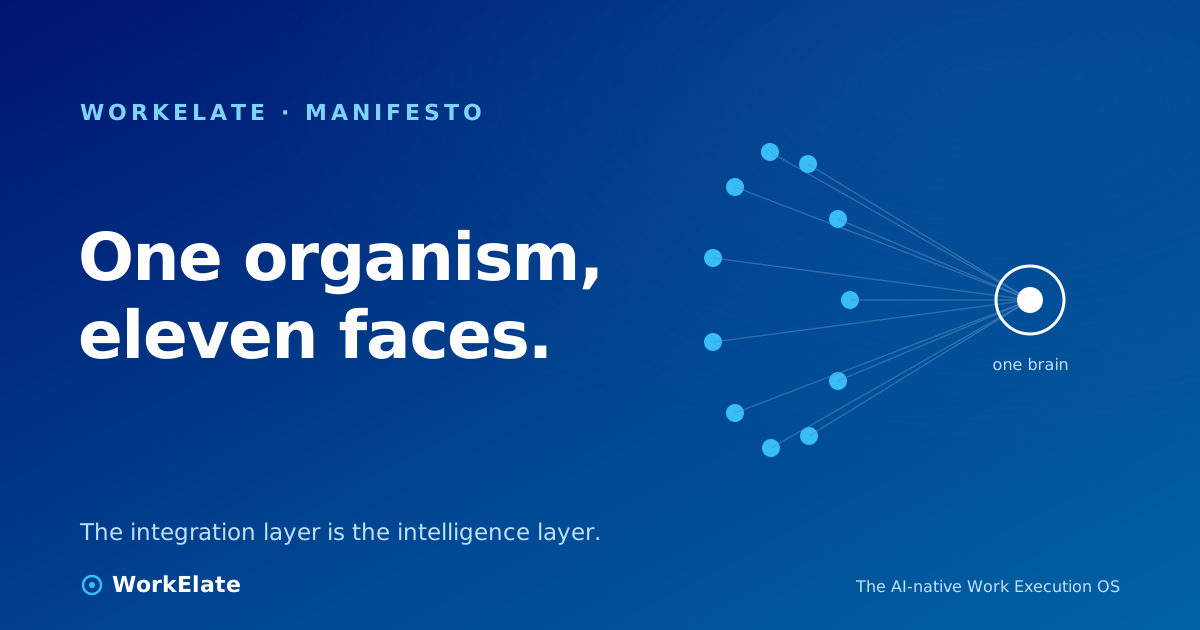
That's the shape of WorkElate. It isn't another planning surface bolted onto your stack. It's one brain sitting above your apps, reasoning over the whole work-graph. When a design is finished, it doesn't wait for someone to remember the engineer — it surfaces the handoff with the context attached and pushes it forward. When a blocker appears, it routes the blocker to the person who can clear it, instead of letting it sleep until the next standup. The coordination that used to live in the gap becomes something the system does.
The catch is trust, and it's a real one. You will not hand the wheel to a system you can't watch. So the carrying is governed: suggest → confirm → execute. The brain proposes the move and shows the why behind it; you approve; then it carries the work across the handoff with the context intact. Visible enough to trust, automatic enough to matter.
A better plan is a one-time gain — you write it once and it sits there. A system that reliably carries work across the gap is a compounding one: every cycle of work flows a little faster, waits on a few fewer handoffs, loses a little less context. The teams that pull ahead aren't the ones with the most impressive roadmaps. Everyone has a roadmap. They're the ones whose plans actually arrive. (Execution isn't optional — it's the only thing that matters.)
So here's the question worth sitting with. You already know how to make the plan — everyone does. The real test is the carrying. If you measured last quarter only by what crossed the gap from decided to done, how much of your beautiful planning would still be standing?