Execution Isn't Optional. It's the Only Thing That Compounds.
A plan is the cheapest artifact in your company. You can produce a beautiful one in an afternoon — the deck, the roadmap, the tidy list of next steps with owners and dates. Everyone nods. The meeting
WorkElate Team
Jun 1, 2026 · 8 min read
A plan is the cheapest artifact in your company. You can produce a beautiful one in an afternoon — the deck, the roadmap, the tidy list of next steps with owners and dates. Everyone nods. The meeting ends on time. And then, somewhere between that meeting and the actual work, a startling amount of it quietly dies.
Not because the plan was wrong. Because nobody closed the distance between deciding and doing.
That distance is the only place real outcomes are won or lost. The plan said "designer hands off to engineer Thursday." What happened: the design was done Wednesday, sat in a folder nobody pinged, got noticed the following Tuesday, and by then the spec had drifted. Five days of nothing — not because anyone was lazy, but because the handoff lived in the gap and the gap belongs to no one.
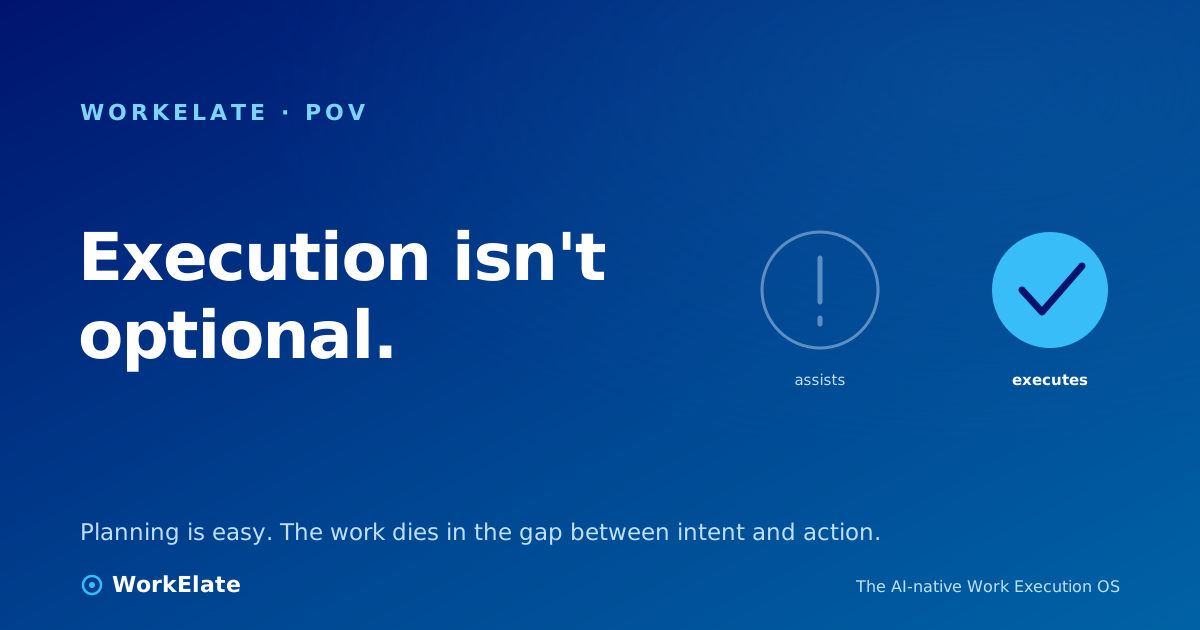
Planning is easy. The gap is where work dies.
Here is the uncomfortable asymmetry. Planning is bounded, legible, and satisfying. You can finish it. Execution is none of those things — it's a thousand tiny coordination acts spread across people and tools and time zones, each one a place momentum can leak out. So we over-invest in the easy half and under-invest in the half that actually produces value.
The productivity industry made this worse. It taught us to optimize the individual — time-block the calendar, organize the tasks, archive the inbox. But you can have a perfectly groomed calendar and still ship nothing, because the thing blocking you isn't your discipline. It's the work waiting on someone else's reply, in a tool you don't have open, behind context that never traveled with it.
▤ Where the work actually dies
Execution failures are system failures, not effort failures
When execution stalls, the reflex is to blame people. "The team isn't aligned." "We need better accountability." Almost always wrong. The work didn't stall because someone didn't care. It stalled because the system asked a human to be the connective tissue between tools that don't talk to each other.
Three mechanics do most of the damage:
Handoffs break flow. Every time work crosses from one person, tool, or stage to the next, someone has to notice, re-create context, and push it along by hand. Each handoff is a place to wait.
Context falls out in transit. The why, the priority, the constraint — they were obvious in the planning room and gone by the time the executor opens the task. So the executor stops to re-ask, and re-asking is the most expensive thing in knowledge work.
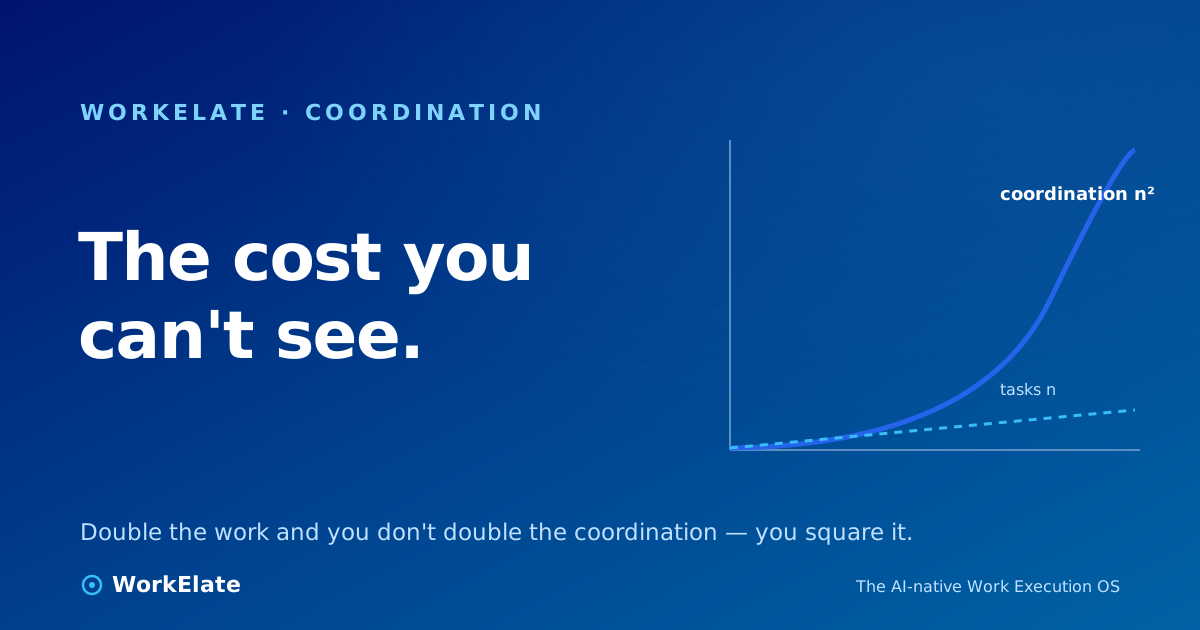
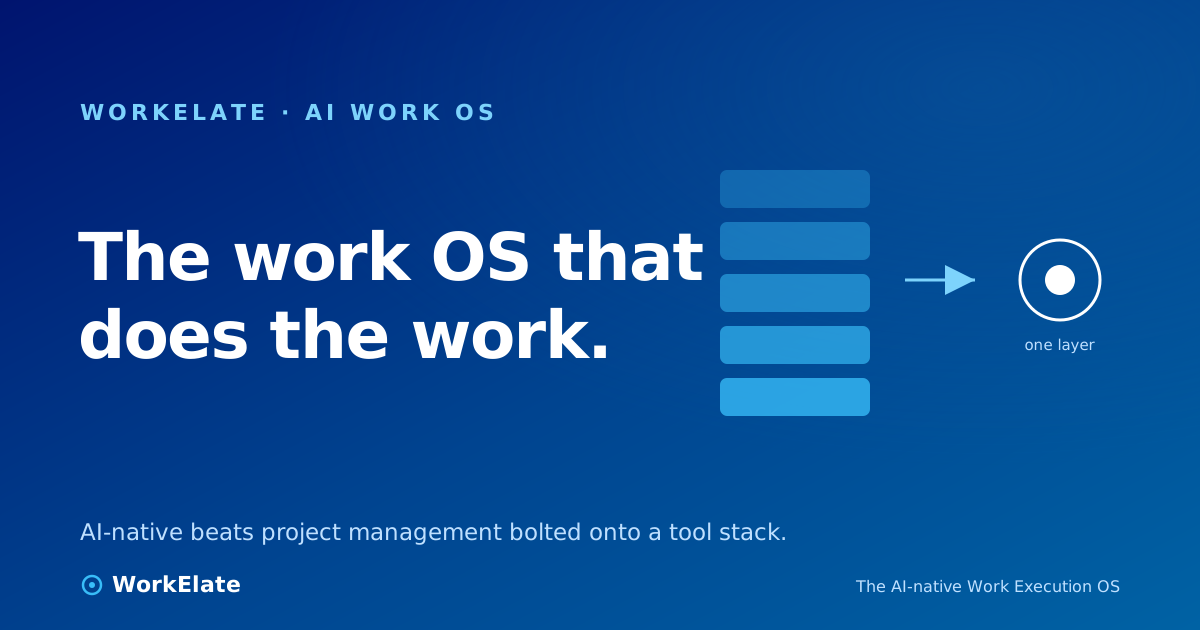
Tools don't coordinate. Planning in one place, the build in another, review in a third. No single system sees the whole arc, so the orchestration falls on a person who is now doing the work of glue instead of the work they were hired for.
None of that is solved by trying harder. It's solved by a system that holds the arc.
THE POINT
Plans don't compound. Execution does.
A plan is worth nothing until the gap between deciding and doing gets closed — reliably, every time, without a human stitching it by hand.
Why this is finally AI's job — but only the right kind of AI
For most of computing history, software could hold a plan but never advance one. It stored the board, the doc, the ticket — and then waited for a human to move it. That's the planning trap encoded in tooling: every system was a place to write intent down, and not one of them could act on it.
This is the part that changed. An AI that understands what needs to happen, sees the work across every tool, and can actually move it forward is the first technology that addresses the gap directly instead of adding another surface to coordinate. But there's a sharp fork here, and most of the market took the wrong branch. An assistant that drafts a summary or suggests a next step is still leaving the doing to you — it's a faster planner, not an executor. The thing that closes the gap is AI that takes the action. (Why AI should execute, not assist.)
The catch — and the reason "let the AI just do it" usually fails — is trust. You will not hand the wheel to a system you can't watch. So the action has to be governed: suggest → confirm → execute. The AI proposes the move and the context behind it; you approve; then it carries the work across the handoff with the why intact. Visible enough to trust, automatic enough to matter. The best version of this is the AI you barely notice, because it's removing the coordination tax in the background rather than demanding your attention for it. (Invisible AI: the only AI that matters.)
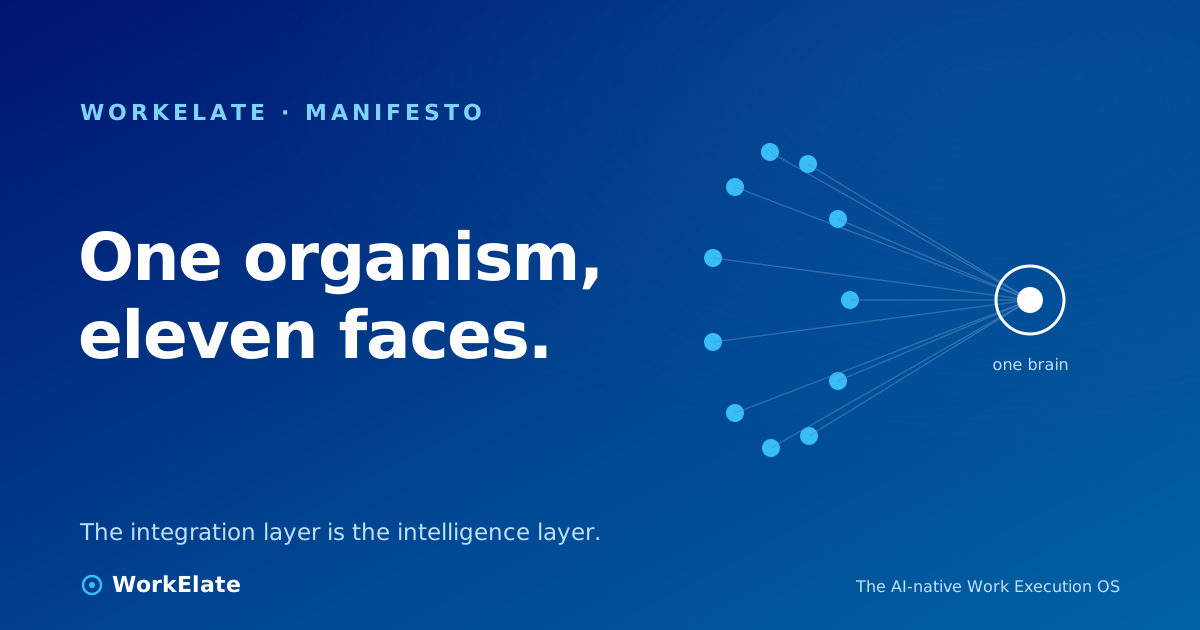
That's the shape of WorkElate. It isn't a planning tool or a task manager — it's one brain sitting above your apps, reasoning over the whole work-graph. When a design is done, it doesn't wait for someone to remember the engineer; it surfaces the handoff with everything attached and moves it forward on your confirm. When a blocker appears, it routes the blocker to the person who can clear it, instead of letting it sleep until the next standup. The coordination that used to live in the gap — and quietly kill the work — becomes something the system does.
A better plan is a one-time gain. A system that reliably closes the gap is a compounding one — every cycle of work flows a little faster, loses a little less context, waits on a few fewer handoffs, and the advantage stacks. The companies that pull ahead aren't the ones with the most impressive roadmaps. Everyone has a roadmap. They're the ones whose intent turns into finished work without leaking out in the middle.
So here's the question worth sitting with: if you measured your team only by what crossed the gap from decided to done — not what got planned, not what got discussed — how much of last quarter would still be standing?