Case Study
How TechFlow Cut Its Sales Cycle From 90 Days to 30
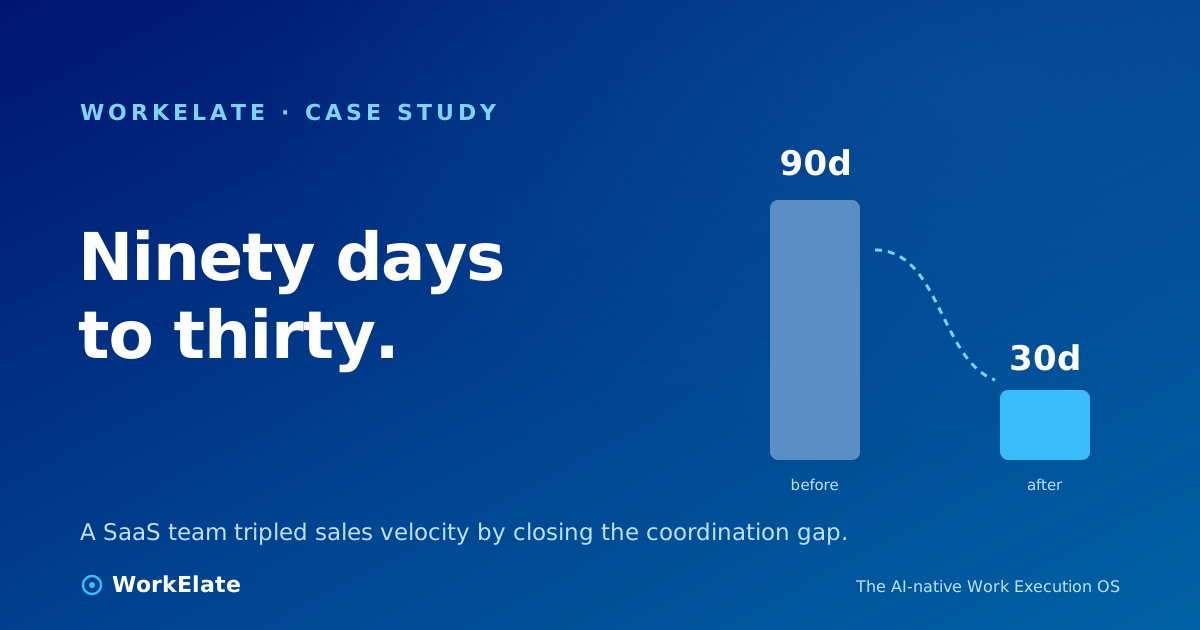
A B2B SaaS team closed the coordination gap between forms, CRM, and handoffs — and watched a 90-day sales cycle compress to 30. Here's the play.
A B2B SaaS team closed the coordination gap between forms, CRM, and handoffs — and watched a 90-day sales cycle compress to 30. Here's the play.
⚠️ HONESTY GATE — read before publishing. TechFlow is a realistic scenario, not yet a signed, approved customer reference. Confirm TechFlow is a real, approved reference before publishing; replace every[VERIFY]tag with a confirmed fact, or remove it. No quote below is attributed to a real named person. Do not ship this with[VERIFY]tags intact.
The deal was already won. Everyone on the call knew it. The buyer had said yes on a Tuesday, the budget was approved by Thursday, and the contract was a formality.
It took TechFlow [VERIFY] nineteen more days to send it.
Not because anyone was lazy. Because the "yes" lived in one place — a discovery call note — and the next move lived in five others. The account owner had to remember to tell the solutions engineer. The SE had to remember to loop in legal. Legal needed the deal desk's pricing. The pricing was sitting in a spreadsheet that hadn't been updated since the last reorg. Each handoff was a small, forgivable delay. Stacked end to end, they were a three-week tax on a deal that was done.
This is the part of a long sales cycle nobody puts in the forecast. It isn't selling time. It's coordination time — the gap between a thing being decided and the thing actually moving. That gap is where TechFlow's [VERIFY] 90-day cycle really lived.
TechFlow [VERIFY], a B2B SaaS company, came to the same conclusion most growing sales teams eventually do: the bottleneck wasn't the pitch. The reps were good. The product demoed well. Win rates on qualified deals were healthy.
The problem was the seams between systems.
A lead filled out a form on the site. The form lived in one tool. The follow-up task lived in another — if a rep remembered to create it. The CRM had the opportunity but not the latest email thread. The handoff from SDR to AE happened over a Slack message that scrolled out of view by lunch. Nobody had a single, live view of where a deal actually was, so the answer to "what's blocking this?" was always a meeting to find out.
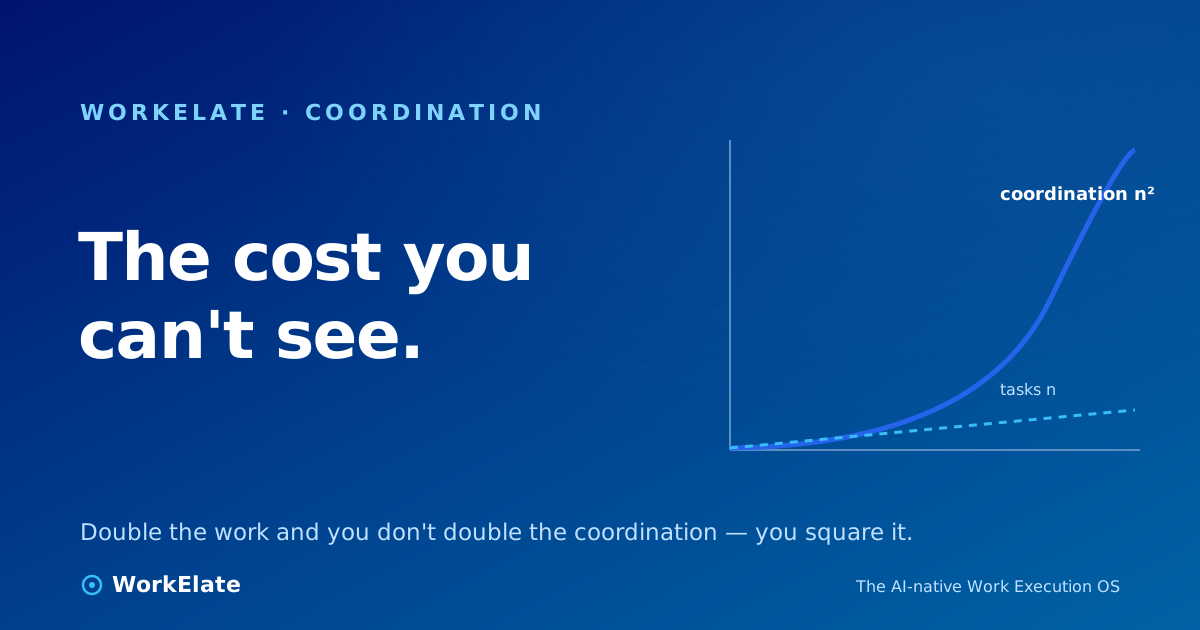
This is the thing most "sales acceleration" tooling gets backwards. It tries to make the selling faster — more sequences, more cadences, more reminders to chase. But TechFlow's reps weren't slow. The system between them was slow. As we've argued before, the real cost of a task is coordination, not the task itself. A 90-day cycle made of 40 days of selling and 50 days of waiting doesn't get fixed by selling harder.
TechFlow didn't add a sales tool. They connected the work they already had.
WorkElate sees a client's entire work-graph across every surface — the form a lead submits, the task a rep needs to do next, the weMail thread where the real conversation lives, the calendar slot that has to get booked. WAO, the orchestrating brain, reads that graph and does the coordination work that used to fall on whoever remembered.
Three concrete shifts did most of the lifting:
When a lead submits TechFlow's form, it isn't a row in a spreadsheet waiting for someone to notice. WorkElate's form builder produces a real bookable scheduler — a "book my time" question becomes an actual calendar hold, not a fake dropdown that locks nothing. The lead picks a slot, the slot is real, the rep's calendar has the meeting, and the follow-up task exists before anyone touched a keyboard.
Response time to a new lead [VERIFY] dropped from hours to minutes — not because a rep got faster, but because the first move stopped depending on a rep being awake.
Every mutation in a WorkElate app emits a signal WAO can see. So when a deal hit the stage where the solutions engineer needed to be involved, that wasn't a Slack message hoping to be read. It was a state change the brain noticed — and acted on, with a confirm step before anything client-facing went out. Suggest, confirm, execute.
This is the part that's hard to copy. A tool that only reads your CRM through an API can tell you a handoff is due. WorkElate owns the surfaces, so it can make the handoff — create the task, draft the intro, hold the slot — and then ask you to approve it. That difference is the whole argument for why AI should execute, not just assist.
Because the work-graph is one live object keyed to the account, pipeline health wasn't a weekly status scramble. The state was always current, because the state was the work. The question that used to cost a standup answered itself.
"We didn't teach our reps to sell faster. We stopped making them be the glue between five tools that didn't talk to each other."
— TechFlow [VERIFY] — confirm speaker + exact wording before publishingHere is what the scenario projects. Every figure carries a [VERIFY] because TechFlow is not yet a confirmed reference. Do not publish these as facts until each one is signed off.
A note on honesty, because it's the brand: the original version of this story claimed a precise rupee figure saved, an exact capacity lift, and a named percentage drop in acquisition cost. We've held those back. Motivating is not the same as fictional. A 90-to-30 compression is a believable result of closing a coordination gap — but a number you can't trace is a number that fails diligence the first time a buyer asks "says who?" If TechFlow confirms these, they go in with attribution. If they don't, they don't go in.
The TechFlow shape isn't a SaaS-sales shape. It's the shape of any team whose cycle time is mostly between the work rather than in it. Agencies waiting on a client approval to move a deliverable. Ops teams where a ticket sits because the next owner didn't know it was theirs yet. Recruiting pipelines where a great candidate goes cold in a three-day handoff gap.
In each case the fix is the same: stop treating the apps as separate islands a human has to ferry information between, and put one brain above them that sees the whole graph and does the ferrying. That's the difference between bolting AI onto a sales tool and running the work with it — the case we make in full for the AI work OS that's replacing project management.
▶ Watch on WorkElate See a lead form become a booked meeting and a live deal — across apps youtube.com/@WorkElate · videoId: TODO — swap when publishedTechFlow's reps didn't get three times better at selling in four months. Nobody does. What got three times faster was everything that happens between the selling — the part the forecast never names, the part your best people quietly absorb until they can't.
So the question for your own pipeline isn't "how do we sell faster?" It's quieter, and harder: how many of your ninety days are actually spent selling — and how many are just spent waiting for the work to find its next pair of hands?