POV
Output Over Activity
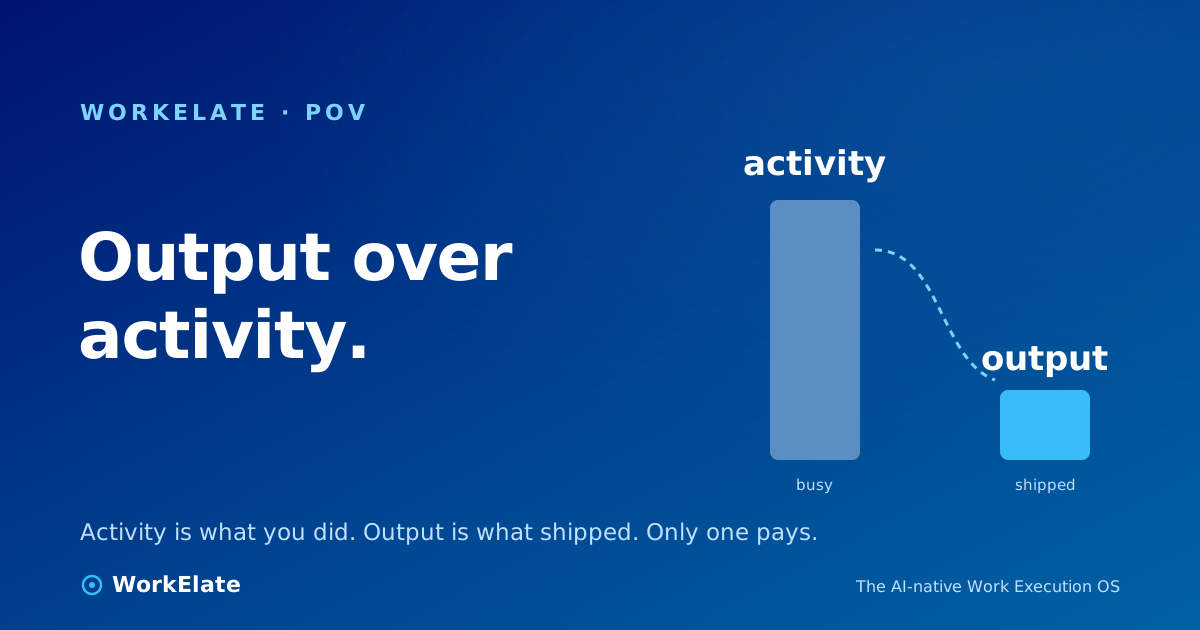
Activity is what you did. Output is what shipped. Most work tracking measures the first and pays for the second. Measure and free the thing that actually ships.
Activity is what you did. Output is what shipped. Most work tracking measures the first and pays for the second. Measure and free the thing that actually ships.
At Friday standup, the board glows. Forty cards moved. Hours logged, neat as a ledger. Everyone, by every visible measure, worked.
Now ask a harder question: what shipped?
Often the honest answer is "less than the board suggests." And that gap — between everything that happened and the one thing that mattered — is the most expensive blind spot in how teams keep score.
These are not the same noun. Activity is the meeting attended, the task started, the file moved, the hour logged. Output is the decision made, the feature delivered, the thing a customer can now use.
We measure activity because activity is easy to see. A person in meetings all day is visible. Whether those meetings produced a decision is not. Cards in progress are countable. Value delivered is not. So the metric we can see crowds out the one we actually care about — and people, being rational, optimize for the metric. They start more than they finish. They look busy because busy is what gets noticed.
Here is the part that stings. A team buried in activity often isn't productive — it's disconnected.
Work lives in one app, the decision behind it in a chat thread, the dependency in someone's head. Every seam between them needs a human to ferry context across. That ferrying generates activity: a status nudge, a "did you see this?", a recap typed for the third time. It's effortful, so it looks like work. But it's the work of glue, not the work of the thing itself. A rising activity count can mean more is getting done — or that work has been shredded into more pieces to track. The board can't tell you which.
This is why productivity is overrated and execution is underrated: productivity counts motion, execution counts arrival. It's the same reason visible progress and actual progress drift apart — the visible part is the activity; the actual part is the output.
The fix isn't to work harder at activities. It's to stop scoring them as the goal.
Output asks one question of any piece of work: did it arrive? Did the feature ship. Did the decision get made. Did the blocker clear. Everything before that — the handoffs, the updates, the closed cards — is plumbing. You don't celebrate the pipe; you celebrate the water arriving.
A connected work-graph makes this measurable. When work lives as one linked structure — a task tied to the decision that spawned it, to the dependency it's blocked on, to the outcome it feeds — the system watches things move from started to delivered, not just from open to closed. Completions and blockers become something the system knows, not something a human has to produce by hand. The handoffs that used to be activity become edges the graph holds. That's also how execution velocity pulls away from activity velocity: you stop generating coordination, and the busywork that was masquerading as progress simply disappears.
▶ Watch on WorkElate See work tracked by what ships, not what moves youtube.com/@WorkElate · videoId: TODO — swap when publishedSo before next standup, run one test on your own week. Of everything you did, how much actually shipped — and how much was just motion you reported because motion is what the board could see?