POV
Execution Velocity vs. Activity Velocity
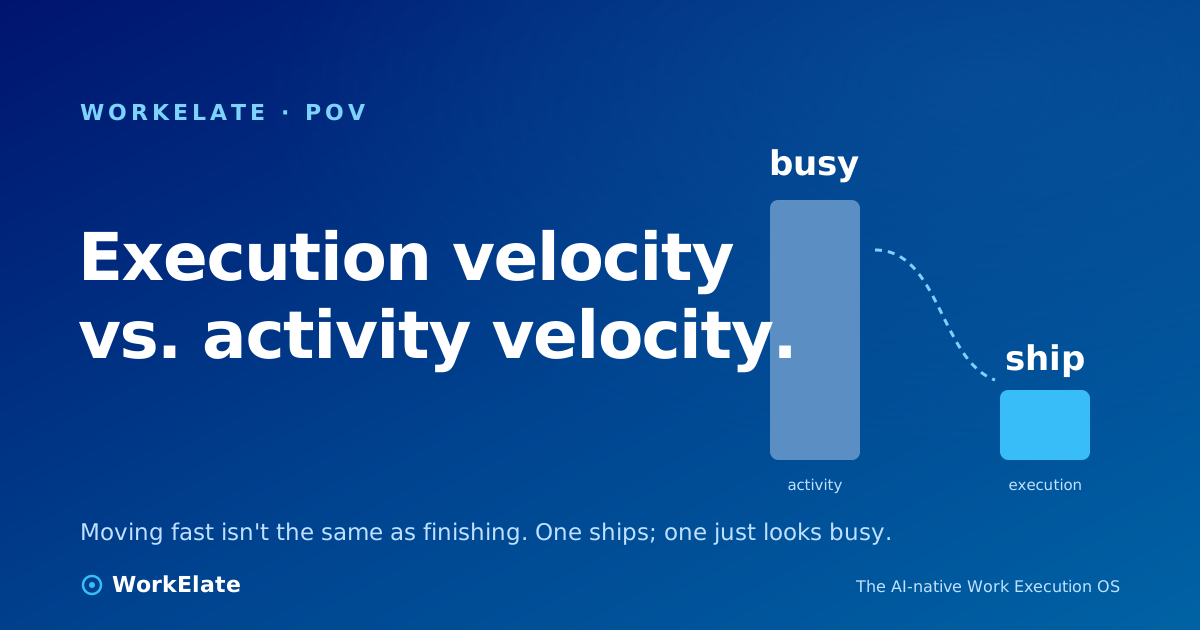
Moving fast and looking busy is activity velocity. Actually shipping is execution velocity. One produces motion. The other produces outcomes.
Moving fast and looking busy is activity velocity. Actually shipping is execution velocity. One produces motion. The other produces outcomes.
Your team closed forty tickets last week. The burndown chart looks beautiful. Standup was crisp. Everyone was, by any visible measure, fast.
And the feature still hasn't shipped.
This is the gap nobody puts on a dashboard. There are two kinds of speed, and they feel identical from the inside. The first is activity velocity — how fast you check things off. The second is execution velocity — how fast a real outcome reaches a real person. They look the same on a Tuesday. They are not the same on a quarter.
Watch one task closely. It's called "Send design to engineering." Someone does it. It gets marked done. The chart ticks up. Progress, apparently.
Except the design now sits unread for three days. Nothing was delivered. Nothing was decided. A file changed hands, and the act of handing it created another thing to track — a review to schedule, a thread to chase, a "did you see this?" to send. You didn't move the work forward. You manufactured coordination and called it progress.
That's the trap. Activity velocity is easy to measure — count the tasks — which is exactly why teams optimize for it. Execution velocity is hard to measure, so it gets ignored. We chase the number we can see and lose the one that matters.
Here's the part that stings. A team drowning in tasks often isn't productive — it's fragmented. Work has been chopped into so many tiny coordination steps that each handoff becomes a ticket, each status nudge becomes activity, each "checking in" becomes a thing to close.
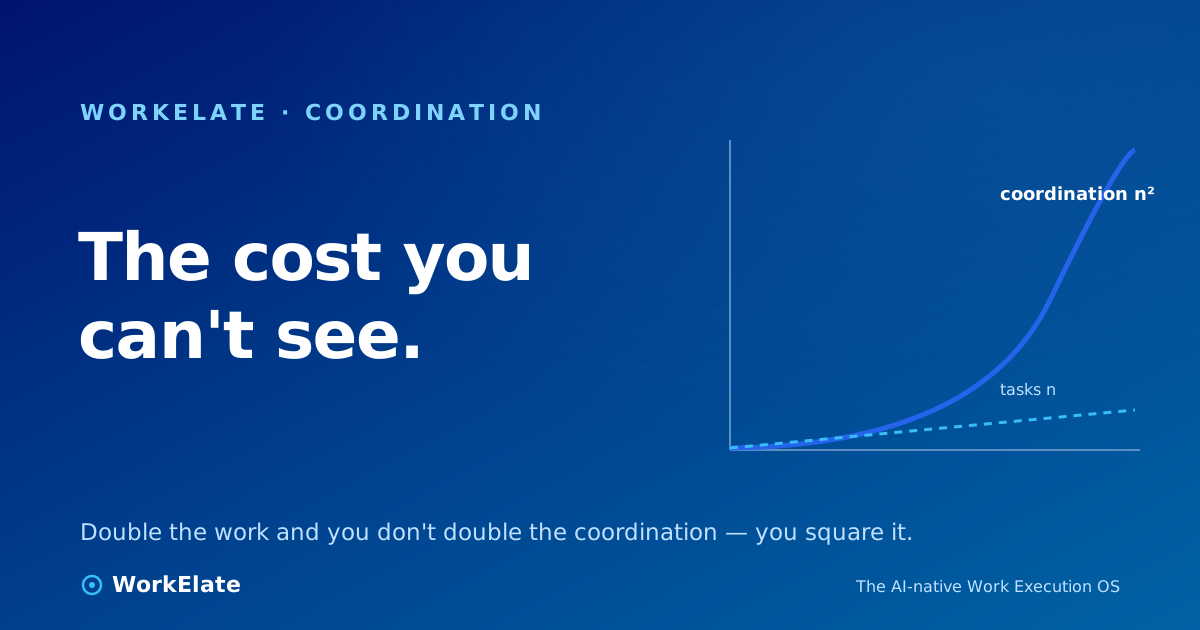
The more disconnected your tools, the more of this you generate. A task in one app, a decision in a chat thread, a dependency in someone's head — every seam between them needs a human to ferry context across. That ferrying is the activity. It looks like work because it's effortful. But it's the work of glue, not the work of the thing itself. This is the same reason the real cost of a task is coordination, not the doing — and the reason modern work feels busy but goes nowhere.
So a rising task count can mean two opposite things: more is getting done, or work is being shredded into more pieces to track. The chart can't tell you which. That's the problem with the chart.
The fix isn't to work harder at activities. It's to stop counting them as the goal.
Execution velocity asks one question of any piece of work: did the outcome materialize? Did the feature ship. Did the customer get value. Did the metric move. Everything before that — the handoffs, the updates, the closed tickets — is plumbing. Useful plumbing, sometimes. But you don't celebrate the pipe; you celebrate the water arriving.
This is why a connected work-graph beats a wall of boards. When work lives as one linked structure — task tied to the decision that spawned it, to the dependency it's blocked on, to the outcome it feeds — the system can see a thing move from start to delivered, not just from open to closed. The handoffs that used to be tasks become edges the system holds, not chores a human files. You stop generating coordination, and the activity that was masquerading as progress simply disappears.
That's the whole reframe. Productivity is overrated; execution is underrated — because productivity counts motion, and execution counts arrival.
▶ Watch on WorkElate See work move from start to delivered — not just open to closed youtube.com/@WorkElate · videoId: TODO — swap when publishedSo before next standup, try one question on your own week. Of everything you closed, how much actually arrived — and how much was just you, moving fast, looking busy, ferrying a file from one box to another?