Productivity Is Overrated. Execution Is Underrated.
Picture the most productive person on your team. They cleared the inbox by 9. They attended every meeting, closed forty tasks, and replied to everything within the hour. Their day looks immaculate.
WorkElate Team
May 17, 2026 · 8 min read
Picture the most productive person on your team. They cleared the inbox by 9. They attended every meeting, closed forty tasks, and replied to everything within the hour. Their day looks immaculate.
Now ask the only question that matters: what shipped?
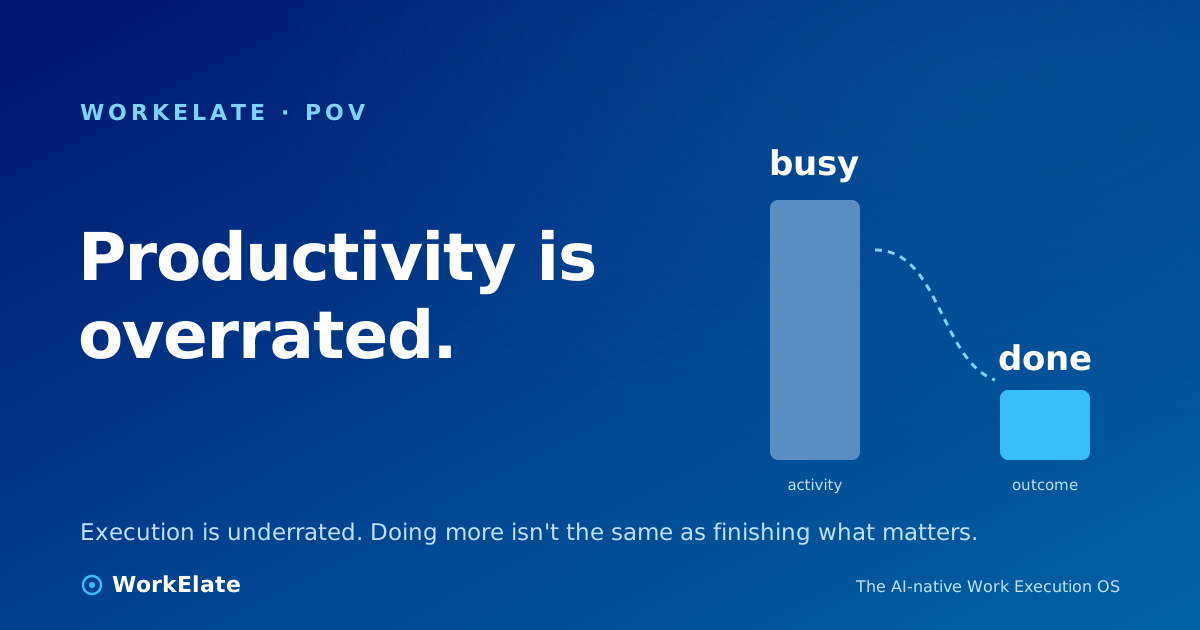
Often, the honest answer is nothing that moved the business. And that gap — between a flawless day and a flat quarter — is the most expensive misunderstanding in modern work. We have spent two decades building an entire industry around productivity: hacks, apps, frameworks, rituals, all promising to help you do more, faster. But doing more was never the point. Doing the right things, to completion, was the point. Productivity measures activity. Execution measures outcome. They are not the same thing, and we keep paying for the first while we need the second.
The trap is that busyness feels like progress
Productivity culture optimizes inputs because inputs are easy to count. Hours worked. Tasks closed. Emails sent. Each one delivers the small dopamine hit of completion — the satisfying ping of a thing crossed off — without requiring the harder reality of an outcome achieved. That's the trap. Busyness feels like motion, so we mistake the feeling for the result.
Most productivity systems quietly reinforce it. They help you organize tasks, not finish outcomes. They help you track activity, not drive delivery. They make you feel productive while the work that actually matters sits one handoff away, waiting on a reply you never chased, in a tool nobody had open.
THE POINT
A perfect day of activity and a flat quarter are not a contradiction.
Productivity measures how much you did. Execution measures whether the right thing got finished. Only one of them shows up in the results.
Execution is harder because it demands decisions
Here's the asymmetry nobody likes. You can be productive doing almost anything — productivity is indifferent to whether the task mattered. Execution is not. Execution is getting the right things done, which means deciding what to build, what to ship, and — the painful part — what to say no to. Productivity asks for effort. Execution asks for judgment, and then it asks you to carry that judgment all the way to a finished result.
That's why execution is so easy to fake and so hard to do. You can look like you're executing while you're really just generating more tasks. The tell is always the same: a team with a full calendar and an empty shipping log. The work isn't stalled because anyone is lazy. It's stalled because the system asked a human to be the connective tissue between tools that don't talk to each other — and that human is now spending their best hours on coordination instead of the work they were hired to do. (Why modern work feels busy but goes nowhere.)
01
Productivity counts inputs
Hours, tasks, emails — all easy to measure, none of them proof that anything was finished.
02
Execution counts outcomes
What got shipped, delivered, decided. Harder to fake because it shows up in the results.
03
The villain is coordination
Work doesn't die from lack of effort. It dies in handoffs, lost context, and waiting on a reply.
04
The lever is removal
You don't fix execution by doing more. You fix it by removing the coordination tax between deciding and doing.
Why customers don't pay for your productivity
No customer ever paid for how busy you were. They paid for what you delivered. Investors don't fund full calendars; they fund results. And the reason execution wins isn't a matter of taste — it's that execution compounds and productivity doesn't.
Every shipped feature creates value the next one builds on. Every closed project clears the runway for the one behind it. Productivity, left to itself, just creates more tasks — a list that grows faster than it shrinks. A team that out-executes its competitors isn't out-hustling them; the busy team often works harder. It's that the executing team gets the right things finished, and the finishing is what stacks.
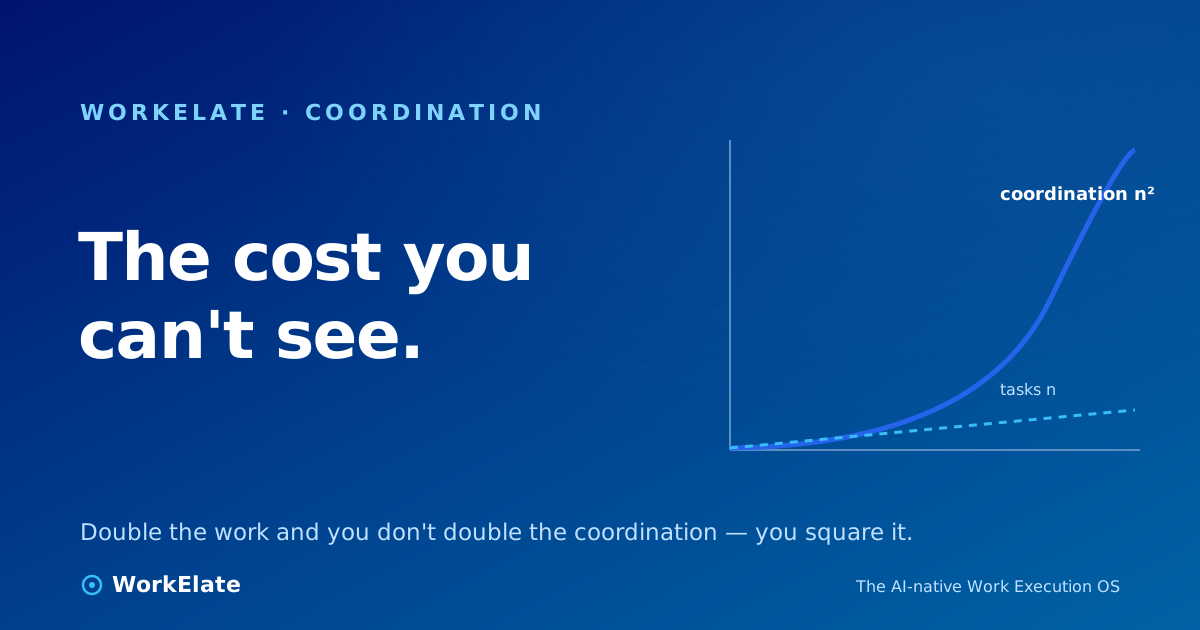
So if execution is the real lever, the question becomes mechanical: where does it actually break? Not in the planning. The plan is usually fine. It breaks in the gap between deciding and doing — the thousand tiny acts of coordination where momentum leaks out one handoff at a time. The expensive part of a task was never the task. It was the coordination around it. (The real cost of a task is coordination.)
You don't fix this by doing more
This is the trap inside the trap. Faced with stalled execution, the instinct is to add — another standup, another tracker, another productivity push. More activity to fix a problem activity caused. But the lever for execution isn't more. It's removal: taking the coordination work off the humans so the work flows from intent to done without someone hand-stitching every step.
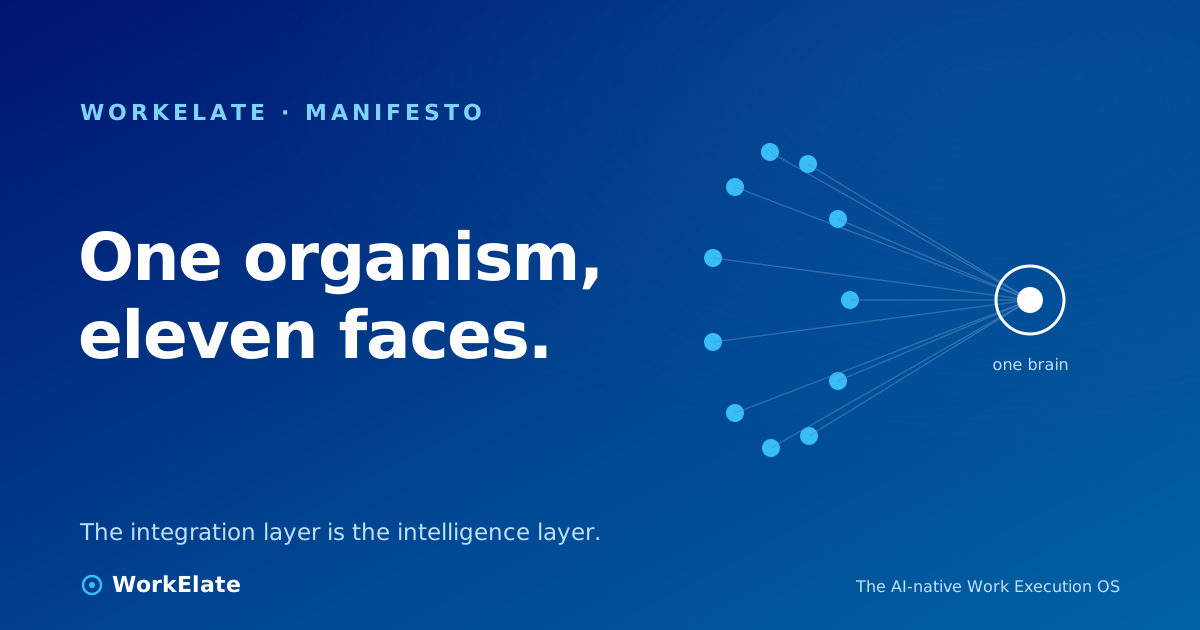
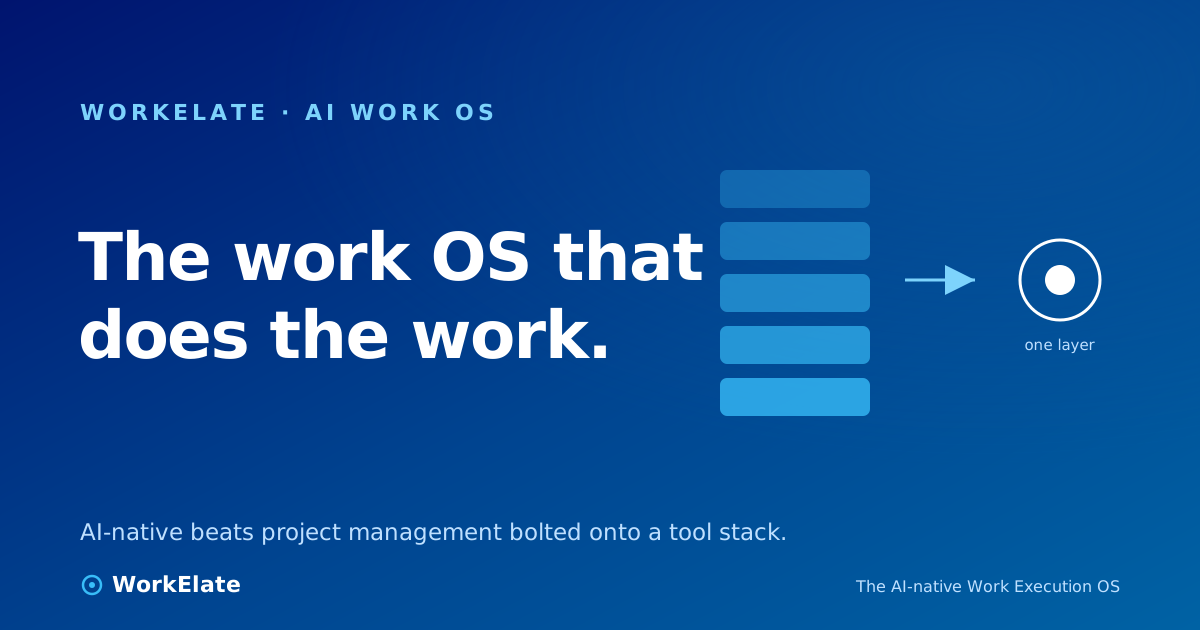
That's the shape of WorkElate. It isn't another place to organize tasks — it's one brain sitting above your apps, reasoning over the whole work-graph. When a design is done, it doesn't wait for someone to remember the engineer; it surfaces the handoff with the context attached and moves it forward on your confirm. When a blocker shows up, it routes the blocker to the person who can clear it instead of letting it sleep until the next meeting. The orchestration that used to live in the gap — and quietly kill the work — becomes something the system does, governed by a simple reflex: suggest, confirm, execute. Visible enough to trust, automatic enough to actually matter.
That's the difference between a tool that makes you feel productive and a system that helps you execute. One adds another surface to coordinate. The other removes the coordination. (Execution isn't optional — it's the only thing that compounds.)
Productivity is overrated because it measures the wrong things — and rewards the version of work that's easiest to fake. Execution is underrated because it's harder, demands real decisions, and refuses to be faked: you can look productive without executing, but you can't execute without a result to point at.
So here's the question worth sitting with. If you measured last quarter only by what crossed the line from decided to done — not what got planned, not what got discussed, not how full the calendars were — how much of it would still be standing? And how much was just a very productive way of going nowhere?