Playbook
High-Performance Teams Kill the Seams, Not the Tools
High-performance teams don't run fewer tools. They kill the seams between them — the coordination tax that eats your best people's day.
High-performance teams don't run fewer tools. They kill the seams between them — the coordination tax that eats your best people's day.
A few years ago I watched a project manager at a growing agency spend the first forty minutes of her Monday doing something that looked, from the outside, like work. She opened the task board. She cross-checked it against the client thread in chat. She found a card marked "done" that wasn't done, because the designer had posted the final file in a doc, mentioned it in a call, and never moved the card. So she moved the card. Then she opened the spreadsheet that tracked which deliverables were billable, and updated that too. Then a Slack message asked, "where is this tracked?" — and she answered it for the third time that week.
None of that was the work. The deliverable hadn't moved an inch. She was doing the work of glue — stitching together what eight different tools each knew about the same project but couldn't tell each other.
This is the story everyone gets wrong. The agency didn't have a tools problem. They had a seams problem. And the difference between those two diagnoses is the difference between a team that ships and a team that meets about shipping.
The popular fix is to count your tools and feel bad. Slack, Notion, Trello, Asana, Google Docs, Zoom, Loom, a spreadsheet, an email client — and the advice that follows is always the same: consolidate, cut, get down to "one to three core platforms."
It sounds disciplined. It's mostly wrong.
The number of tools was never the thing slowing you down. A designer needs a canvas. A finance lead needs a sheet. Your inbox is not interchangeable with your project board, and pretending it is just means you'll do spreadsheet math inside a task description and lose the formulas. Capability is not the enemy. Specialized surfaces exist because specialized work exists.
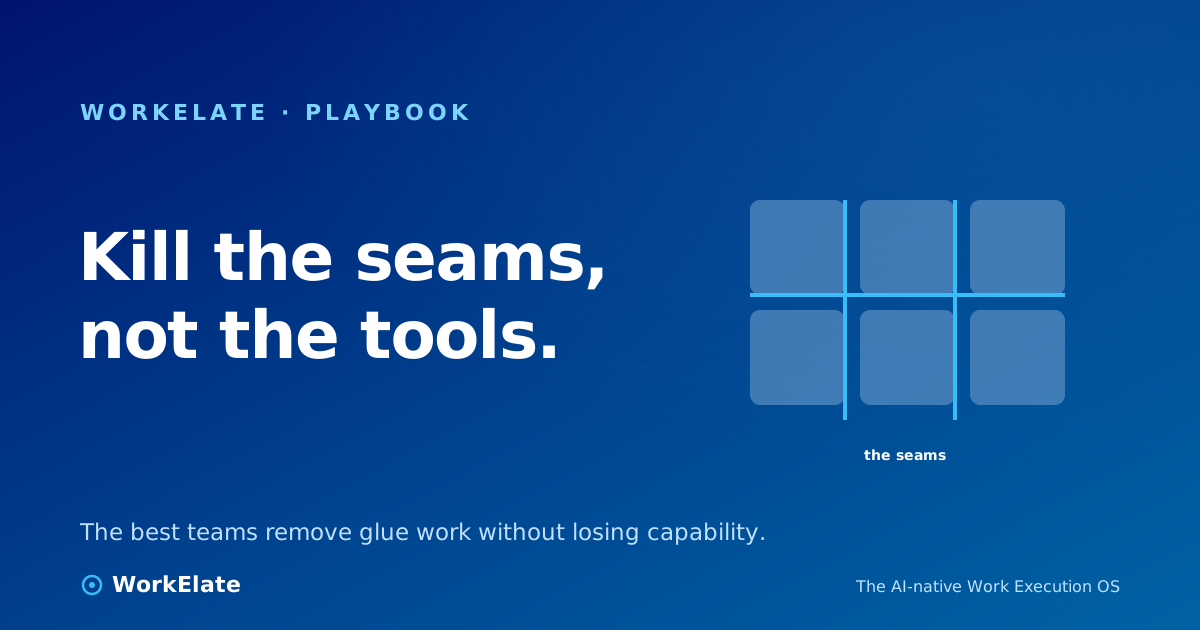
The thing that actually costs you is what lives between the tools — the manual reconciliation, the re-typing, the "let me just update the other system," the status meeting whose entire purpose is to make two tools agree. That's the coordination tax. And it doesn't shrink because you uninstalled an app. It shrinks when the tools stop being islands.
"The board always lies — because someone has to hand-carry the truth from where the work happened to where the work is tracked."
— WorkElateHere's the counter-intuitive part: when a team "consolidates" to fewer tools but the remaining tools still don't talk to each other, the coordination tax barely moves. They've reduced capability and kept the glue work. That's the worst of both trades.
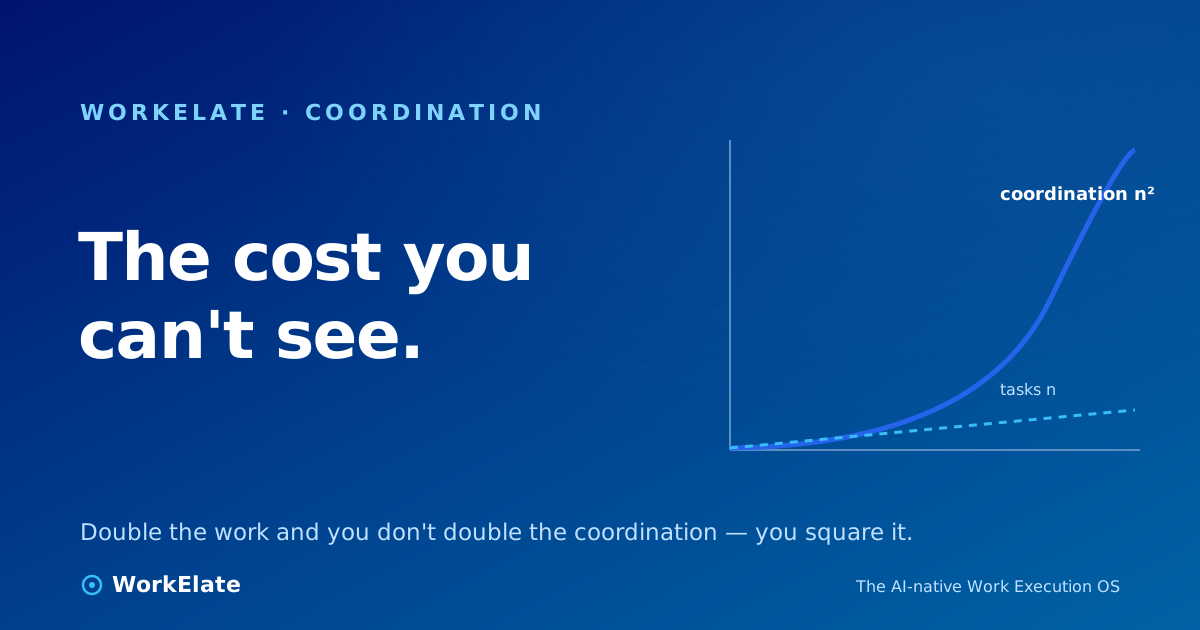
Coordination doesn't scale the way most people assume. If you have four people and four tools, you don't have four connections to keep in sync — you have every pair, every handoff, every "did you see the update." It scales with the square of the moving parts, not the count. Every new tool, every new teammate, adds a row and a column to a grid of things that now have to agree.
That grid is where focus goes to die. It's not the app that breaks you; it's the switch into it and back out.
Look at that middle number for a second, because it's the most expensive lesson in the industry. Microsoft has the best distribution in software history. It put an AI copilot inside the apps a billion people already use, at thirty dollars a seat. And roughly three in a hundred paid for it. An AI feature dropped onto a suite that was built for humans to manually reconcile didn't change the reconciliation. The seams were still there; now there was just a smarter assistant standing on one side of them, unable to reach across.
It's worth sitting with why. A copilot that can draft your email brilliantly but can't see that the deliverable it's referencing already shipped in your docs, already got argued about in chat, and is already late on the sheet — that copilot is fast inside one box and blind to the other nine. It makes the box you're standing in better. It does nothing about the distance between boxes. And the distance is the job. A team feels that instantly: the demo dazzles, the trial fizzles, and the seams that made Monday morning miserable are exactly as wide as they were before.
The seams are the cost. Not the seats.
Same four surfaces in both rows. The only thing that changed is who carries the handoff. In the top row, it's a person — your best person, usually, because they're the only one who knows where everything lives. In the bottom row, the carrying is done by the system itself, and the person is free to do the part only a person can do.
So if it isn't "use fewer tools," what is it? After watching enough of these teams, the pattern is consistent. It's four habits, and none of them is about counting apps.
Notice what's not on that list. "Delete six apps" isn't a habit. "Force everyone into one interface" isn't either. The high-performance move is to keep the capability your specialists need and remove the reconciliation your generalists are stuck doing. You don't win by owning fewer surfaces. You win by killing the gaps between the surfaces you have.
And the order matters. Most teams attempt these in reverse — they buy a new all-in-one tool first (habit two, sort of), then try to bolt async on top (habit four), and never get to the one that actually pays: making the handoff the machine's job. So they end up with a shinier tool, the same human glue, and a quarterly ritual of blaming the tool and shopping for the next one. The teams that break the loop start at the seam. They find the single most-reconciled object in their week — usually project status, sometimes client-facing deliverables — and they make that one thing flow itself. Then they do the next one. It's unglamorous and it compounds.
Teams love to announce they're "async-first" and then discover that async only works when the system already holds the context. If checking an update thread requires four tabs and a memory of which call covered what, people will just hop on a call — because the call is the only place all the pieces meet. Async communication isn't willpower. It's what becomes possible once the work-graph is connected and the update is genuinely complete in one place. Connect the seams first; the async follows.
Here's where it's easy to oversell, so I'll be plain. The dream of "everything in one place, perfectly simple" usually ships as a tool that does ten jobs at a fourth of the quality — a chat that isn't as good as your chat, a sheet that isn't a real sheet. Teams flee those, and they're right to.
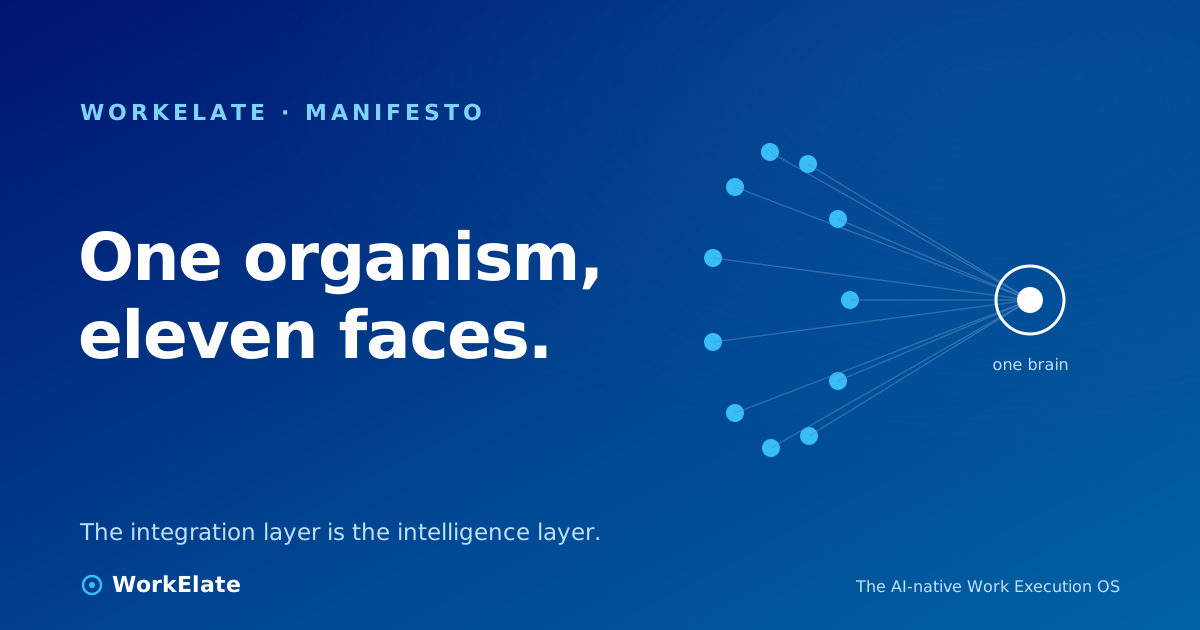
That's not the bet worth making. The bet worth making is keeping real, specialized surfaces — a genuine spreadsheet engine, a genuine whiteboard, a genuine inbox — and putting one brain across all of them. Not eleven apps with AI bolted on, each with its own little assistant blind to the others. One orchestrating intelligence that can see your whole work-graph — keyed on the client, the project, the account — and actually act across it.
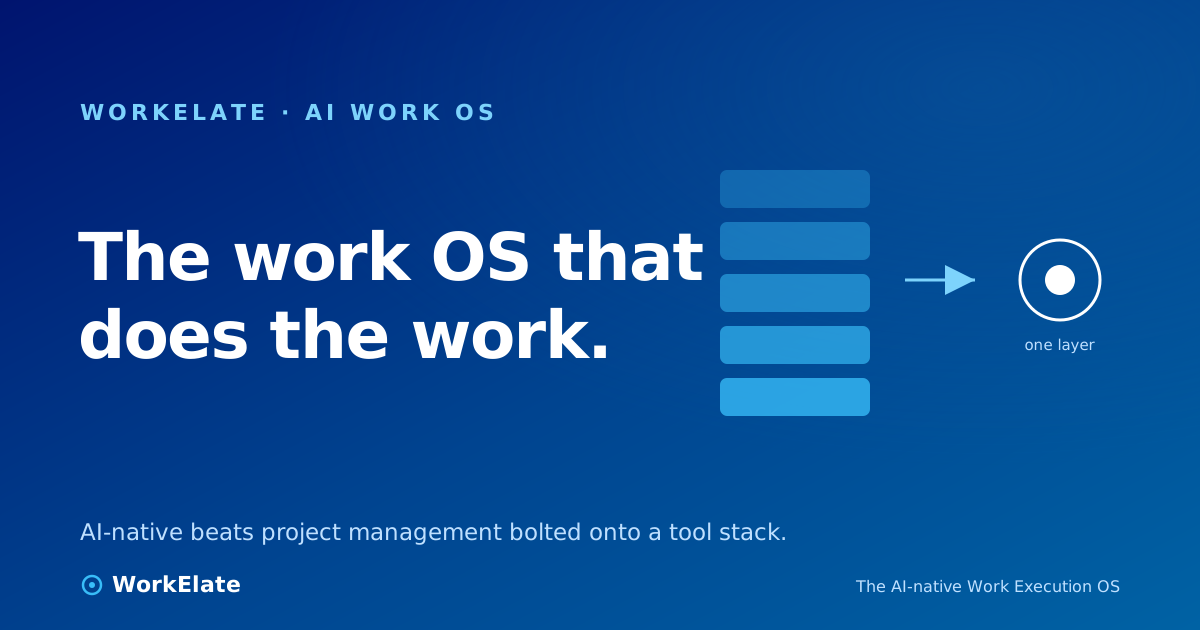
The difference is the write-path. Most AI on the market can read across your tools, with a human confirming every single step. The leap is a system that holds the context, proposes the move, and — once you confirm — does the coordination work itself: moves the card, updates the thread, files the doc, ticks the sheet. The integration layer stops being plumbing and becomes the intelligence. That's the shape worth wanting. It's the architecture we're building at WorkElate, and it's why we describe ourselves as one brain across eleven surfaces rather than one tool pretending to be all of them.
▶ Watch on WorkElate See one brain move a deliverable across task, chat, and docs — without a human carrying it youtube.com/@WorkElate · videoId: TODO — swap when publishedIf you want the structural argument for why this matters more every year — why incumbents who bolted AI onto monolithic suites stayed slow — we wrote it up in why work systems are eating SaaS. And if you've ever tallied what a single "small" task actually costs once you count the chasing and reconciling around it, the real cost of a task is coordination does that math out loud.
The agency from the start of this piece didn't cut their tools to three. They kept their surfaces. What they changed was the carrying — they stopped making a human be the integration layer. Their Monday mornings stopped opening with forty minutes of reconciliation. The "where is this tracked?" messages didn't get answered faster; they stopped getting sent, because the answer was always the same and always visible.
That's the whole move. High-performance teams aren't minimalists about tools. They're maximalists about flow. They refuse to let their best people spend their attention being glue.
So before your next tool audit, change the question. Don't ask which apps to delete. Ask: where is a human still hand-carrying the truth from one tool to another — and what would it take for the system to carry it instead? The answer to that question is worth more than any app you could uninstall. For a longer look at what happens when the orchestration moves off your people and into the system, see the AI work OS replacing project management.
The teams that win the next decade won't be the ones with the shortest tool list. They'll be the ones whose tools finally stopped making people do the talking for them.