Case Study
CloudScale: How One CS Team Took NPS From 48 to 67 by Closing the Coordination Gap
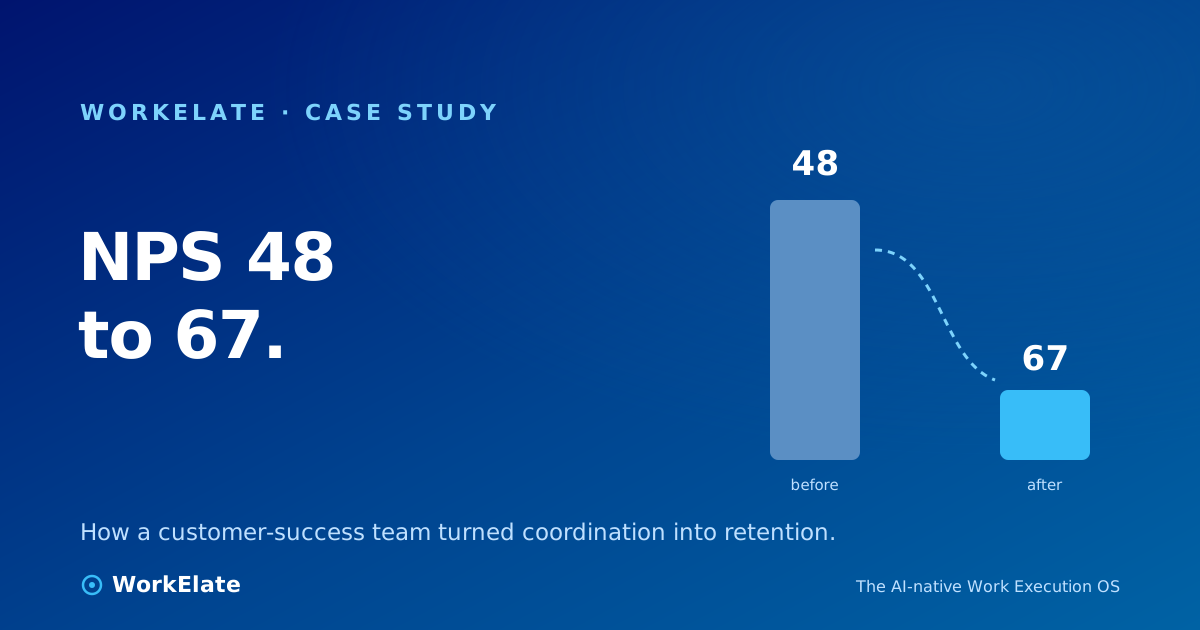
A customer-success team moved NPS 48→67 when signals from mail, calendar and tasks started reaching the CSM in time. A grounded WorkElate case study.
A customer-success team moved NPS 48→67 when signals from mail, calendar and tasks started reaching the CSM in time. A grounded WorkElate case study.
⚠️ Confirm CloudScale is a real, approved reference before publishing. Replace every [VERIFY] tag with a confirmed name, number, or quote, or remove it. The shape of this story reflects WorkElate's real capability; the named customer and its figures are not yet a signed reference and must be checked or anonymized first.
It is 9:14 on a Tuesday morning at CloudScale [VERIFY], a cloud-infrastructure provider, and a customer is about to churn that nobody on the success team knows is at risk.
The signs were all there. A support thread in the inbox had gone three days without a reply. A renewal call on the calendar had been quietly rescheduled twice. A task to send the migration runbook was sitting in a teammate's board, half-done, behind eleven other cards. Each of those facts lived in a different app, owned by a different person, visible to no one in full. The customer-success manager who owned the account — the one person who could have made a single phone call and saved it — saw none of them until the cancellation email arrived.
That is not a people problem. Those were good people. It is a coordination problem: the three signals that, together, spelled "this account is slipping" never reached the same human at the same time. The board said the account was green. The board always lies.
CloudScale's NPS was 48 [VERIFY]. Their team did not lack effort, or care, or talent. They lacked a way for what one tool knew to reach the person who needed to know it.
Walk the floor before the change and you would see customer success doing the work of glue. Roughly 60% of their week [VERIFY] went to firefighting — chasing context across tools, reconstructing what had happened on an account by opening five tabs and asking three colleagues. The work that actually grows accounts (the proactive check-in, the early save, the expansion conversation) got whatever time was left over, which was rarely much.
Every signal that mattered already existed somewhere in CloudScale's stack. The mail knew about the stalled thread. The calendar knew about the twice-moved call. The board knew about the unsent runbook. The problem was never missing data. It was disconnection — the facts couldn't find each other, so they couldn't find the CSM.
Here is the one thing that changed, and it is small to describe and large in effect.
CloudScale ran their work on WorkElate, where the eleven apps — weMail, calendar, task, and the rest — are not eleven separate tools but organs of one body. When something happens in any of them (a mail goes unanswered, an event slips, a card stalls), the app emits a signal into a shared cross-app work-graph keyed on the account. WAO — the WorkElate AI Orchestrator, the brain that sits above the apps — reads that graph the way an experienced delivery manager reads a room.
So the three lonely facts stopped being lonely. A stalled support thread, a twice-moved renewal call, and an unsent runbook are unremarkable on their own. Together, on one account, in one week, they are a pattern — and the brain that can see all three at once is the first thing CloudScale ever had that could notice it. WAO surfaced the account to the CSM before the cancellation, with the three signals attached and the reason spelled out: here is why this one needs you today.
This is the signature move — three things need you; two I already handled — and it only works because the seeing is genuinely cross-app. Not a copilot inside the inbox that is blind to the calendar. One brain, reading one graph, reaching one person in time.
Within roughly five months [VERIFY], CloudScale's NPS moved from 48 to 67 — a 19-point lift [VERIFY]. The number people quote is the NPS. The number that explains it is the one underneath: the share of the success team's week spent firefighting fell, and the share spent on proactive, account-growing work rose in its place [VERIFY]. Churn dropped meaningfully [VERIFY], and the revenue that would have walked out the door stayed [VERIFY].
None of that came from working harder. The team did not suddenly care more. The accounts that used to slip silently now arrive on a CSM's desk while there is still time to make the call — because the system, not a person, did the watching across every app, and handed over only the few that needed a human.
"The board always lies. The first thing that ever told us the truth about an account was the one brain that could read every app at once."
— CloudScale customer success [VERIFY]It is tempting to file this under "better software" and move on. The honest read is narrower and more useful.
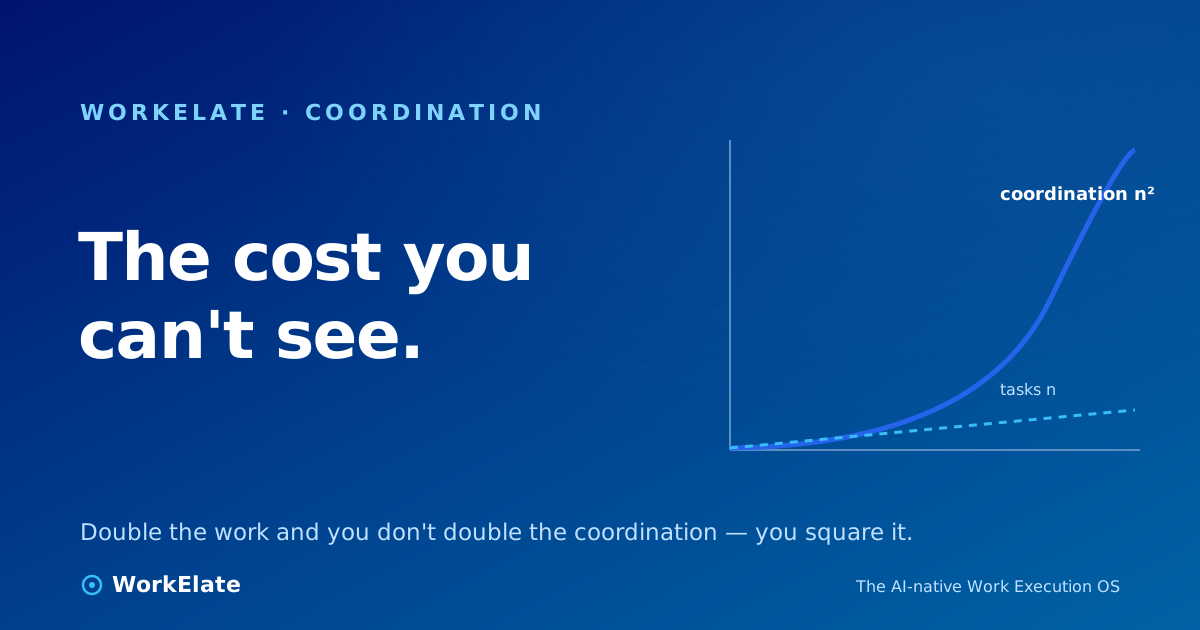
CloudScale's NPS did not rise because anyone added a dashboard or a sentiment score. It rose because the coordination gap closed — the lag between a fact existing in one tool and reaching the human who could act on it shrank from days to the same morning. That gap is the real cost of running a customer-success team on disconnected apps, and it is invisible right up until it shows you a cancellation email.
WorkElate did not give CloudScale a new place to store the customer journey. It gave them a brain that reads the journey across the tools they already had, and reaches the right person before the save window closes. The difference between counting work and understanding it is the whole difference between a tool and a work system — and for a CS team, it's the difference between learning an account is at risk and learning it has already left.
▶ Watch on WorkElate See WAO surface an at-risk account across apps youtube.com/@WorkElate · videoId: TODO — swap when publishedIf you run a success team, the test is simple. Pick your last avoidable churn. Ask where the warning signs lived in the days before it happened — and ask whether anyone could have seen all of them at once. If the answer is no, you do not have a caring problem. You have a coordination problem. And that one is fixable.
Related reading: