POV
Your Habits Don't Matter If the System Is Broken
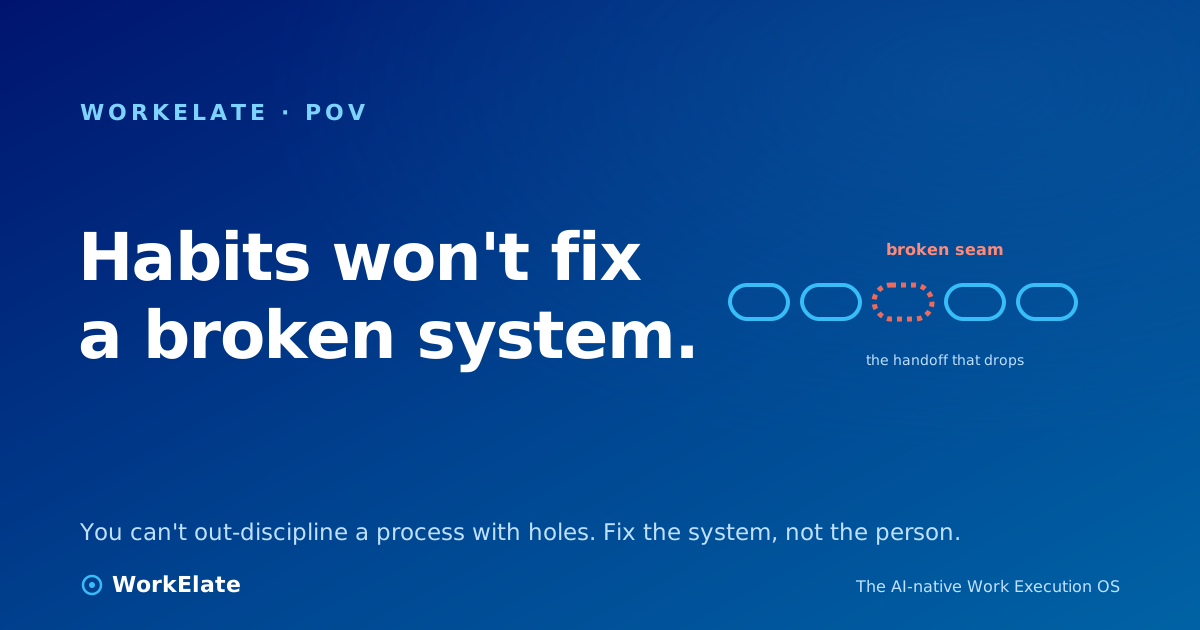
You can't out-discipline a broken process. When the system between people has holes, personal productivity habits just patch them — fix the system, not the person.
You can't out-discipline a broken process. When the system between people has holes, personal productivity habits just patch them — fix the system, not the person.
You time-block your calendar. You triage your inbox at nine. You keep a clean task list, you protect your focus hours, you do the things the productivity books told you to do. And by Thursday you're still chasing a status someone forgot to update, re-explaining a decision to a colleague who wasn't in the room, and discovering a handoff that quietly died last week.
The discipline was real. It just didn't matter. Because the thing slowing you down wasn't your habits. It was the space between you and everyone else.
Most productivity advice is about the individual. Block your time, prioritize your tasks, master your focus. All of it assumes the work system around you is sound — that information flows, ownership is clear, handoffs land.
When that assumption is false, your habits stop being productivity and start being compensation. You're not getting more done; you're patching gaps that shouldn't exist. The clean inbox is you absorbing a coordination failure with personal effort. And personal effort doesn't scale, because the gaps aren't yours alone — they live in the seams between people.
Watch where the day actually leaks. Unclear ownership — two people assume the other has it, so nobody does. Broken handoffs — the work arrives but the why doesn't, so the next person rebuilds it. Invisible status — progress lives in someone's head, so you interrupt three people to learn what a system should have just known.
None of those are discipline problems. You cannot habit your way out of a missing connection. These are infrastructure problems, and they want infrastructure answers. This is the same reason execution is a system problem, not a people problem — and why the real cost of a task is the coordination around it, not the doing.
Here's the tell: put a disciplined person in a broken system and they work harder to get less. Put an average person in a good one and they look like a star — because the system carries the load the habits used to.
A good system makes the right thing the default. Status is something it knows, not something you produce. A handoff carries the decisions and dependencies attached to the work, so the next hand starts where the last one left off. Blockers surface on their own instead of waiting for someone diligent to notice. WorkElate runs on a cross-app work-graph — your tasks, docs, messages, and calendar wired into one connected object — so the coordination work that used to demand your discipline becomes something the system simply does. The reason most teams keep failing to execute isn't effort, it's the workflow underneath.
Habits still matter — for the work only you can do. They just shouldn't be the thing holding your team's coordination together. Fix the seams first. Then your discipline compounds instead of compensates.
▶ Watch on WorkElate See the system do the coordination work for you youtube.com/@WorkElate · videoId: TODO — swap when publishedSo before you download another habit, ask the harder question: is the work actually yours to fix with discipline — or is the system handing you a hole, and calling your effort the patch?