Why Execution Is a System Problem, Not a People Problem
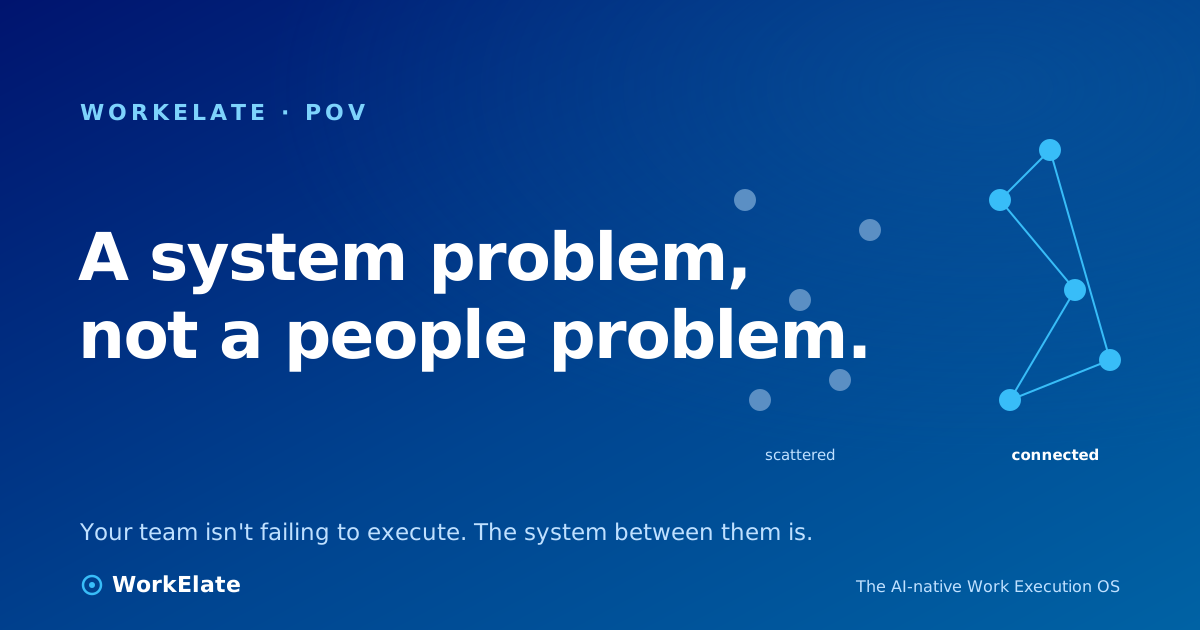
When work slips, we blame discipline and accountability. But the thing that actually failed is the coordination layer between people — and you can't fix a system by lecturing the people inside it.
WorkElate Team
May 1, 2026 · 5 min
Something slipped. The launch went out a day late, or the client found out about the change before your account lead did, or the thing everyone agreed to in the meeting just quietly didn't happen. And the first question in the room is always the same: who dropped it?
It's a natural question. It's also almost always the wrong one. Because when you actually trace a missed deadline back to its origin, you rarely find a lazy person or a careless one. You find a moment where work changed hands and nothing was holding the thread. The designer finished and assumed the engineer knew. The approval came through in an email the one person who needed it never saw. The follow-up lived in someone's head, and that someone went on vacation. Nobody was negligent. The gap between them was.
That gap has a name. It's the coordination layer — the connective tissue that's supposed to move work, context, and accountability from one person to the next. And in most companies, that layer isn't a system at all. It's a stack of human memory and good intentions. So when it fails, we do the only thing the org chart lets us do: we blame a human.
The accountability reflex
Walk into any company with an execution problem and you'll find the same diagnosis on the whiteboard. People need more ownership. Teams need clearer goals. Leaders need to follow up harder. So the company buys the cure that matches the diagnosis — OKRs, performance reviews, a new status-update ritual, an accountability workshop — and the gap stays exactly where it was.
It stays because none of those things touch the actual failure point. You can hold someone fiercely accountable for a handoff and still lose the handoff, because accountability doesn't carry context across a tool boundary. You can set crystal-clear goals and still miss the follow-up, because a goal isn't a system that remembers. The reflex treats a structural problem as a moral one. And moral fixes don't scale, because there's no amount of discipline that lets a human reliably track what no system is tracking for them.
▤ Two ways to read the same miss
The high-performer trap
Here's the trick that keeps this myth alive: your best people make it invisible.
A strong operator doesn't wait for the system to carry context — they go get it. They keep a private tracker because they don't trust the shared one. They send the "just confirming" message before anyone has to ask. They remember the follow-up, chase the approval, fill the seam by hand. From the outside it looks like talent. From the inside it's a person doing the job of the missing coordination layer, on top of their actual job.
And leadership reads it backwards. See, it can be done — we just need more people like them. But the fact that execution requires a heroic person is the proof that the system is broken, not the proof that people are the answer. Sustainable execution shouldn't depend on your most exhausted employee remembering the thing nobody built a system to remember. When it does, you don't have a high-performance culture. You have a single point of failure with a good attitude — and a burnout clock running underneath it.
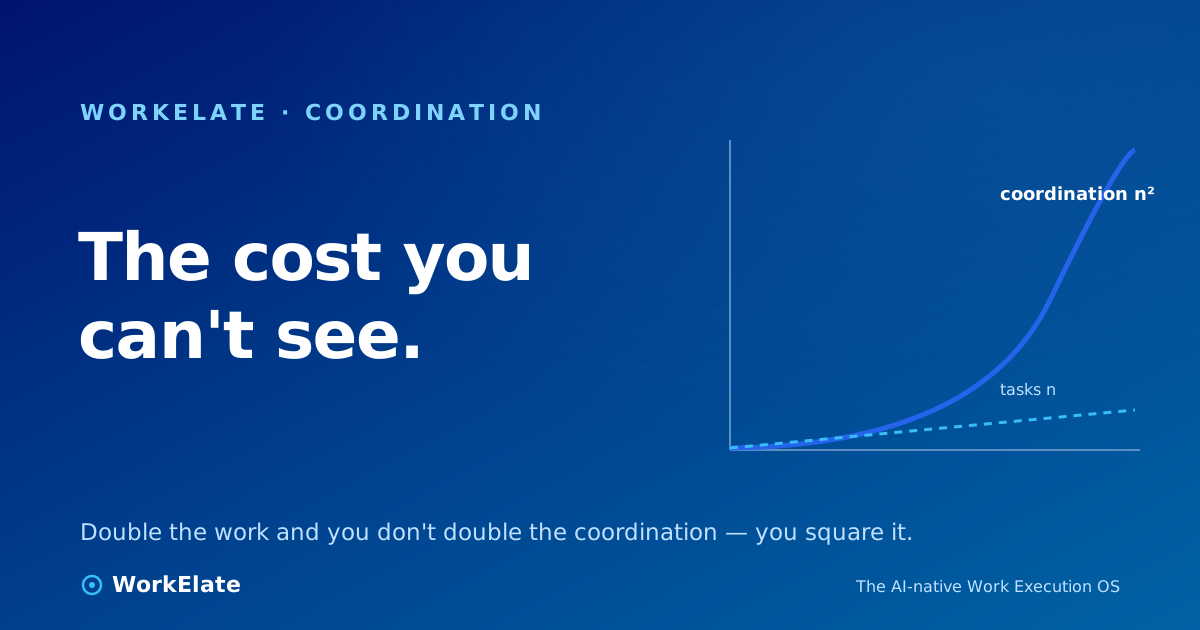
n²how coordination scales as a team grows — every new person adds handoffs to everyone they touch, not one
~23 minto refocus after a single context switch — the reload tax your best people pay silently
0amount of personal discipline that can track what no system is tracking
People solutions ask humans to be the system
The clearest way to see the difference is to put the two fixes side by side. A people solution says teams need to communicate better. A system solution says information should travel automatically, so there's less to communicate. A people solution says leaders need to stay on top of execution. A system solution says status should be something the system already knows, so nobody has to ask. A people solution says we need clearer ownership. A system solution says work should route to the right person on its own.
Every people solution ends the same way: by asking a human to manually do what a system should do for them. That's not raising the bar. It's hiding a structural cost inside someone's calendar and calling it accountability. The companies that actually execute aren't the ones with the most disciplined people. They're the ones where execution is the path of least resistance — where the system makes the right handoff easier than the dropped one.
THE POINT
If execution only works when your best person is heroic, the system is the thing that failed — not the person.
Fix the coordination layer and execution stops being a feat. It becomes the default.
What a real coordination layer does
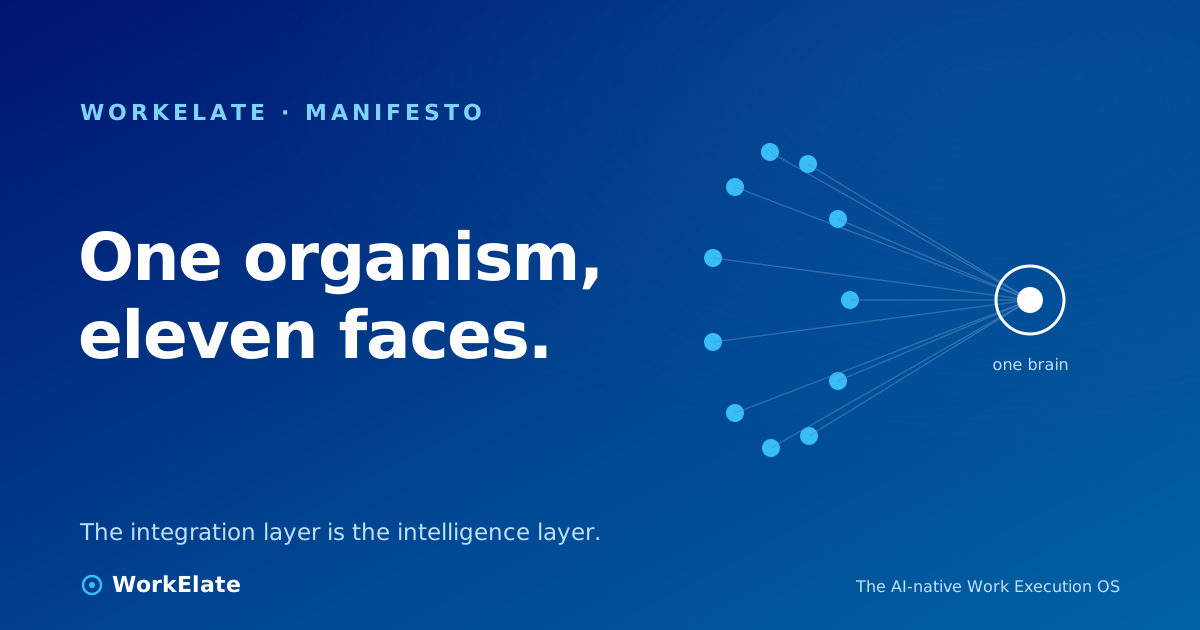
This is the layer most stacks don't have, because the tools were never built to share one. Your chat, your docs, your boards, your calendar, and your inbox each hold a fragment of the work, and the job of stitching those fragments into something coherent falls — every single day — on people. That stitching is the coordination tax, and it's the real cost of a task, far more than the doing.
A real coordination layer holds the connections the tools can't see. It knows that this approval unblocks that task, that this decision came from that thread, that this follow-up has been waiting six days for a reply nobody sent. When the connective tissue is something the system holds instead of something a person remembers, the failures that looked like character flaws turn out to be plumbing — and plumbing you can fix. That's the deeper reason workflows break: not because people won't follow them, but because the steps live in heads instead of in a system that carries them. It's also why outcomes come from systems, not tools — a folder of files waits to be read; a work system moves the work.
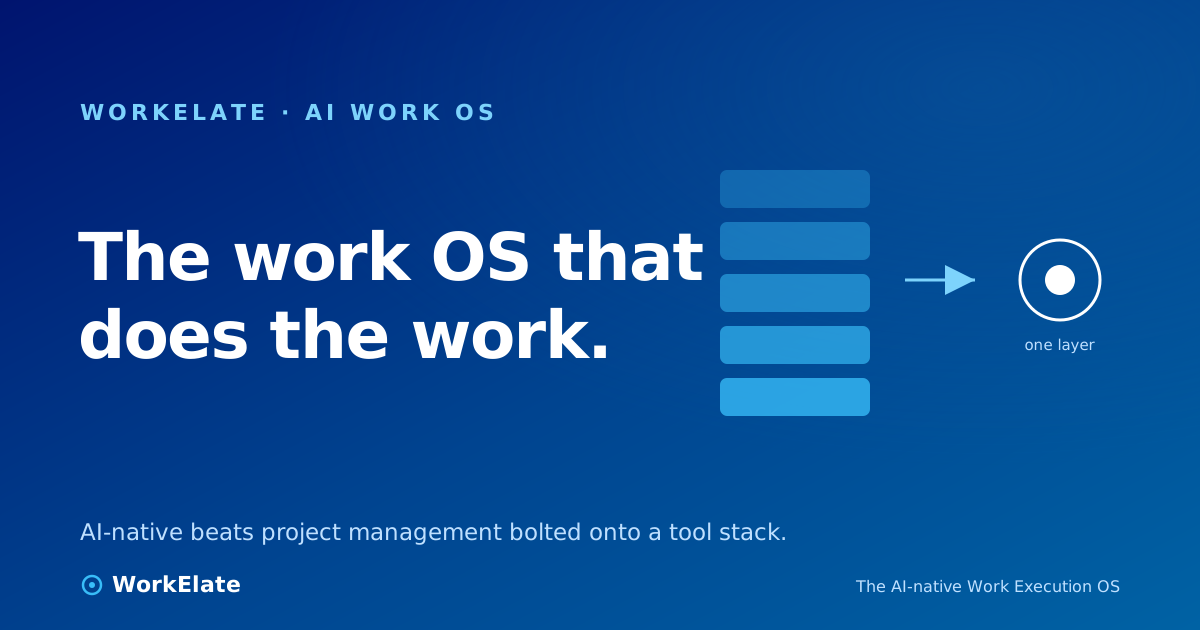
This is what WorkElate is built to be: not another surface to keep updated, but the coordination layer above all of them — where context travels with the work, handoffs fire on triggers instead of memory, and status is something the system already knows. Not because your people aren't good. Because even great people shouldn't have to be the glue.
So the next time something slips, resist the first question. Don't ask who dropped it. Ask what would have caught it — and whether a person was ever the right thing to ask to. Because if the only thing standing between your strategy and your results is somebody remembering, you don't have an execution problem. You have a system that forgot to exist.