Why Workflows Break: The Real Reason Teams Fail to Execute
Pull up the post-mortem on any project that shipped late, and read what people actually wrote. You will not find "we couldn't do the design work." You won't find "nobody knew how to write the code" or
WorkElate Team
May 20, 2026 · 8 min read
Pull up the post-mortem on any project that shipped late, and read what people actually wrote. You will not find "we couldn't do the design work." You won't find "nobody knew how to write the code" or "the legal review was too hard." The steps were fine. Every person executed their part competently.
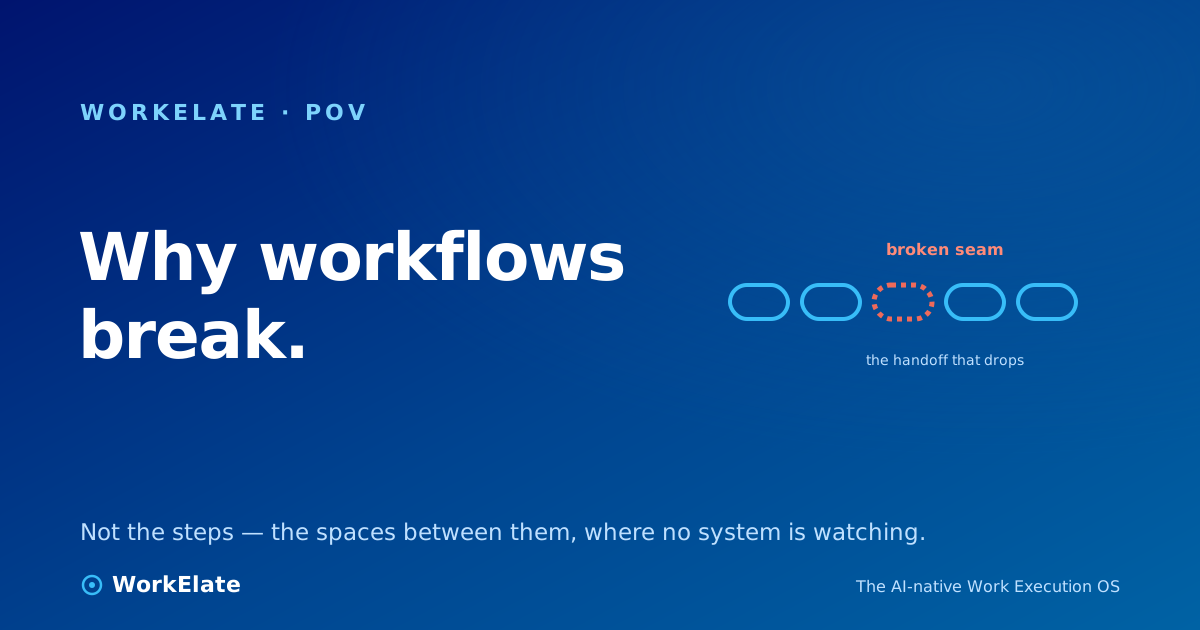
What you'll find instead, buried in the timeline, is a different kind of failure. "Design was done Tuesday but dev didn't pick it up until Friday." "Finance approved it, but the message got lost and nobody told the vendor." "We assumed QA was running — they were waiting on us." The work didn't break. The spaces between the work broke.
This is the thing almost every workflow tool gets wrong. It is built to manage the boxes, when the failures live in the arrows.
The boxes are fine. The arrows are where you bleed.
Draw your workflow on a whiteboard and you'll naturally draw boxes: research, design, build, test, ship. The boxes are where the competent, well-staffed, well-understood work happens. You've hired good people to fill them, and they do.
Now look at what connects the boxes. Each arrow is a handoff — a moment where work leaves one person's hands and is supposed to arrive in another's with everything the next person needs: the context, the constraints, the reasons, the current state. That arrival is not automatic. Someone has to notice the upstream task finished. Someone has to gather what the next person needs. Someone has to write the message, confirm it landed, and track the reply.
None of that is on the board. There's no card titled "tell design they're unblocked." There's no estimate for "chase finance for the approval that's three days late." The arrows are unstaffed and uncounted — and yet they are where the day actually goes.
THE POINT
Workflows don't break at the steps. They break in the spaces between steps — the handoffs no system is watching.
Your tool draws the boxes and ignores the arrows. The arrows are where execution is won or lost.
Why no tool catches it
Here's the counter-intuitive part. The reason the gaps stay invisible isn't that the software is careless. It's that the software was never given the thing it would need to watch them.
A workflow tool sees the boxes because you typed them in. But the space between two boxes is a relationship that spans tools — design finished in one app, the ticket lives in another, the conversation scattered across chat and email and a meeting nobody minuted. No single system holds that relationship. It exists only in one person's head, or in a link someone remembered to draw. There is no picture of how the work connects, so there's nothing for software to read, and the human stays the only thing watching the gap.
Below are the four arrows where workflows actually fail. Notice that not one of them is a step. Every single one is a space.
01
The hidden dependency
Task A blocks Task B, but that link lives in someone's head, not in any system. So a human has to remember it, watch it, and pull B forward the moment A finishes. Forget once and the chain stalls silently.
02
The lost context
Work moves to the next desk, but the *why* doesn't travel with it. The next person doesn't know what was tried, what the constraints are, or why a call was made — so they rebuild context by hand, or guess.
03
The stale status
The board says "in progress." Reality moved on two days ago. Status is something a human has to remember to type, so it's always a little behind the truth — and decisions get made on the lag.
04
The fragmented seam
Design in one tool, tasks in another, docs in a third, talk scattered everywhere. The workflow exists across the gaps between apps — which is precisely where no app is looking.
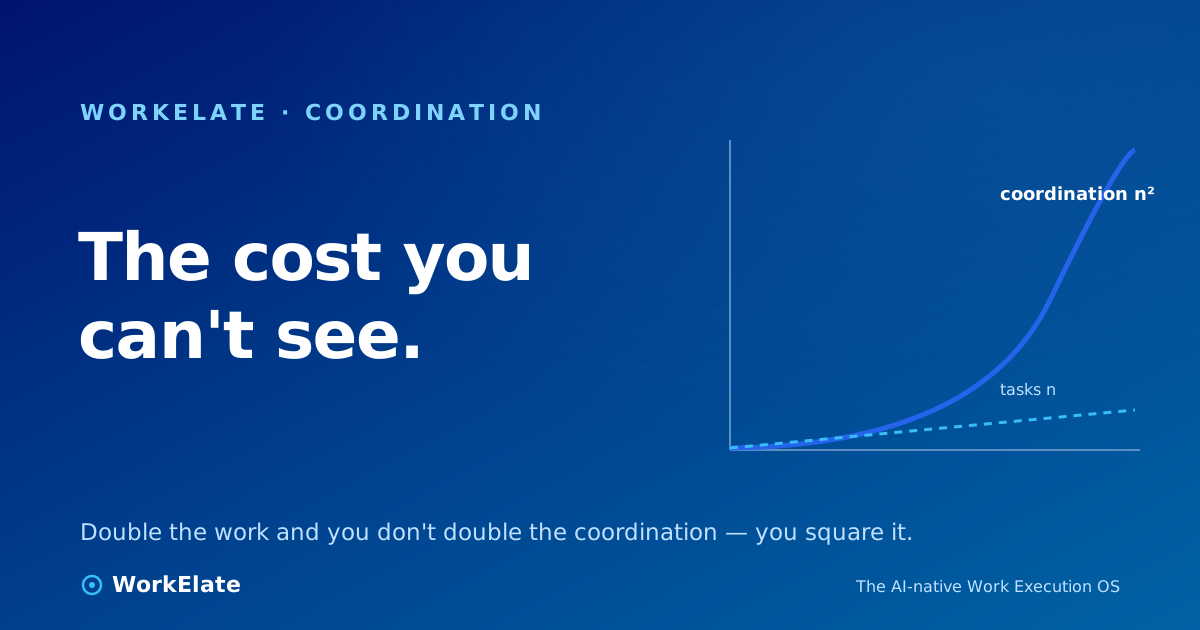
Every one of these is a coordination job that fell to a person because the system couldn't see across the seam. Stack them up and you get the quiet math nobody plans for: the cost of running a workflow doesn't grow with the number of steps. It grows with the number of connections between them. Add a person, add a tool, and the arrows multiply far faster than the boxes. At some point your best operators — the only ones holding the whole map in their heads — are spending more hours coordinating than executing. That's not a planning failure. That's an unwatched-gap failure, and no amount of better planning closes it.
The fix isn't a better board. It's a system that watches the spaces.
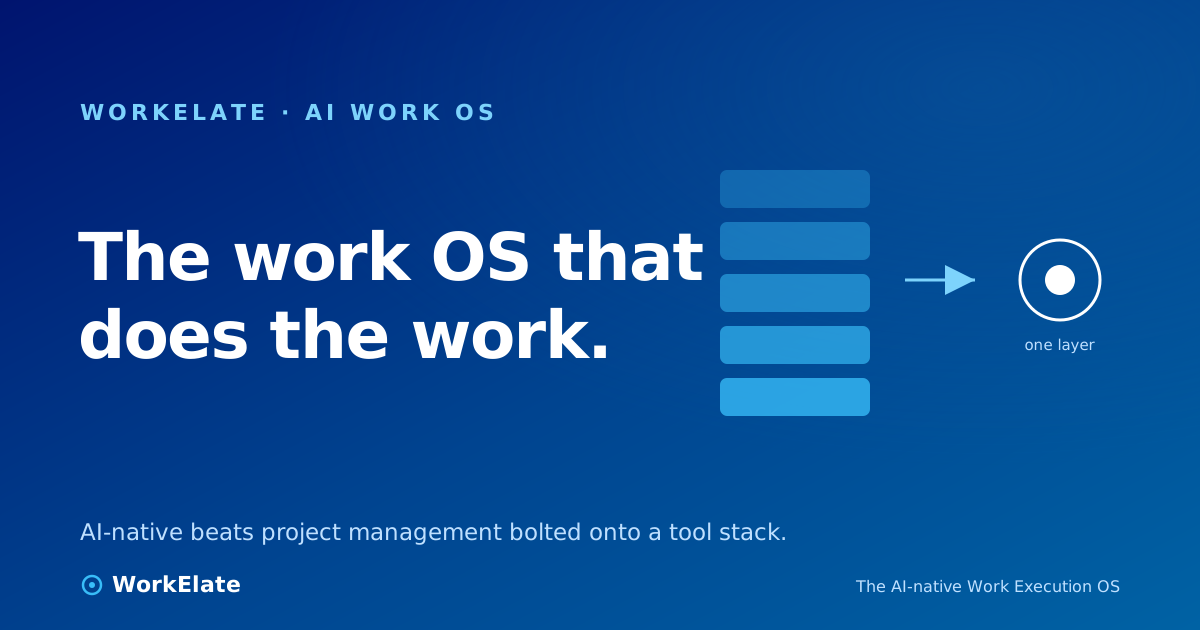
If the failures live in the gaps, then the answer is not another tool for drawing boxes. It's a system that can see the whole graph of work — every box and every arrow as one connected picture — and carry work across the gaps so a human doesn't have to.
Two things have to be true for that to happen.
First, the work-graph has to be emitted, not inferred. Every meaningful event — "design finalized," "approval granted," "deadline moved" — has to be a signal the system actually receives, the moment it happens, on whatever surface it happens. Most stacks try to guess the graph by scraping scattered APIs after the fact. The durable version is one where the apps themselves emit the graph as work moves, so the link between Task A and Task B is a fact the system holds — not a guess it pieces together too late.
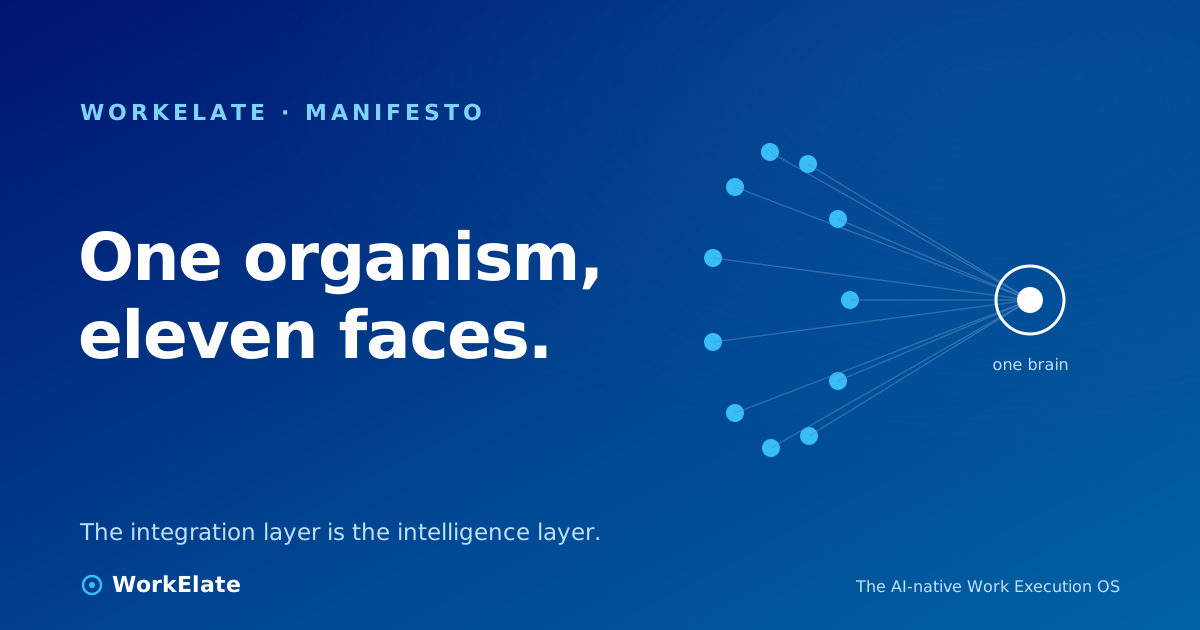
Second, one brain has to read that whole graph. A handoff that crosses from your design tool to your dev tool to your calendar cannot be managed by three separate copilots that each see one slice. The coordination is the cross-app part. It takes a single intelligence sitting above the stack — one that sees the finished design, the unblocked ticket, and the open calendar slot as one picture and acts on the seam between them. WorkElate calls that brain WAO, and the cross-app picture it reads is the work-graph.
"They infer the graph and can only read it. We emit the graph and can write to it."
— WorkElate
When both are true, the morning ritual stops being a person's job. "Design's done — you're clear to start" stops being a message a tired human remembers to send and becomes a signal the graph emits and the brain acts on. It reaches you not as another notification to triage, but as here's what moved and what now needs you — with anything destructive or client-facing still gated behind your confirmation. You don't lose control of the coordination. You stop being the manual machinery of it.
That's the real reframe hiding inside "why workflows break." The steps were never the problem. The problem is that we built a generation of tools to manage the boxes and left every team to hand-carry the arrows. Give the system the emitted graph and one brain to read it, and the gaps stop being where execution goes to die.
So before you redesign your process again, ask the more honest question. Your workflow isn't breaking because the steps are wrong. It's breaking in the spaces between them — so who, right now, is watching those spaces: your system, or the one person still holding the whole map in their head?