POV
Work Should Feel Like Flow, Not Friction
Watch a good designer in the zone. The work pours out. Then a message lands: "Hey, is this the latest version? Can you re-share the brief? Did legal sign off?" The pouring stops.
Watch a good designer in the zone. The work pours out. Then a message lands: "Hey, is this the latest version? Can you re-share the brief? Did legal sign off?" The pouring stops.
Watch a good designer in the zone. The work pours out. Then a message lands: "Hey, is this the latest version? Can you re-share the brief? Did legal sign off?" The pouring stops.
It doesn't stop because the work got hard. It stops because the space between the work got hard.
That's the part almost everyone misreads. We say our days are full of friction and we assume the friction is the work — the thinking, the building, the deciding. It isn't. The work is the part you'd happily do for free on a Saturday. The friction is everything wrapped around it: the re-sharing, the chasing, the status meeting that exists only to answer "where is this?"
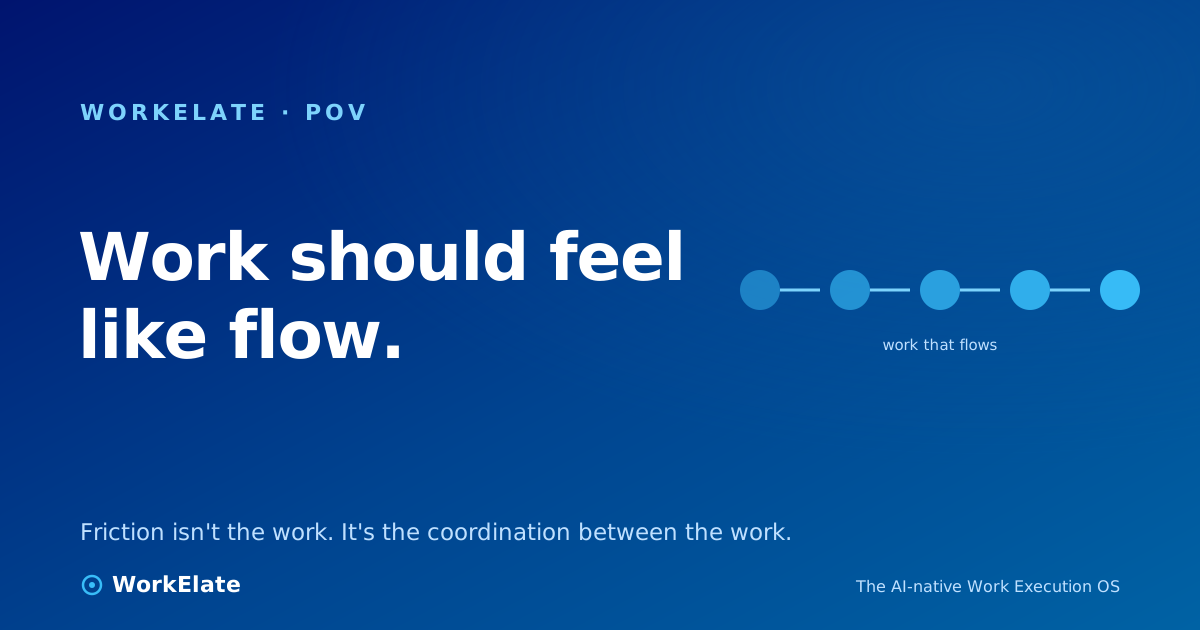
Flow isn't a faster version of work. Flow is what's left when you delete the glue.
For a decade we blamed the wrong thing. "Too many tools." "Too many notifications." "People aren't organized enough." So we bought another tool, muted another channel, took another note-taking course — and the friction didn't move.
It didn't move because the friction was never inside any one tool. It lives in the seams between them.
The brief lives in docs. The decision happened in chat. The deadline is on the board. The approval is buried in an email. Each piece is fine on its own. The problem is that nothing knows about anything else, so a human has to be the wire that connects them. Your best people spend their day being the wire.
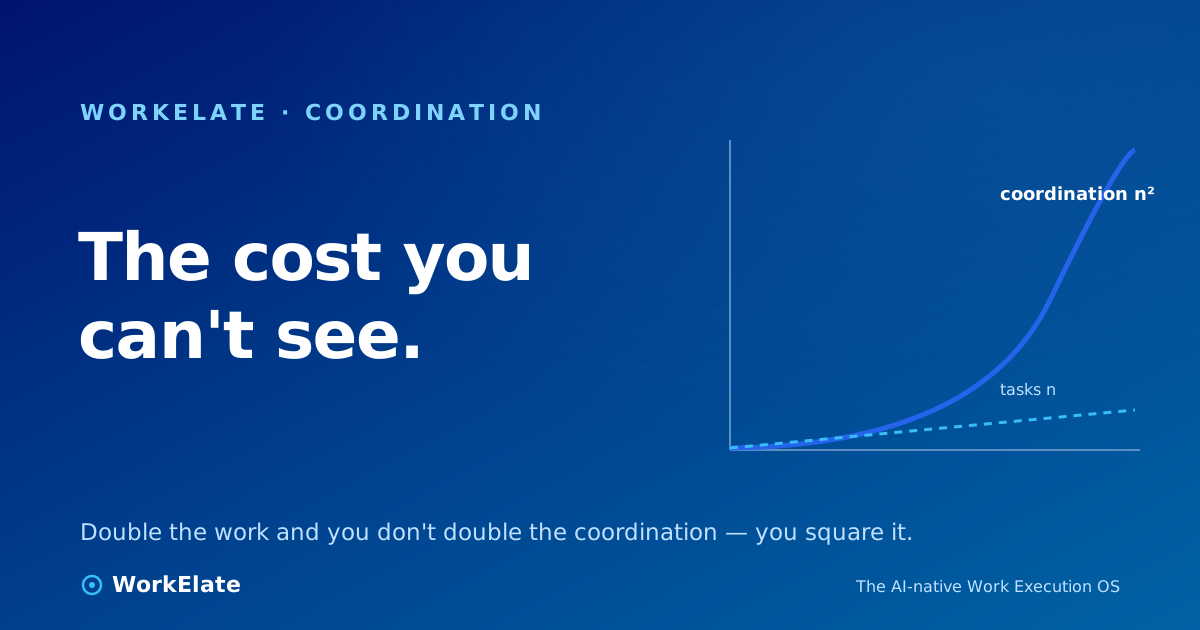
That's the coordination tax. And here's the cruel part: it doesn't grow with how much work you have. It grows with how many connections the work has.
Add one person and you didn't add one set of handoffs — you added a handoff to everyone already there. This is why a ten-person team feels light and a thirty-person team feels like wading through wet sand. Nobody got lazier. The wiring just got denser, and the wiring is made of people.
The standard prescription for friction is personal: better systems, cleaner notes, more diligent follow-ups, stay on top of it all. It's seductive because it puts you in control.
It also can't work. You can be flawlessly organized and still be blocked by a decision in a thread you weren't on, a file in a system you can't see, a handoff nobody told you was ready. You cannot personally out-organize a systems problem. Friction between tools is not solved by being tidier inside one of them.
That's the quiet truth behind a lot of burnout. The high performers aren't drowning in work. They're drowning in coordinating work — and because they're good at it, they absorb more of the glue, until the glue is the job.
Picture the same designer, but the system around them is awake. The brief surfaces with the task instead of being asked for. The decision from chat is attached to the work it changed. When the design is ready, the next person is told — with context — without anyone clicking "notify." The status updates itself because the system watched the work happen.
Notice what didn't change: the designer still designs. The thinking is still theirs. Flow doesn't mean less judgment — it means your judgment stops getting interrupted by errands.
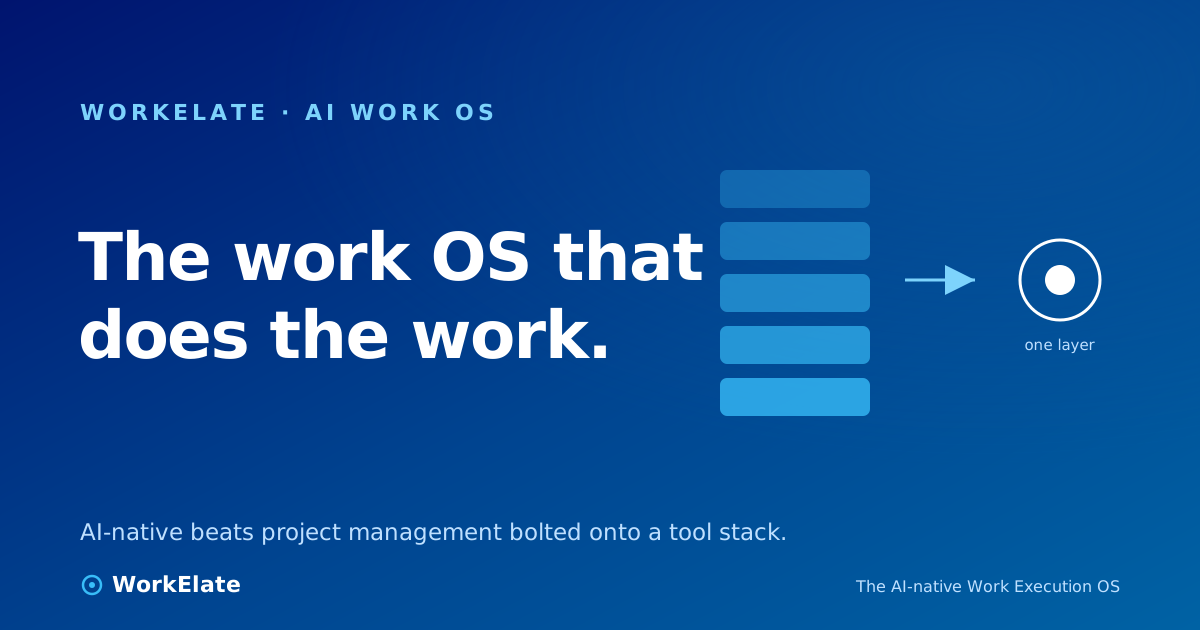
This is the difference between a place to store work and a system that runs it. A folder holds your files. It doesn't know that the contract was signed, so the kickoff can start. Knowing that — and acting on it — is a different category of thing.
▶ Watch on WorkElate One prompt, one handoff, across apps youtube.com/@WorkElate · videoId: TODO — swap when publishedFor most of software history, the glue had to be human because no system could hold the whole picture. Each app saw its own corner. Stitching the corners into a story was a job only a person could do.
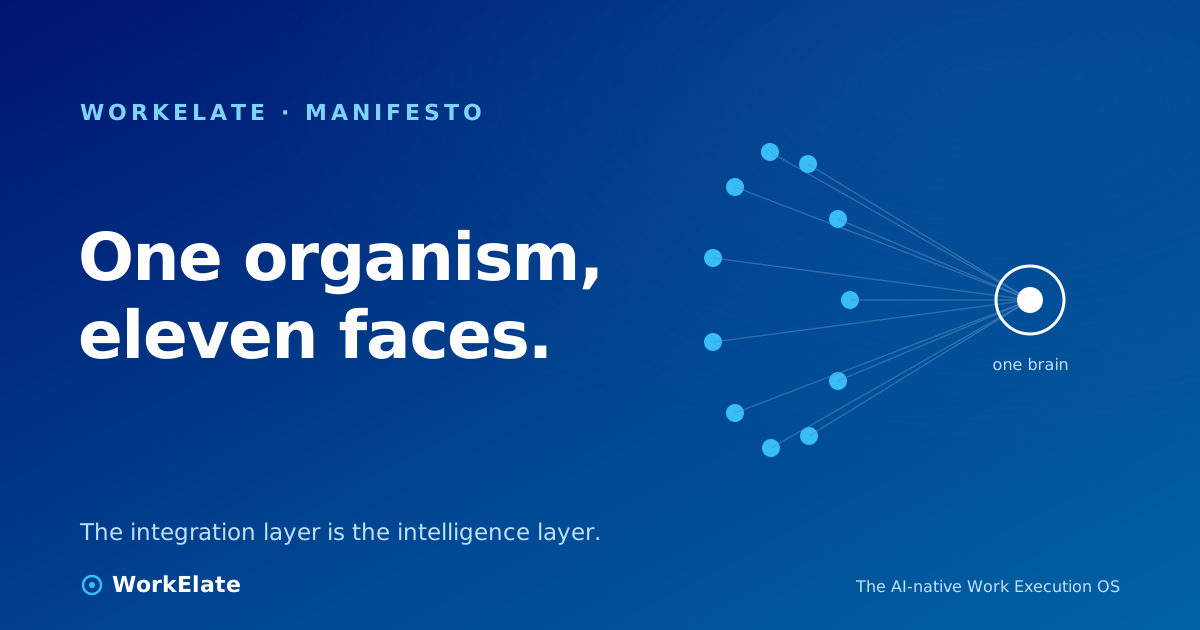
That's the part that changed. WorkElate runs one orchestrating intelligence — WAO, the WorkElate AI Orchestrator — across every app in the suite: docs, chat, board, calendar, form, mail, and the rest. Because the apps emit what happens — a card moves, a form is booked, a deal closes — WAO doesn't have to guess the state of the work by interviewing people. It already knows. It can recall what happened last week, reason about what should happen next, and do the mechanical part, asking you to confirm anything that matters.
The point isn't more apps with AI bolted on. It's that the coordination between them — the seams where friction lives — finally has something other than a human standing in them. The integration layer becomes the intelligence layer. Worth being precise: this removes the mechanical slice of coordination — the routing, the chasing, the status-keeping. The judgment stays yours. That's the slice worth removing, because the real cost of a task is the coordination around it, not the task.
And it attacks the thing that actually drains you: the context you rebuild every time you switch. When context travels with the work instead of living in your head, the most expensive part of your day — reloading where you were — mostly stops happening.
So here's the reframe to carry out of this. When work feels like friction, stop asking your team to push harder against the boulder. Ask a better question: how much of today was the work, and how much was the wiring?
Because the teams that win the next decade won't be the ones whose people grind hardest. They'll be the ones where the glue work quietly disappeared — where status is something the system knows, not something humans produce, and flow is simply the default state of getting things done.
The work was never the problem. The space between the work was. Fix that, and flow isn't a rare good day. It's Tuesday.