Why \"Getting Things Done\" Doesn't Get Things Done
David Allen's Getting Things Done did something genuinely useful: it got the work out of your head and onto a trusted surface. Capture everything. Clarify what it means. Organize by context. Review we
WorkElate Team
May 27, 2026 · 8 min read
David Allen's Getting Things Done did something genuinely useful: it got the work out of your head and onto a trusted surface. Capture everything. Clarify what it means. Organize by context. Review weekly. Engage with confidence. A whole generation of knowledge workers learned to externalize their mental load, and felt — for the first time — in control of the pile.
That feeling is real. But notice what it actually is. It's the calm of a tidy list. And a tidy list is not the same thing as finished work.
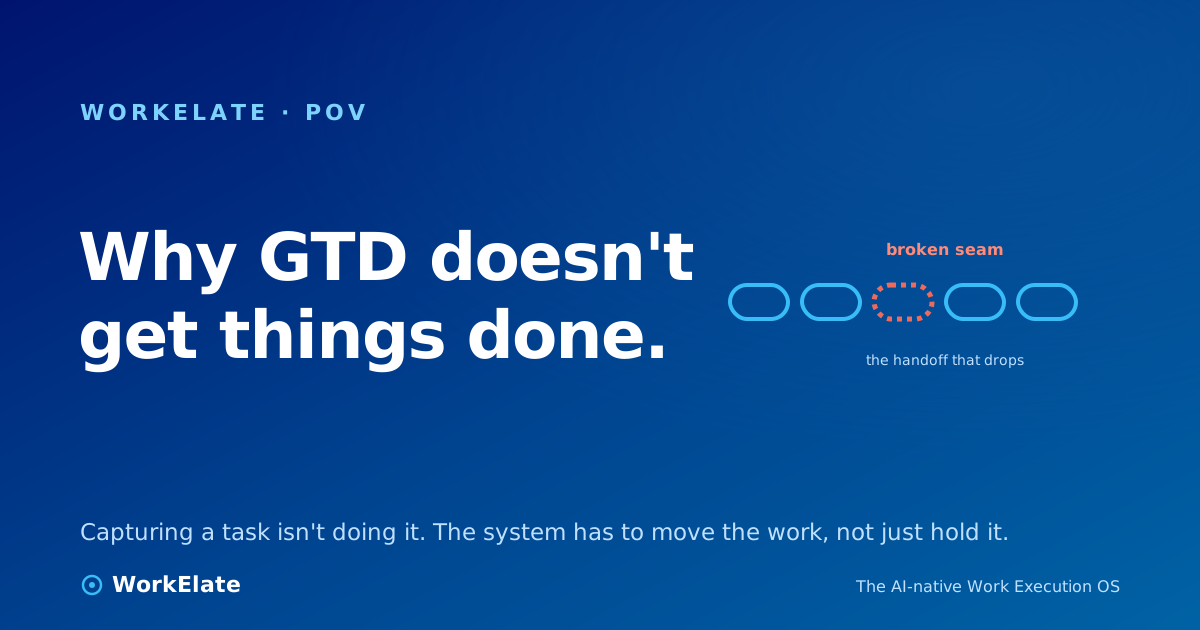
This is the quiet sleight of hand at the center of personal productivity. GTD is superb at the capture half of work and silent on the move half. It will faithfully tell you "Review the design mockups." It will not carry forward the three decisions, the one constraint, and the Slack thread that make that review mean anything. It holds the task. It does not move it. And the distance between holding and moving is where your week actually goes.
Capture is the easy half. Moving the work is the job.
Here's the asymmetry nobody put on the cover. Capturing a task is bounded and satisfying — you can finish capturing. You write it down, you file it by context, your inbox hits zero, and a small dopamine hit confirms you've done something. But the task itself hasn't moved an inch. It's just been beautifully shelved.
Moving the work is the opposite kind of thing. It's a thousand small coordination acts spread across people, tools, and time — each one a place momentum can leak out. GTD optimizes the half you can finish and leaves you alone with the half that actually produces outcomes.
And it was designed that way, honestly. GTD comes from a world where a knowledge worker operated mostly alone — your projects, your contexts, your next actions. In that world, a perfect personal list nearly was the work. But that world is gone. Your next action lives in your list; the actual work lives in Figma, the inbox, the spreadsheet, and a teammate's unread reply. A flawless list pointing at a fragmented workflow is still a fragmented workflow.
▤ What GTD captures vs. what it leaves in the gap
What a tidy list can't do
GTD excels at managing your commitments. It's powerless against the four things that actually slow a team down — because none of them live on a single person's list:
Context falls out in transit. Your list says "Review design mockups." It does not carry the discussion, the decisions, or the constraints that produced those mockups. So you stop and reconstruct them by hand — and re-asking is the most expensive act in knowledge work.
Dependencies have no owner. GTD tracks what's on your plate. It can't see that your next action is blocked on someone else's, can't notice when they finish, and can't nudge the chain forward. The blocker sleeps until the next standup.
Work happens across tools. The next action sits in your list; the doing happens in the design tool, the inbox, the doc, the board. GTD reminds you something needs doing. It can't orchestrate the doing across the surfaces where work actually lives.
Teams stay fragmented. GTD is personal by design. Five people each running an immaculate system produces five well-organized individuals and one workflow nobody owns. Everyone manages their tasks; no one moves the work.
Try harder and none of these improve. They aren't effort failures. They're system failures — the predictable result of asking a human to be the connective tissue between tools that don't talk to each other.
THE POINT
A captured task is not a finished one.
GTD made you a brilliant librarian of your own work. The job was never to shelve the work neatly. It was to move it across the gap — reliably, every time, without a person stitching it by hand.
From a better list to a system that moves the work
The honest fix isn't to abandon capture — it's to stop pretending capture is the finish line. A task is one frame in a longer arc, and the arc is what needs a system. Not a smarter to-do list. Something that holds the whole span from decided to done and closes it.
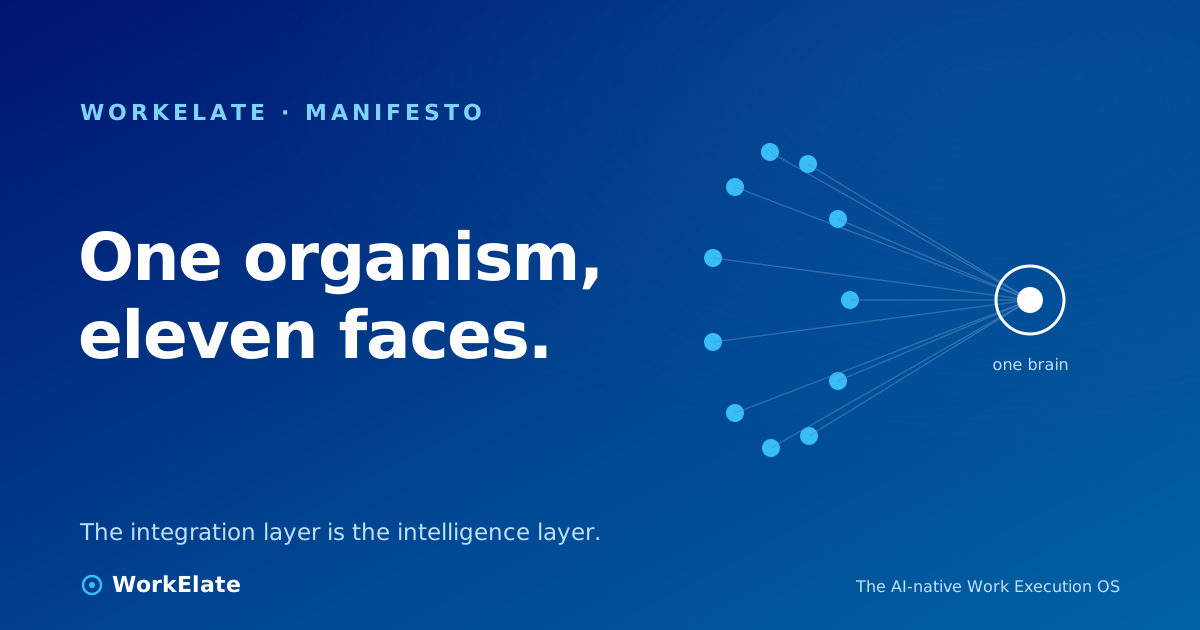
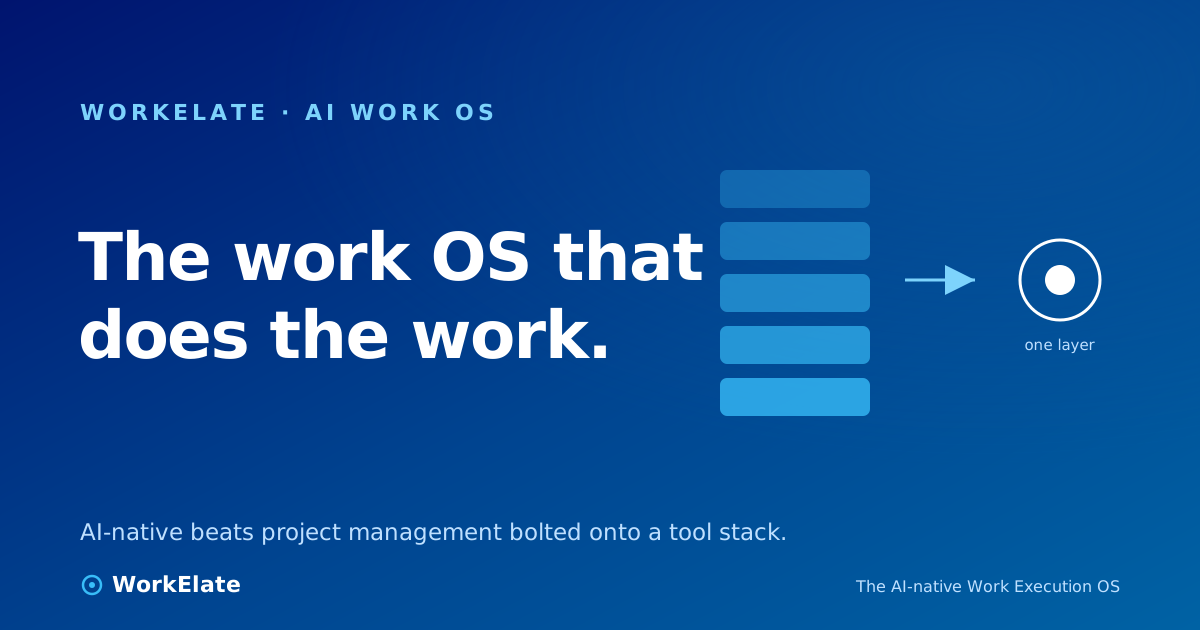
That's the shape of WorkElate. It isn't a tidier place to store your work; it's one brain sitting above your apps, reasoning over the whole work-graph. When a design is finished, it doesn't wait for someone to remember the next person — it surfaces the handoff with the decisions and constraints still attached, and moves it forward on your confirm. When a blocker appears, it routes the blocker to whoever can clear it, instead of letting it sleep on five separate lists. The coordination that used to live in the gap — and quietly kill the work — becomes something the system carries.
The reason this is finally possible, and wasn't when GTD was written, is that software could only ever hold a plan, never advance one. It stored the list and waited for you. An AI that understands what needs to happen, sees it across every tool, and can take the action is the first technology that addresses the gap directly instead of handing you one more surface to coordinate. But — and this is the fork most of the market got wrong — an assistant that drafts a summary or suggests your next action is still leaving the doing to you. That's a faster list, not an executor. The thing that closes the gap is AI that moves the work. (Why AI should execute, not assist.)
And because you won't hand the wheel to a system you can't watch, the action is governed: suggest → confirm → execute. The system proposes the move and the context behind it; you approve; it carries the work across the handoff with the why intact. Visible enough to trust, automatic enough to matter.
Respect to the librarian. The work still has to move.
None of this makes GTD wrong. Getting the pile out of your head onto a trusted surface is real relief, and most people are worse off without it. But relief is not the same as outcomes, and a quiet mind is not a moved task. GTD won the easy half so completely that we mistook it for the whole game.
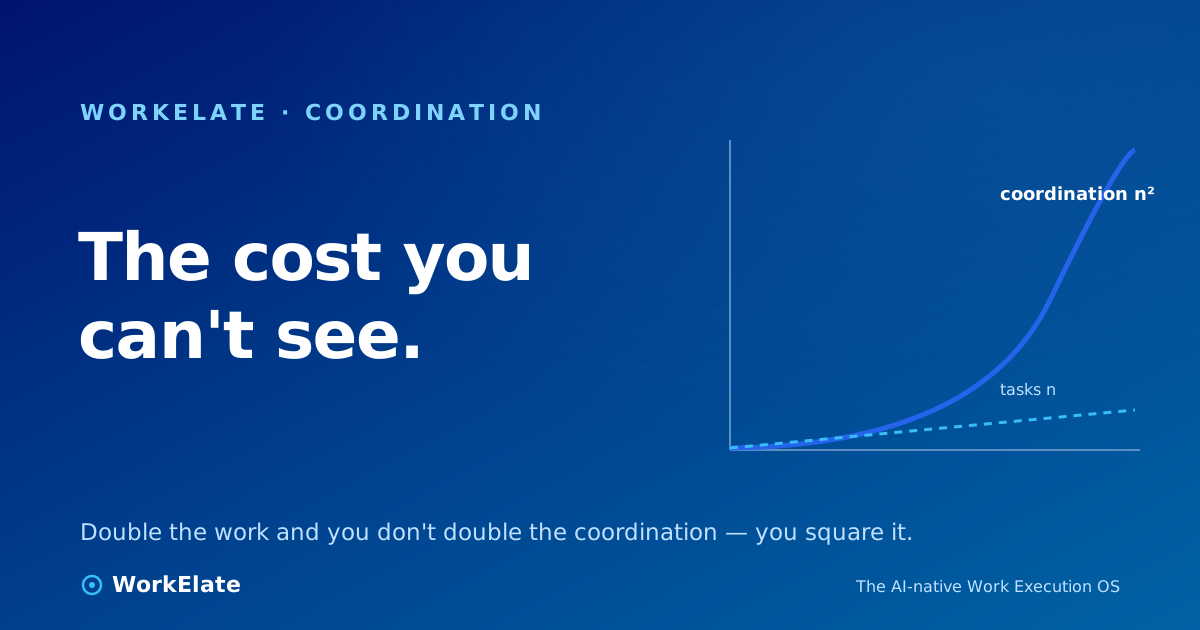
The expensive part of any task was never the capturing. It was the coordination around it — the handoffs, the lost context, the waiting. (The real cost of a task is coordination.) That's the half a list can never do for you, and the half a system finally can.
So here's the question worth sitting with. If you measured last quarter only by what crossed the gap from captured to done — not what got written down, not what got neatly filed — how much of your perfectly organized list would still be standing?