POV
Why Follow-Ups Exist at All
"Just circling back on this."
"Just circling back on this."
"Just circling back on this."
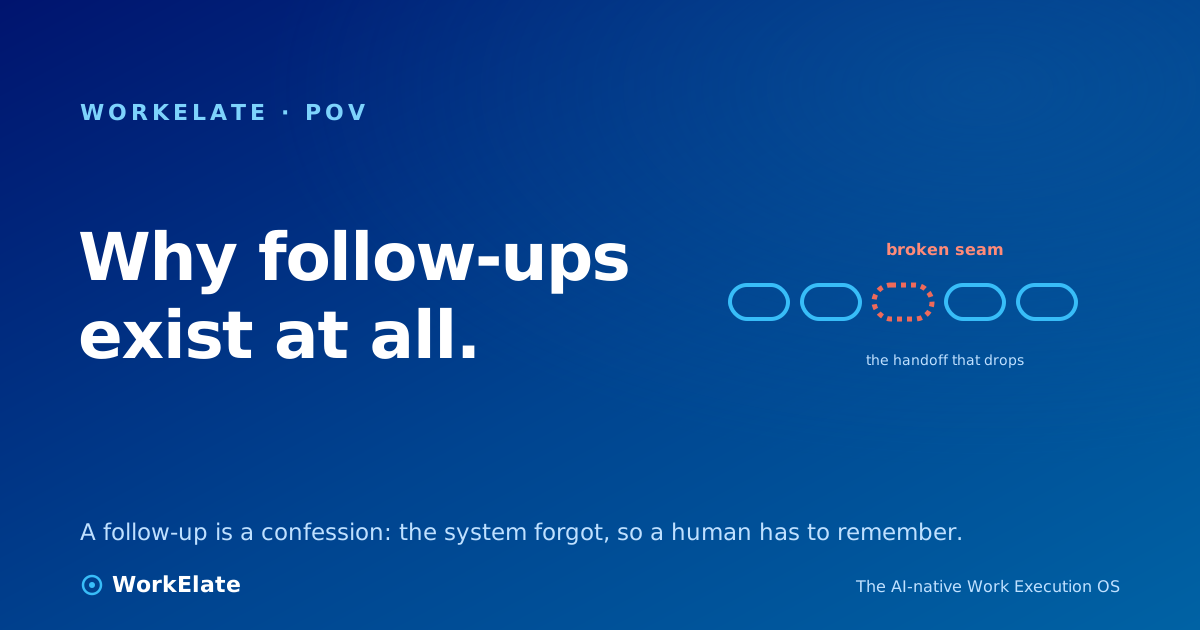
You've written that sentence a hundred times. Maybe today. It's polite, it's harmless, and it is also a small confession: the system that was supposed to carry this work forgot to, so now a human has to remember it and chase it.
That's all a follow-up is. Not a virtue. Not "good hygiene." A patch. The manual labor of keeping work moving when nothing underneath is keeping it moving for you.
We've dressed this up as a skill. The organized operator is the one with the best follow-up game — the nudges, the "bumping this," the spreadsheet of who-owes-me-what. We promote people for being good at it. But step back and look at what the skill actually is: a person holding state in their head because no system is holding it for them.
Think about what you're actually doing when you follow up. You're asking a question the system already had the answer to — or should have.
Did the client get back to us? That's in the inbox. Is the deck done? That's a state on the artifact. Did the deadline slip? That's two dates compared. Is anyone blocked? Somebody said so, three days ago, in a thread no one routed anywhere.
None of these require you to remember. They require something to hold the thread — to know the work exists, know who owns it, know when it's late, and know to say so before you had to ask. The reason you ask is that the work lives in eleven disconnected places, and the only thing connecting them is your memory.
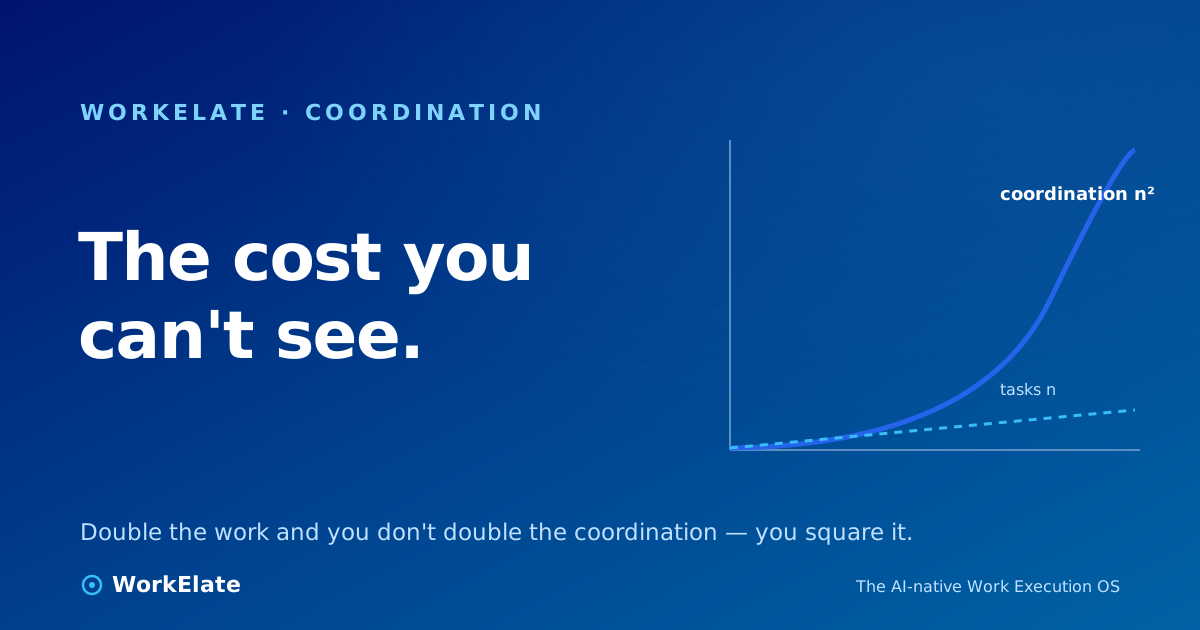
That's the real cost, and it isn't the thirty seconds it takes to type "any update?" It's that you became the connective tissue. Your attention is now load-bearing. The work doesn't move unless you push it, which means it moves at the speed of how much you can hold in your head — and you can't hold much, because you're also doing the actual work.
This is the coordination tax, and follow-ups are how you pay it, one "circling back" at a time.
The alternative isn't a better reminder app. A reminder still assumes you remember to set it. The alternative is a system that holds state and acts on it — one that knows the work, watches it, and surfaces the exceptions before they rot into follow-ups.
WorkElate is built on one brain — WAO — sitting above your apps, watching the same work-graph you'd otherwise hold in your head. When a card's owner goes quiet near a deadline, when a client thread stalls, when a hand-off lands without an answer, it doesn't wait for you to circle back. It already knows, because every app emits what happened. Three things need you. Two it already handled. The chasing isn't faster — it's gone.
That's also why manual status updates are the same confession in a different costume: a human producing information the system should already have. And it's why you keep feeling like you're managing notifications instead of work — the pinging is the system asking you to be its memory.
So here's the question worth sitting with. If you removed every follow-up from your week — not by sending them faster, but by never needing to send one — how much of your job would be left?
And which part of it was ever the actual work?
▶ Watch on WorkElate See WAO catch the thread before it becomes a follow-up youtube.com/@WorkElate · videoId: TODO — swap when published