Work Systems
Why All-in-One Tools Still Don't Fix Work
You can move every tool your team uses behind a single login, and the work between them stays exactly as disconnected as it was the day before.
You can move every tool your team uses behind a single login, and the work between them stays exactly as disconnected as it was the day before.
You can move every tool your team uses behind a single login, and the work between them stays exactly as disconnected as it was the day before.
That's the part nobody tells you when they sell you the suite. The pitch is clean: one platform, one bill, one place. Docs, tasks, chat, forms, a calendar, a whiteboard — all under one roof. And for about two weeks it does feel better. Then a customer leaves a complaint in a form, someone reads it in chat, a decision gets made in a doc, a task gets assigned on a board, and a follow-up gets scheduled on the calendar — and you watch a person carry that thread by hand across five modules of the same product. Nothing about the single login moved the thread for them.
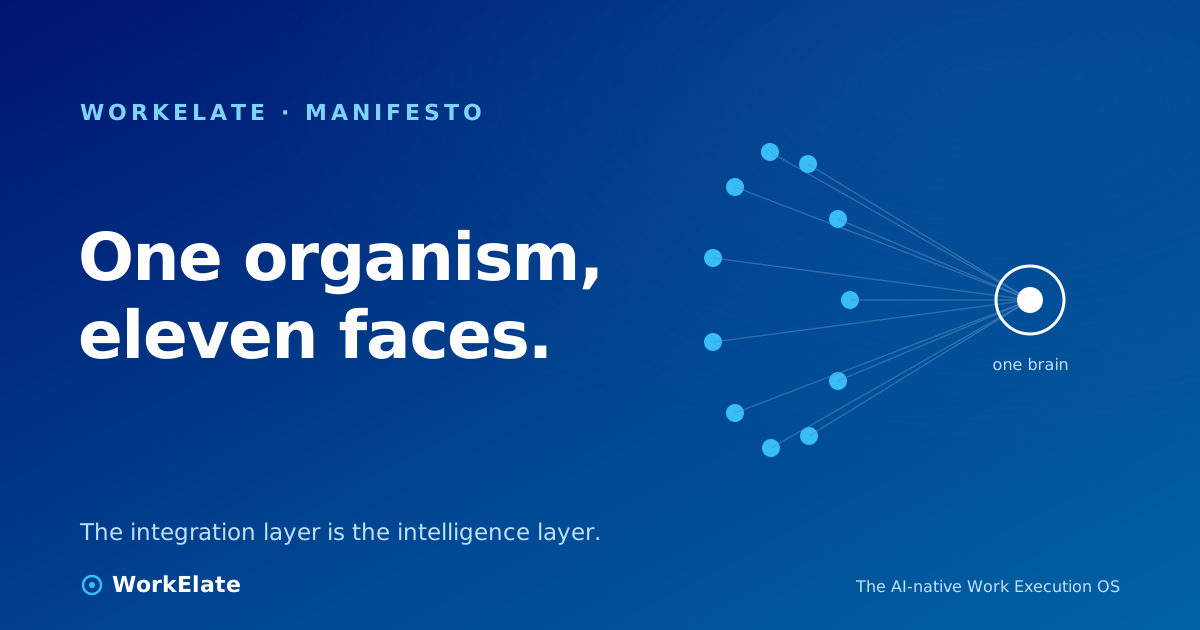
That is the thing worth staring at. The villain was never the number of apps. We ship eleven surfaces ourselves — hub, weMail, chat, data, docs, ppt, calendar, task, board, and form, plus the journey tile. The villain is disconnection: the work doesn't travel between the apps on its own, so a human has to be the courier. A suite doesn't kill that courier job. It just relocates it inside one interface and hopes you stop noticing.
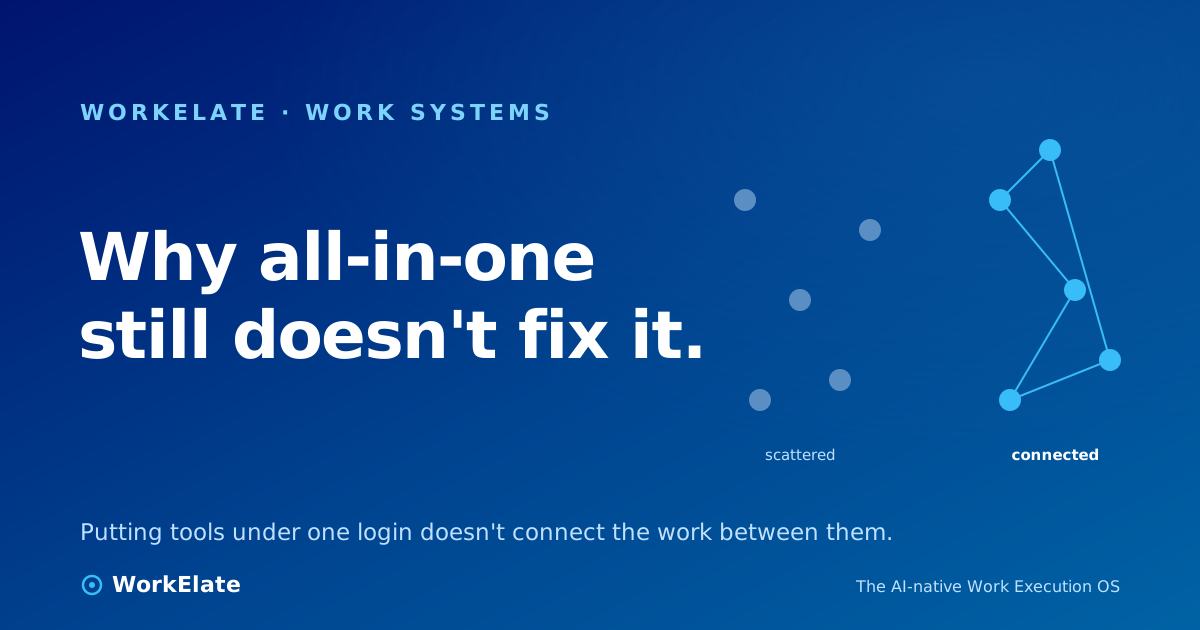
Here's the quiet assumption inside every all-in-one pitch: if everything lives in one database, context will somehow travel for free. It won't. Putting a chat message and a task in the same backend doesn't transfer the why from one to the other. When a conversation becomes a task, the reasoning behind it doesn't follow. When a form response needs action, the link to the rest of the account's story isn't drawn for you. Proximity puts the pieces near each other. It does not connect them. Connection is a job, and in a bundle that job still lands on a person.
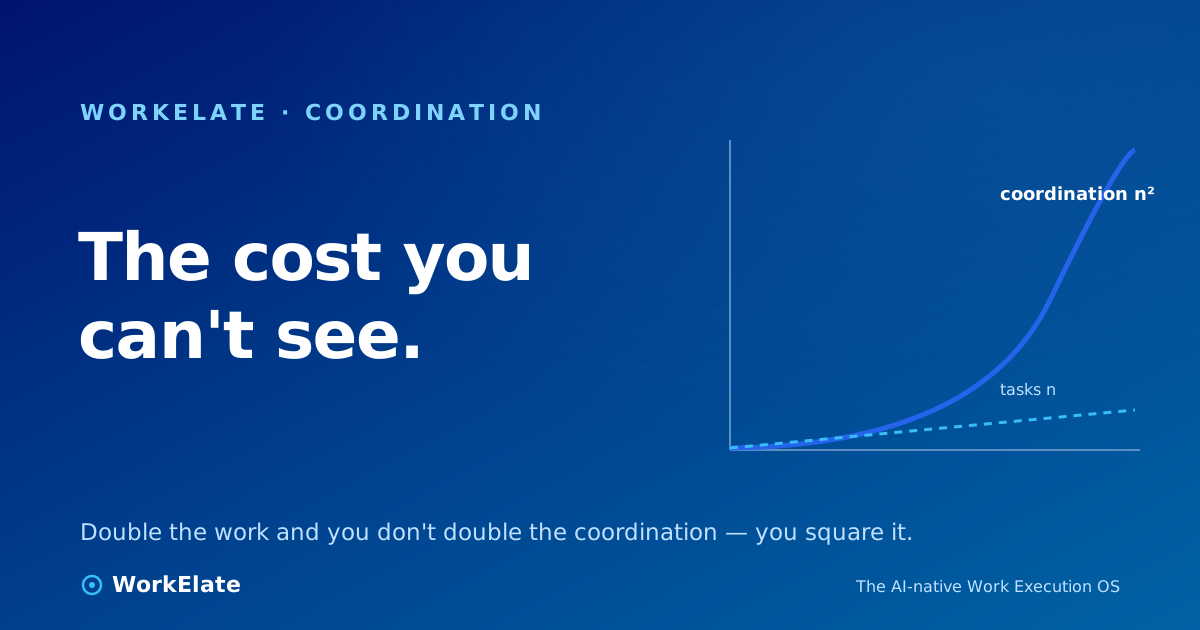
So the coordination tax — the manual notifying, the status you update in three places, the follow-up you have to remember — doesn't get eliminated by consolidation. It gets paid in one window instead of many. Same bill, nicer waiting room.
This is why the two answers the market keeps offering both miss. Best-of-breed maximizes capability and maximizes the disconnection — more tools, more seams to carry work across by hand. All-in-one minimizes the seams you can see and pretends the courier work went with them. Teams oscillate between the two forever because neither one is aimed at the real problem. (We pulled this apart in all-in-one vs disconnected tools.)
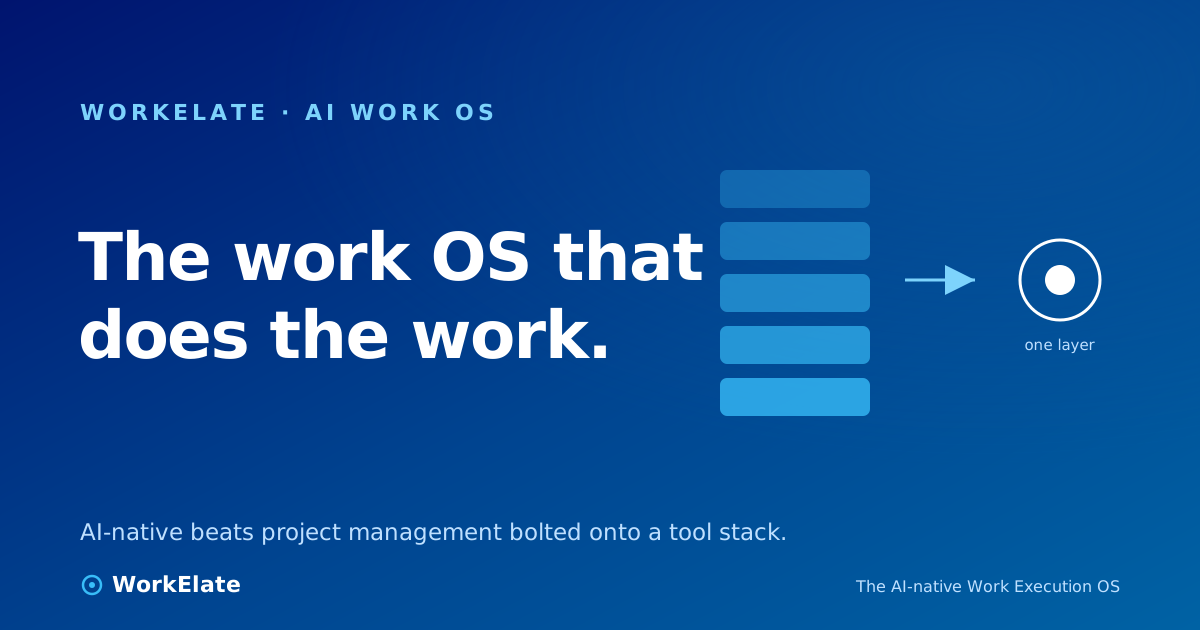
The fix isn't a bigger suite. It's a layer above your apps that reads and writes across all of them — a shared work-graph plus one brain.
Picture the work-graph as a single map keyed on the client or account, where the form response, the chat thread, the doc decision, the task, and the calendar event are nodes that know about each other. The reason most software can't do this is that it can only ever infer the connections by indexing after the fact, and even then it can only read. Because our apps emit the graph as the work happens, the brain above them can read it and write back into it — create the task, draft the reply, lock the slot, update the status. That's the line that matters: the integration layer is the intelligence layer.
WAO — the WorkElate AI Orchestrator — runs a cognitive loop over that graph: sense → recall → reason → decide → act (with a confirm before anything irreversible) → remember. The two stages that make it more than a chatbot are the ones most copilots skip: recall and remember. A copilot that forgets every conversation is a genius with amnesia. A brain that remembers your account's history is the part nobody can copy.
Run the product-feedback loop through it. A complaint lands in form with its full context attached. WAO reads the graph, sees which account and which open thread it belongs to, and routes it. The right people get pinged in chat with the context already attached, not a bare "see form." The decision gets written where decisions live in docs. A task appears on the board, and the status updates itself across every view that cares. The human who used to walk that thread across five modules by hand now reviews one summary and confirms. Same eleven apps. The courier job is gone — because something above the apps did the carrying.
That's also why this survives the way teams actually work now — async, distributed, people onboarding and offboarding constantly. A bundle demands everyone live the same way in the same window. A brain over the graph adapts to whoever's there and whatever they touched. Coordination, it turns out, is most of the cost of a task — more than the task itself — which is exactly the cost a connected graph takes off your people's plates.
▶ Watch on WorkElate One complaint, five apps, zero couriers — WAO carries the thread youtube.com/@WorkElate · videoId: TODO — swap when publishedThe next move in work software was never a bigger box with more modules in it. It's the layer that makes whatever apps you already have behave like one connected system. The whole industry has been quietly shifting from selling you tools to running the work between them.
So before you sign for the suite, ask the only question that decides whether anything actually changes: after the migration, who carries the work between the apps — your people, or the system?