The Shift
Tools Didn't Fail. The Gaps Between Them Did.
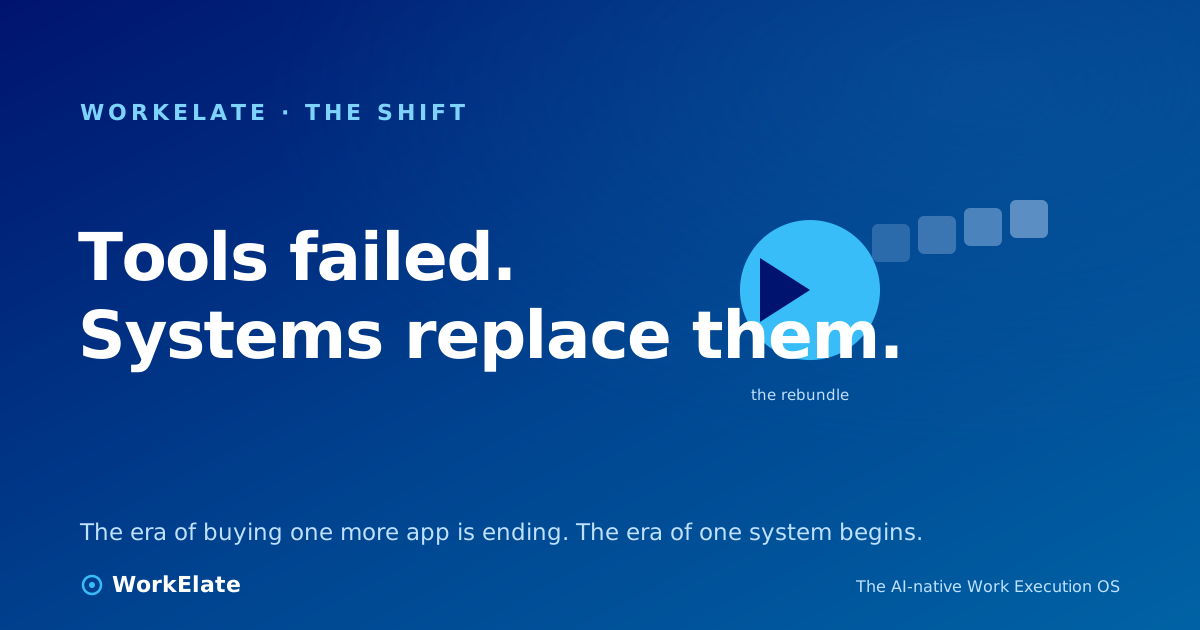
The era of buying one more tool is ending. Work systems — a shared work-graph plus one brain across every app — win not by having fewer tools, but by closing the gaps.
The era of buying one more tool is ending. Work systems — a shared work-graph plus one brain across every app — win not by having fewer tools, but by closing the gaps.
Count the tabs open on your team's screens right now. A project tracker. A chat app. A docs editor. A form builder. A whiteboard. A spreadsheet. A calendar. Each one was bought to make work easier, and each one, on its own terms, succeeded. The form builder builds excellent forms. The tracker tracks. None of them is the problem.
And yet the work still drags. Things stall on Friday afternoons. The same fact gets retyped into four apps. Your best account manager spends her morning not deepening a client relationship but routing information between six logins. So before we declare that tools "failed," let's be honest about what actually broke — because the easy story is wrong, and the wrong story sells you the wrong fix.
The easy story says you have too many tools. Consolidate, it whispers, and the pain disappears. It's comforting, and it's nonsense for any team doing real work.
Your designers want the design tool that's genuinely best at design. Your engineers want the tracker that fits how engineers think. Your finance lead has a spreadsheet they will defend with their life. Specialized tools exist because specialization is good. A team that picks the best tool for each job isn't being undisciplined — it's being good at its job.
Here's the test that proves tool count was never the enemy. Imagine your stack stayed exactly the same size — same apps, same logos — but the moment a client emailed, the right task updated itself, the relevant doc surfaced, the deadline landed on the right calendar, and the status everyone saw was actually true. Would you still feel the pain? You wouldn't. Same number of tools. Pain gone.
So the pain was never the tools. The pain lives in the gaps between them. Every handoff — form to task, chat to calendar, "wait, which doc is the latest" — is a place where work must be carried by hand. None of these is a fire. Retyping a date takes nine seconds. So nothing gets fixed, and the cost hides in the spaces between the line items on your budget. The villain isn't your toolbox. It's the disconnection.
The reflex now is to bolt an AI onto each app and call it solved. The evidence says otherwise. Microsoft shipped M365 Copilot with the best distribution in software history — and roughly 3.3% of M365 users pay for it. An AI feature stitched onto a suite built for humans doesn't convert, because it inherits the same blindness the suite already had: a copilot in your docs that has no idea what your calendar just learned is just a faster way to produce disconnected work.
The companies that built the real moat went the other way. Glean spent three quiet years — 2019 to 2022, before the LLM wave — building a permission-aware graph across the enterprise's apps. When ChatGPT detonated, that substrate was the thing nobody could conjure overnight, and the valuation ladder followed the graph, not the model. The lesson is the one nobody wants to hear because it's slow: the connection between the tools is the asset. The model is the easy part.
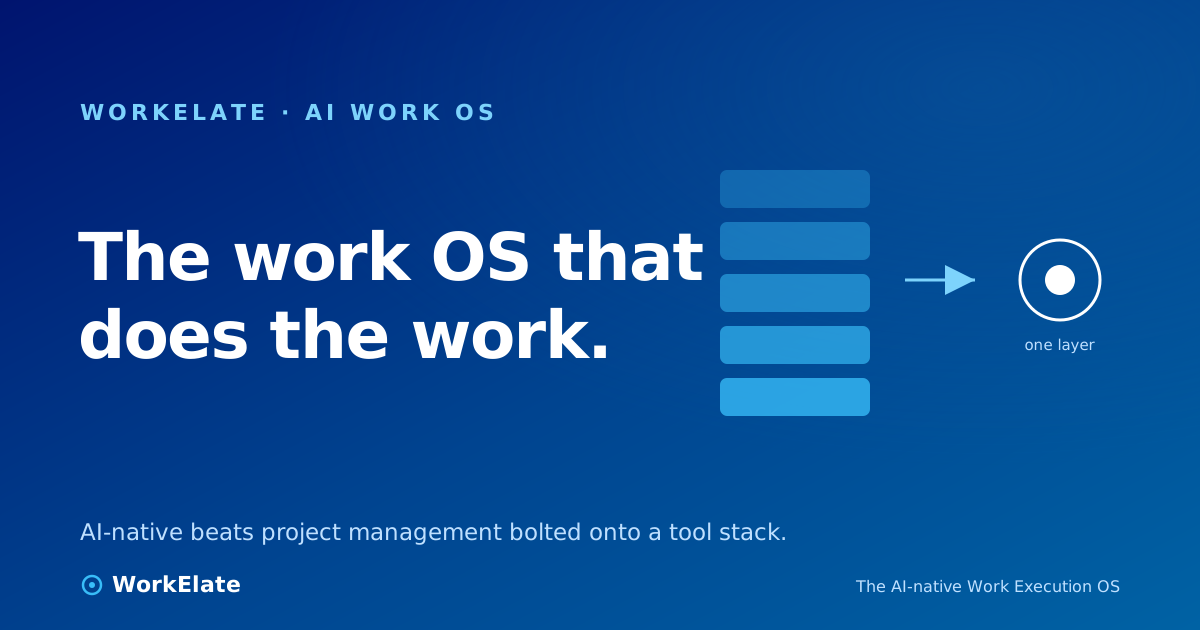
This is the shift, and it's a small sentence with a large meaning. A tool gives you features and asks you to remember. A work system gives you outcomes and remembers for you. The difference isn't a longer catalog of apps under one logo — a suite where the modules don't share a model of your work is just a tool stack with a single invoice. Eleven apps aren't more connected because they share a login screen.
A real work system has a shape, and it's worth being able to recognize it.
That last point is the one the industry keeps blurring: read versus act. Plenty of AI can now read across your stack — index it, answer questions, summarize. That's real and useful, but reading is observation. The integration layer was never an observation job; it's an action job. The work isn't carried until something actually creates the task, books the slot, sends the update. A system that owns the write-path — that can act across surfaces, not just describe them — is the only kind that takes the carrying off your team's plate. Everything else narrates the work you're still doing by hand.
A prospect fills out your intake form: "I need help, and I'd like to book a call this week."
In the tool-stack world, the form stores a submission. Someone has to notice it, decide it's real, open the task tool, open the calendar, email a time, and remember to follow up. Five surfaces, one human carrying the work, one real chance a step gets dropped because it's 5pm Friday.
In a connected system, the form is one surface that emits into the graph. The brain reads "book a call this week" as an intent and produces a real bookable scheduler — not a dead dropdown that captures a preference and locks nothing. It holds the slot, creates the task, surfaces context for whoever takes the call. You confirm what matters; the carrying is done. WorkElate's form app does exactly this today: "book my time" yields a genuine scheduler with tokenized cancel links, not a fake Calendly that books nothing. Same three apps as the tool-stack version — form, task, calendar. The only difference is whether the connection between them is a person or a system.
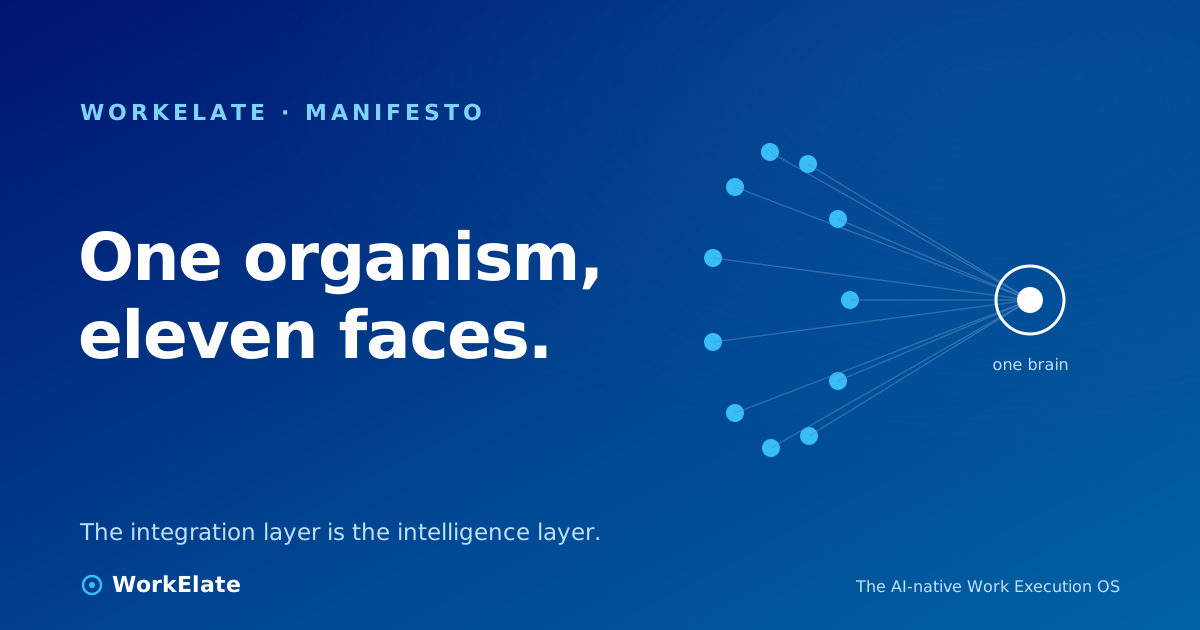
▶ Watch on WorkElate One intake form → a real scheduler, a task, and a held slot — no human in the middle youtube.com/@WorkElate · videoId: TODO — swap when publishedWorkElate is eleven surfaces — hub, weMail, chat, data, docs, ppt, calendar, task, board, journey, form — and we won't pretend each one out-polishes the single best standalone tool in its category. That's not the bet. The bet is the connection: all the surfaces emit into one cross-app work-graph, and one brain (WAO) reads the whole graph and can act back on any surface, with confirm gates on anything that matters. One AI drawer, one brain behind it, across every app — not eleven copilots, one.
We're not the only software that can read across your stack; claiming otherwise would fail diligence. What's rare is owning the surfaces and the write-path, so the brain can carry the work instead of narrating it. Most tools infer your work-graph and can only read it; we emit it and can write to it.
The era of buying one more tool to fix the last tool is closing. The next decade belongs to whoever owns the connection — the part of the work that lives between the apps, where your best people are quietly spending their day.
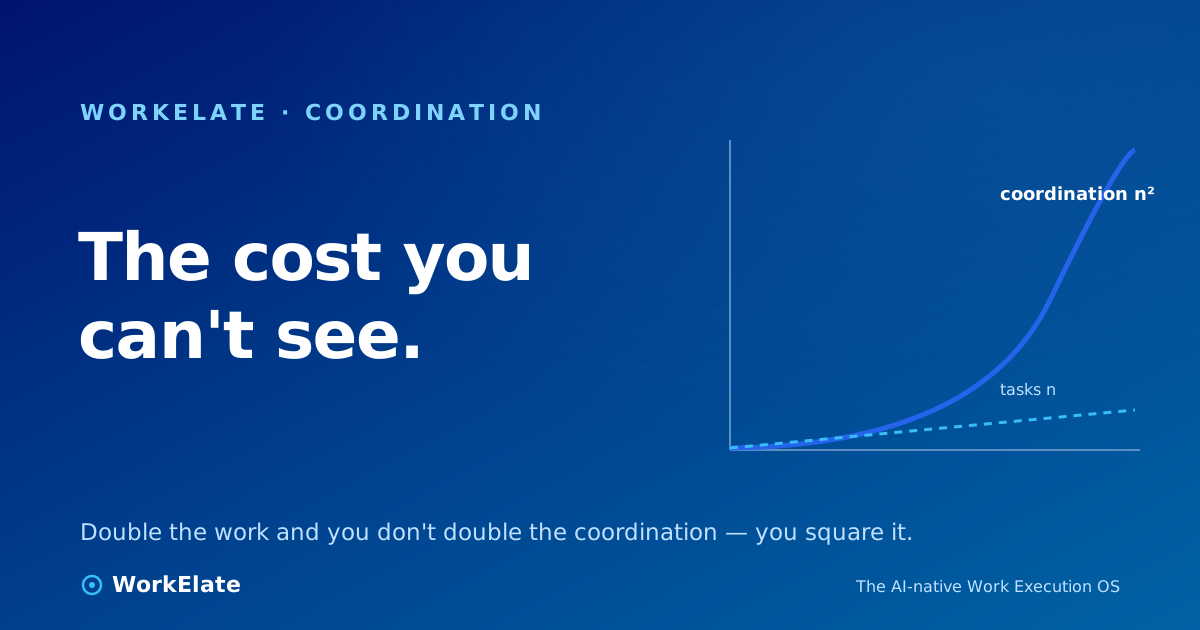
If you want the longer argument, it's the same one in why work systems are eating SaaS and why outcomes don't come from tools, they come from systems. For the dollar figure under all this, see the real cost of a task is coordination.