POV
The Invisible Tax Killing Modern Work
Open your finance dashboard right now and try to find the single most expensive thing your team does. You'll see headcount. You'll see the SaaS bill, line by line, down to the $12-a-seat tool nobody u
Open your finance dashboard right now and try to find the single most expensive thing your team does. You'll see headcount. You'll see the SaaS bill, line by line, down to the $12-a-seat tool nobody u
Open your finance dashboard right now and try to find the single most expensive thing your team does. You'll see headcount. You'll see the SaaS bill, line by line, down to the $12-a-seat tool nobody uses. You'll see contractor spend and cloud spend and the office lease. What you will not see — anywhere — is the line that costs you more than most of those combined: the hours your best people spend not doing their work, but coordinating it.
That line has no invoice. No vendor sends it. No tool tracks it. So it gets paid silently, every single day, by everyone, and it never gets questioned. Let's name the villain plainly: it's the coordination tax, and it is the most expensive thing on a P&L that no P&L has ever shown.
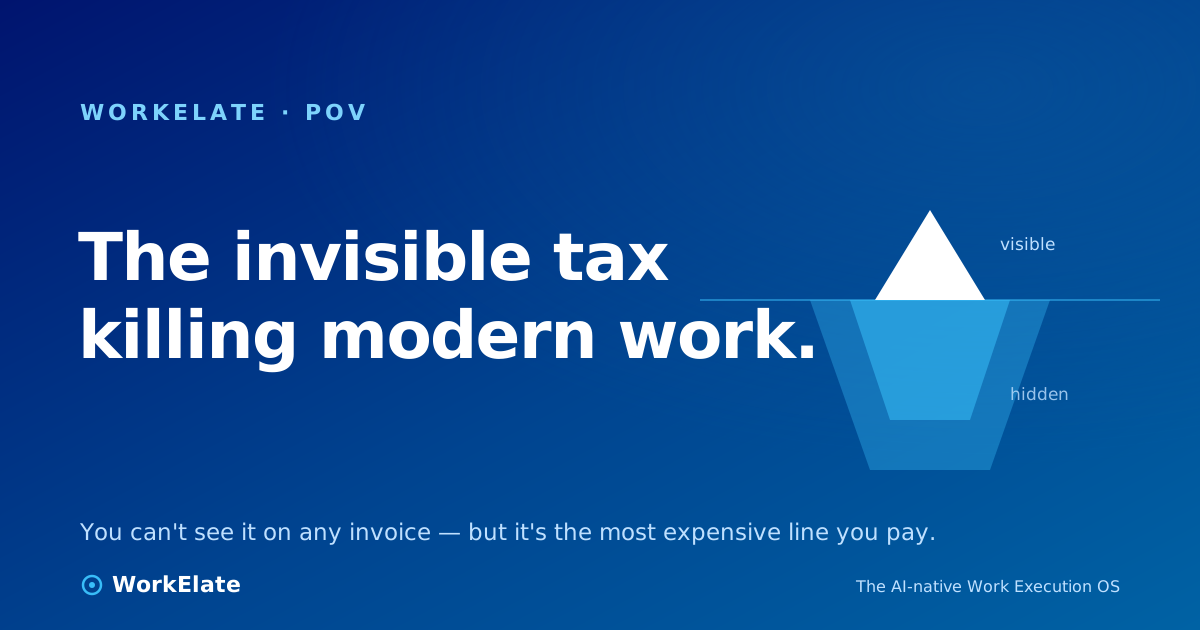
Picture the work your team does as an iceberg. Above the waterline is the visible part — the design that ships, the deal that closes, the feature that goes live, the report that lands. That's the work you hired for, the work you can point to, the work that shows up in a demo or a deck.
Below the waterline is everything that makes the visible work possible: someone noticing that an upstream task finished, gathering the context the next person needs, writing the status update, chasing the approval that's three days late, re-explaining a decision that was already made in a meeting last week, reconciling two people who unknowingly did the same task. None of it appears on a board. None of it has an estimate. And it's most of the mass.
The trap is that this submerged work feels like productivity. You're typing, you're in meetings, you're responsive, your Slack is green. But you're not moving work forward — you're maintaining the scaffolding that keeps fragmented work from collapsing. That's the tax. It looks like the job. It's the cost of the job not being connected.
Here's the part that makes the tax brutal instead of merely annoying: it doesn't grow with the size of your team. It grows with the connections between them.
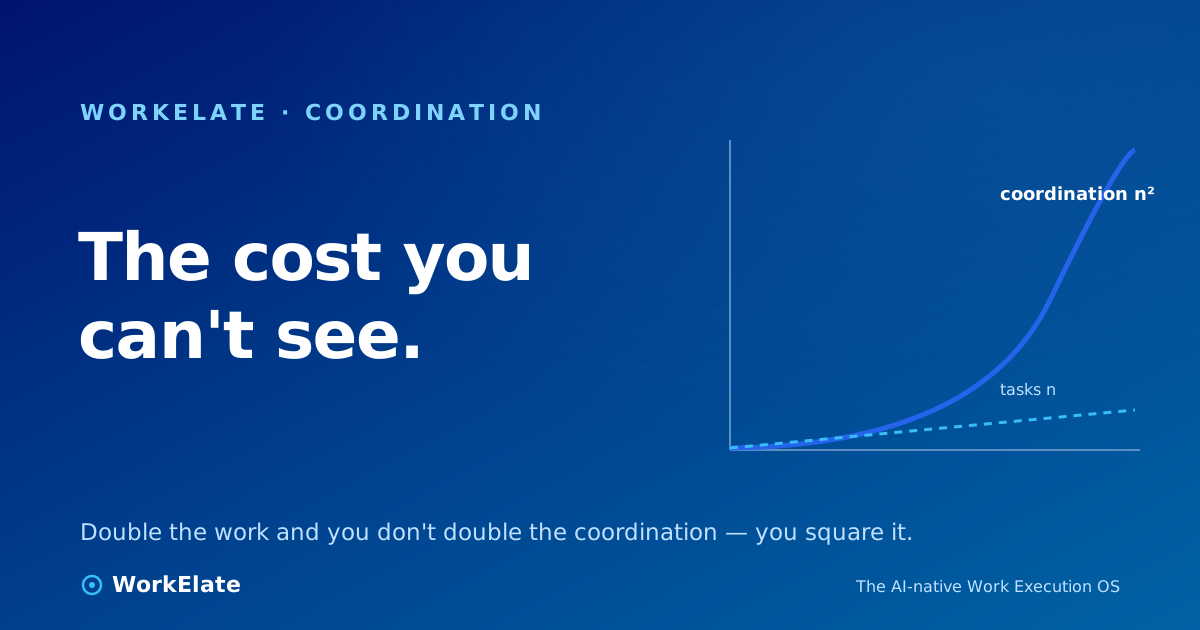
Add a tenth person and you don't add one new line of coordination — you add the lines between that person and the other nine. Coordination scales like n², not n. That's the math under the lived experience of "we doubled the team and somehow move slower." You didn't lose talent. You bought yourself a quadratic increase in the number of handoffs, status pings, and "wait, who owns this?" moments — and nobody priced it in.
Then layer on the switching cost. Every time work is scattered across seven tools, moving between them isn't free. The research that gets quoted — roughly 23 minutes to fully refocus after a single context switch — isn't about one bad distraction. It's structural. A normal task today is: check email for the update, jump to chat for the clarification, open the project tool to change a status, write the decision into a doc, create a follow-up task, ping the person who needs to act. That's not six actions. It's six recalibrations, each one a small withdrawal from the same account.
The standard answer to all this is "let's integrate our tools so they talk to each other." It feels like the cure. It isn't — and the distinction is the whole game.
Integration moves data between tools. Orchestration moves work forward. You can sync your calendar to your task manager, but that sync doesn't know that the meeting produced a decision, who needs to act on it, or what should happen next. You can pipe form responses into a spreadsheet, but the spreadsheet won't notice the one response that needs an urgent reply and route it to the right person. Integration spares you some manual data entry. It leaves the coordination — the noticing, the deciding, the routing, the chasing — entirely on your people. The tax survives integration completely intact.
That's the reason a connected stack still feels disconnected: the tools share data, but nothing reasons across them. The submerged part of the iceberg is exactly the part integration can't reach, because it was never about data at all — it was about judgment over the whole picture. (The real cost of a task is the coordination around it, not the task itself.)
Now imagine the coordination work didn't fall on humans. Imagine status was something the system already knew, because every app emitted what happened into one shared picture of the work — a cross-app work-graph keyed to the client and the account. Imagine an intelligence that sat above the whole stack, watched that graph, and did the glue work: noticed the finished task, gathered the context, drafted the handoff, flagged the at-risk client, surfaced the three things that genuinely need a human and quietly handled the two that don't.
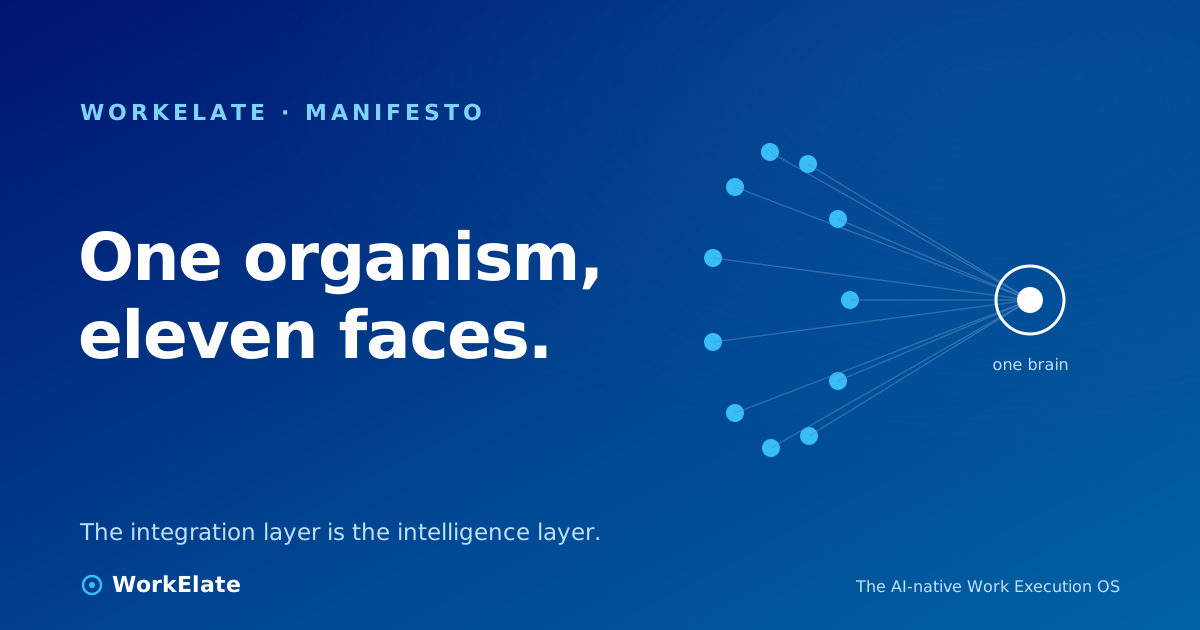
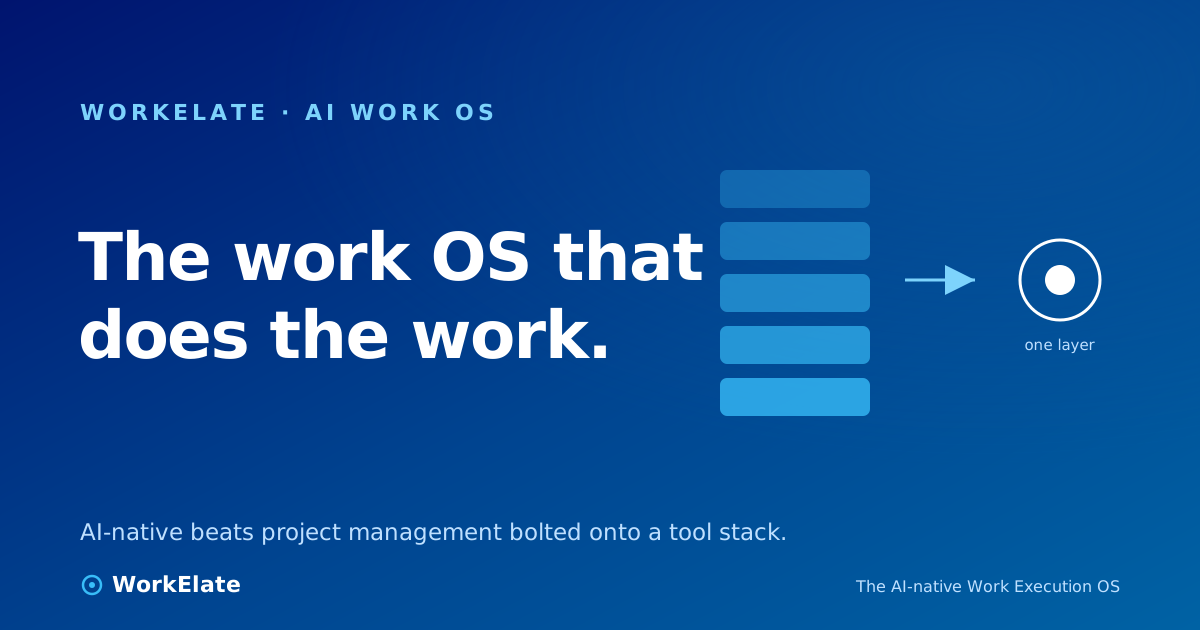
That's what WAO, WorkElate's orchestrator, is built to do — one brain across eleven apps, doing the coordination instead of asking your team to. Not by deleting the surfaces your people work in, but by reasoning across them so the submerged work stops landing on human shoulders. The tax doesn't get optimized. It gets moved off the people and onto the system that should have been carrying it all along. (This is why the day feels busy but goes nowhere — the busy is the tax.)
▶ Watch on WorkElate See WAO do the coordination across apps youtube.com/@WorkElate · videoId: TODO — swap when publishedSo here's the uncomfortable question to sit with. You measure software cost to the dollar and headcount to the head. You can tell me, instantly, what your most expensive tool is. Can you tell me what your coordination tax was last quarter — the hours your most expensive people spent being the glue instead of doing the work? If you can't even see the number, how confident are you that it's small?