There is a quiet lie at the center of how most of us were taught to work: write it down and you'll get it done. Capture the thought, clear the head, trust the list. From the paper inbox to the quick-a
WorkElate Team
May 26, 2026 · 8 min read
There is a quiet lie at the center of how most of us were taught to work: write it down and you'll get it done. Capture the thought, clear the head, trust the list. From the paper inbox to the quick-add box, an entire industry was built on that one promise.
It's a good promise for exactly one person on a calm Tuesday. It breaks the moment work becomes shared.
Because a captured task isn't work. It's a note about work. "Review Q1 projections" tells you nothing about which spreadsheet, who signs off, what decision waits on the answer, or where the reviewed numbers are supposed to land afterward. You wrote down the intent and left the entire path behind. And the path is where the doing actually happens.
A list grows in a straight line. Coordination doesn't.
Here is the part nobody warns you about. One person can ride a list of twenty items, because the missing context lives in your own head — you already know which file, which person, which next step. The list is a memory aid for a system of one.
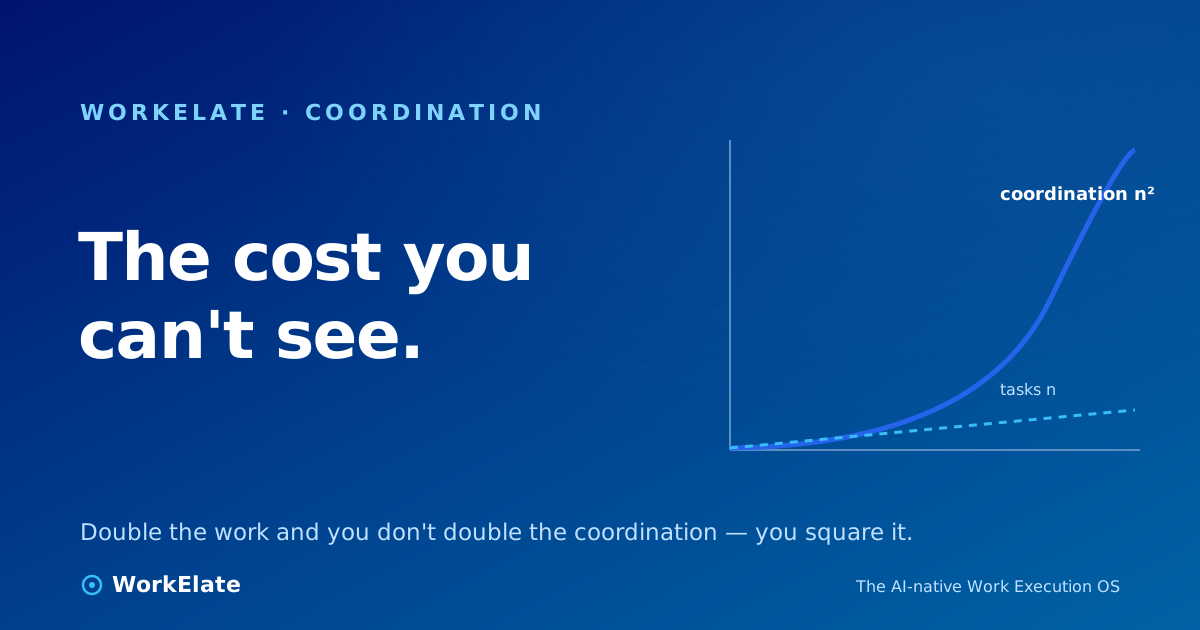
Now make it a team of ten with two hundred items. The context that used to live in one head now has to travel between heads, and that's a different physics entirely. Your task count grew by a factor of ten. The number of handoffs, dependencies, and "wait, who owns this?" moments grew far faster than that — coordination scales closer to the square of the people involved, not the line. The list got longer. The execution got slower. You felt busier and shipped less.
n²how coordination cost scales as a team grows — not n
~23 minto fully refocus after one context switch to "find the file"
1the number of people a capture-first list actually scales to
This is why "we just need to be more organized" keeps failing. A neater list is a faster way to enumerate the work. It does nothing for the gap between the items — the handoff from the spreadsheet to the reviewer to the client, the place where momentum quietly leaks out. You can have an immaculate board and ship nothing, because the board was never the bottleneck. The coordination around it was. (The real cost of a task is coordination.)
Capture asks you to remember. Flow asks the system to carry.
So consider the opposite of capture.
Capture is static. You record an intent and then you, the human, become the engine that moves it — you remember to notify the reviewer, you go find the right file, you switch tools, you re-explain the why that was obvious in the planning room and gone by the time anyone opens the task. Mark a task "done" in a classic task tool and watch what happens in your inbox, your spreadsheet, your calendar: nothing. The completion is a checkbox, not an event. The next step still waits on a person.
Flow is the inverse. In a flow, the work itself carries its context forward across the seam between one app and the next. When the design is finished, the finished thing doesn't sit in a folder waiting to be noticed — the handoff surfaces, with the brief and the priority attached, and moves toward the person who's next. The why travels with the what. Nobody re-asks. Nobody re-explains. The expensive human act of "stitching the tools together by hand" stops being a job.
THE POINT
A longer list is not more progress. It's more things waiting on you to move them.
Capture scales to one person. Execution flow — work that carries its own context across apps — is what scales to a team.
Why this needed AI — and why most "AI features" miss it
For most of computing history, software could store a plan but never advance one. It kept the board, the doc, the ticket, and then waited. Every app was a beautifully designed place to write intent down — and not one of them could act on it. The capture trap was baked into the tools themselves.
What changed is that an AI can now do two things software never could at the same time: understand what a task actually needs, and see the work across every app instead of trapped inside one. That combination is what makes flow possible — not a smarter to-do list, but a reasoning layer that sits above the apps and watches the whole arc.
The honest catch is that most of the market took the wrong fork. An assistant that drafts a summary or suggests a next step is still leaving the doing to you. It made you a faster planner, not a freer executor — capture with better autocomplete. The thing that actually closes the gap is AI that takes the action and carries the handoff, not one that hands the work back.
And the reason it has to be careful about that is trust. You will not hand the wheel to a system you can't watch. So the action is governed: suggest → confirm → execute. WorkElate's one brain — WAO — proposes the move and shows the context behind it; you approve; then it moves the work across the seam with the why intact. Visible enough to trust, automatic enough to matter.
01
Capture is a note
"Review Q1 projections" records intent and leaves the path — file, owner, next step — behind.
02
The list scales to one
Twenty items work in your head. Two hundred across a team turns every handoff into a wait.
03
Flow carries context
The handoff surfaces with the brief attached and moves to who's next. Nobody re-asks.
04
One brain, above the apps
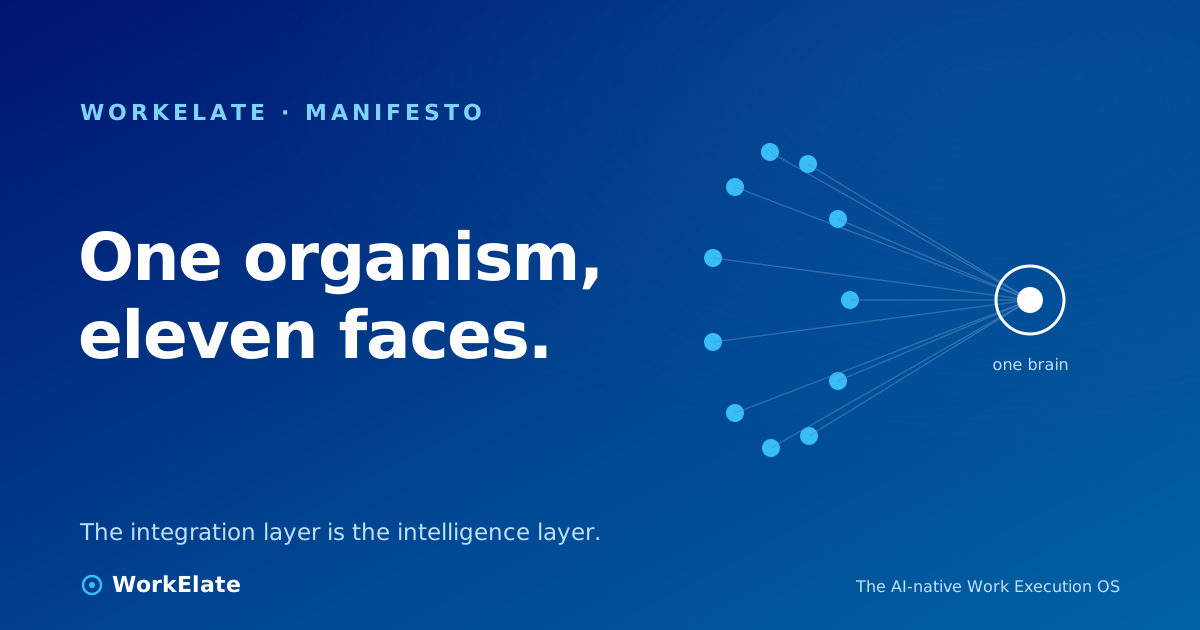
WAO reasons over the whole work-graph and moves work across apps — on your confirm.
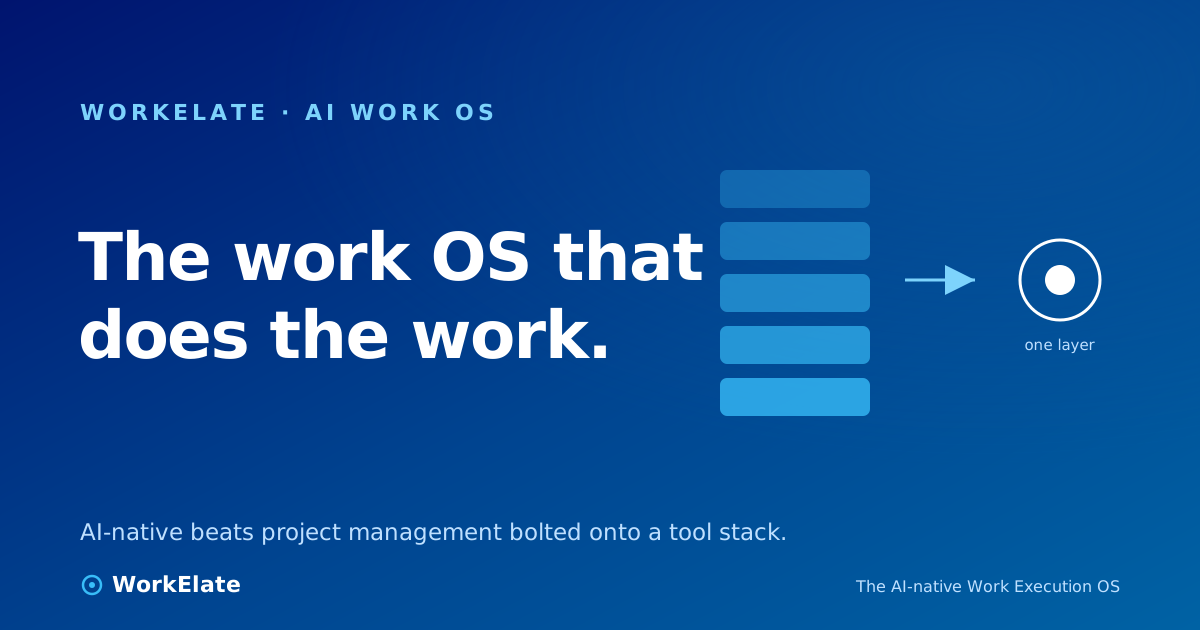
This is the shape of WorkElate: not a planning tool and not a task manager, but one brain reasoning over your work across every app. When a blocker appears, it routes the blocker to whoever can clear it instead of letting it sleep until the next standup. The coordination that used to live in the gap — and quietly kill the work — becomes something the system does, not something a person does after hours.
A bigger list pretends to be progress. It feels like progress — every captured item is a tiny hit of "I won't forget this now." But a list of two hundred things waiting on humans to move them is not a team that's executing. It's a team that's well-organized about its own backlog.
What actually scales is the opposite of capture: work that doesn't wait to be moved. Every handoff that carries its own context is one less place momentum leaks out, and that advantage compounds with the size of the team rather than collapsing under it. That's the whole reframe — execution was never optional decoration on top of the plan; it's the only part that compounds. (Execution isn't optional — it's the only thing that matters.)
So before you add another tool to capture more tasks, sit with the harder question. If your list got twice as long tomorrow, would twice as much finish — or would you just have twice as many things waiting on you to push them across the gap?