POV
Prioritization Is a Coordination Mechanism
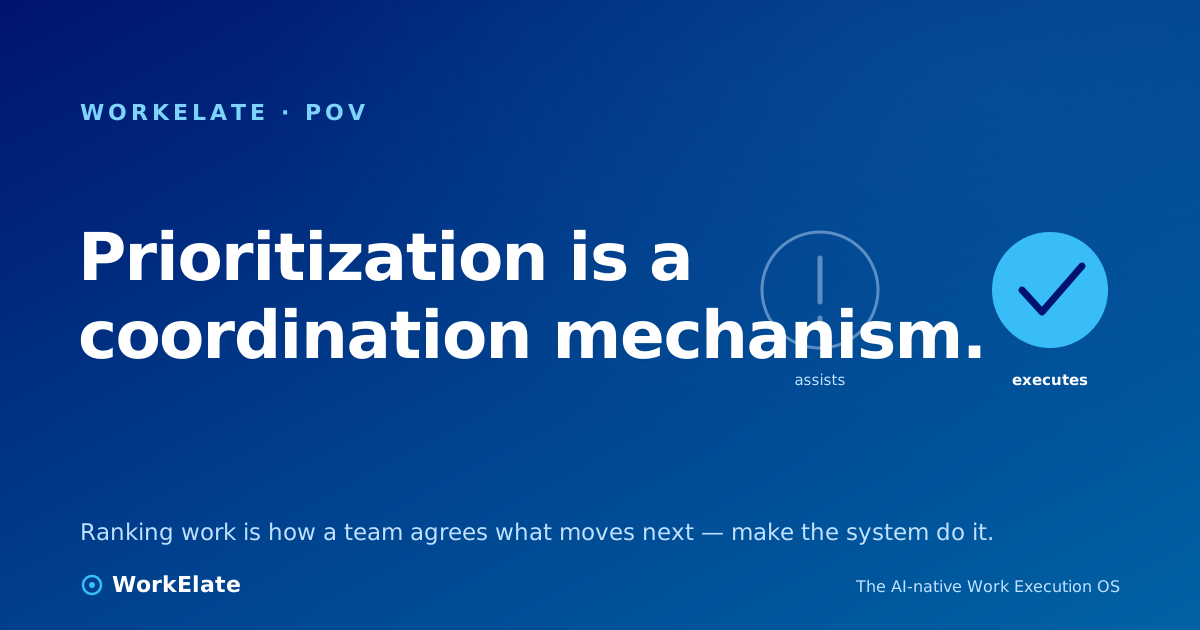
Prioritization isn't a personal productivity trick. It's how a team agrees what moves next — and when the system holds that answer, people stop re-litigating it in every channel.
Prioritization isn't a personal productivity trick. It's how a team agrees what moves next — and when the system holds that answer, people stop re-litigating it in every channel.
Most prioritization advice is written for one person. Rank your tasks. Eat the frog. Pick your big three. It assumes the hard part is choosing what's important — that if you just had a cleaner list, the day would sort itself out.
But you don't work alone. The moment a second person can pick up the same work, prioritization stops being about importance and starts being about agreement: who does what, in what order, before whom. That's not a productivity trick. It's a coordination mechanism — the thing that lets five people move on the same client without colliding.
Watch where the time actually goes and you'll see it. The cost of unclear priority isn't a sub-optimal list. It's the standup that re-decides yesterday's order. The thread where two people quietly worked the same ticket. The "wait, is this still the priority?" that pings four channels and pulls in the lead. When nobody trusts what moves next, everybody negotiates it — over and over, in every surface they own.
A team can rank its work once and be wrong, and survive. What it can't survive is re-ranking constantly because the answer never stays put. Priority changes — a client escalates, a dependency slips — and the new order lives in one person's head until they manually re-broadcast it. By the time it reaches the card, the thread, and the doc, the people downstream have already started on the old plan.
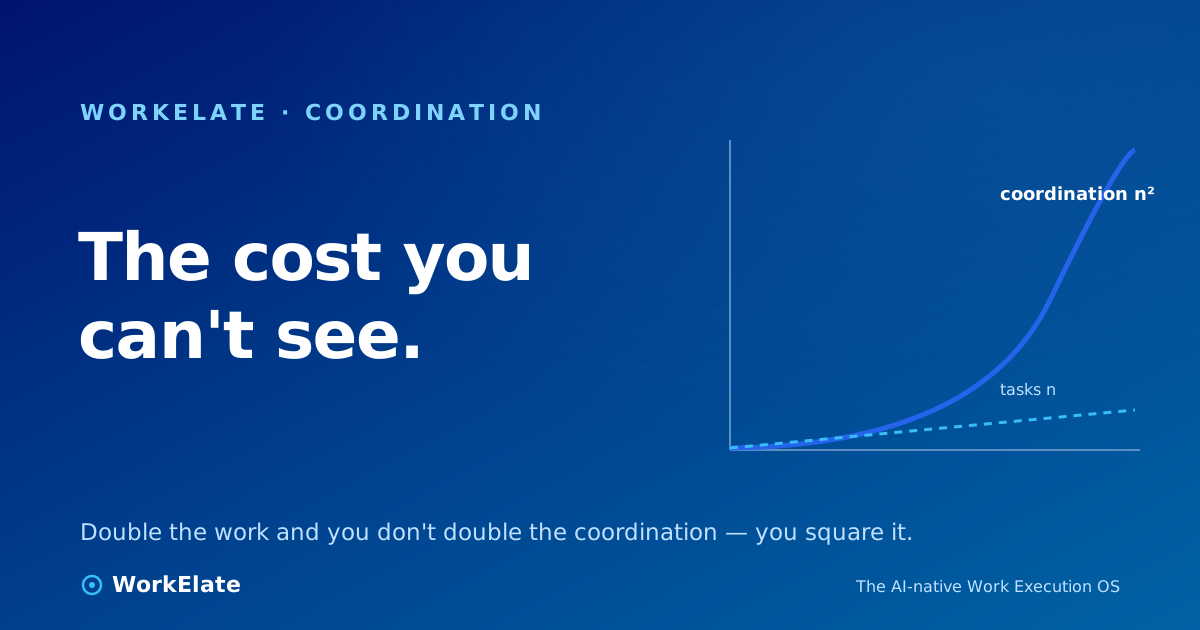
That's the real cost of a task: the coordination around it, not the doing of it. Every priority that has to be re-explained by a human is a small tax, paid in your best people's attention, every time it shifts. The list was never the bottleneck. The propagation was.
The fix isn't a better ranking ritual. It's making priority something the work holds and broadcasts on its own — so the next action is just there, the same for everyone, without a meeting to confirm it. When ownership is unambiguous, the "who's on this?" lap disappears. When a dependency slips, the work it was blocking re-sorts itself instead of waiting for someone to notice. This is deciding over endlessly aligning: the order is set once, in the open, and the system keeps it true.
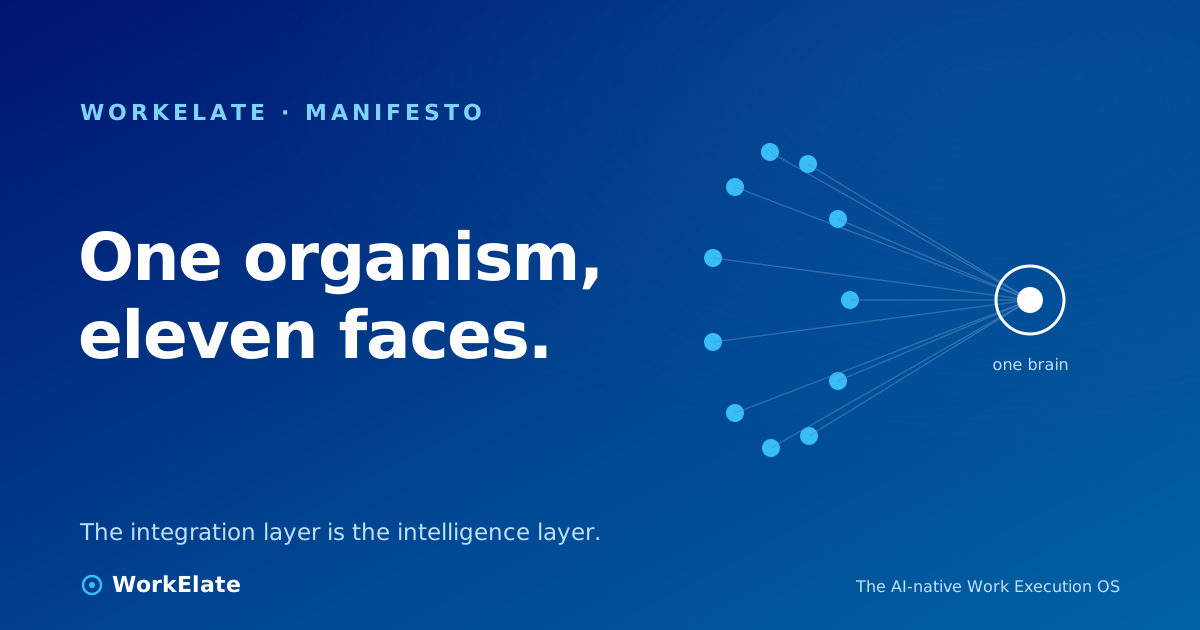
WorkElate keeps that order in the cross-app work-graph — the live object that knows this card blocks that one, this client escalated, this is ready and that is stalled. Because the graph holds the connections, priority propagates the moment it changes; nobody has to walk it from tool to tool. The alternative is the status quo most teams live in, where keeping everyone pointed at the same next-thing is a full-time job nobody was hired for — the quiet, endless work of manual status updates as coordination theater.
▶ Watch on WorkElate See priority propagate the moment it changes — across every app youtube.com/@WorkElate · videoId: TODO — swap when publishedSo the question isn't whether your team can prioritize. Most teams can rank a list in five minutes. The question is what happens in the next hour, when the order changes and nobody updates the four places it lives. If your priorities only stay true in the meeting where you set them, you don't have a prioritization problem. You have a coordination one.