POV
Decisions Over Alignment
Count the meetings on your calendar that exist to "get aligned." Now count the ones where a decision actually got made — written down, owned, and shipped. For most teams the first number dwarfs the se
Count the meetings on your calendar that exist to "get aligned." Now count the ones where a decision actually got made — written down, owned, and shipped. For most teams the first number dwarfs the se
Count the meetings on your calendar that exist to "get aligned." Now count the ones where a decision actually got made — written down, owned, and shipped. For most teams the first number dwarfs the second. That gap is the whole problem.
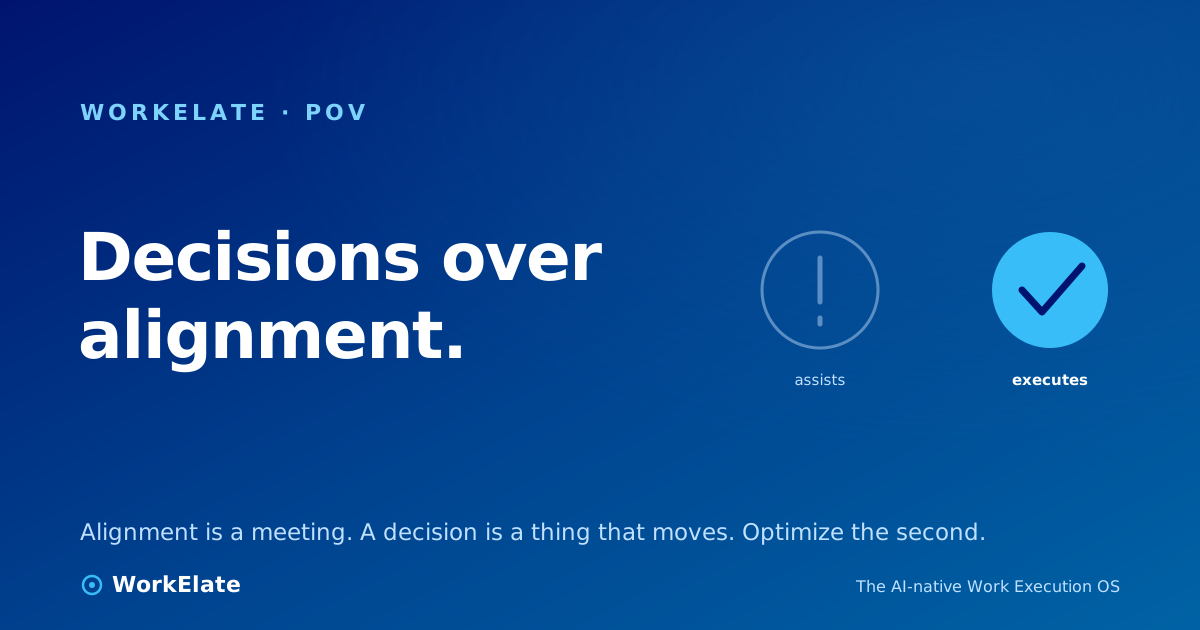
Alignment is a meeting. A decision is a thing that moves.
We've quietly agreed to treat them as the same. They are not. Alignment is the warm feeling that everyone is on the same page. A decision is a commitment with a name attached and a date it takes effect. One can be performed for an hour and leave the work exactly where it was. The other changes what happens next.
Here's the trap. Alignment feels like progress because it looks like collaboration. So teams keep buying more of it — another sync, another stakeholder, another round to make sure no one's surprised. And every extra voice in the room makes the decision slower, softer, and harder to trace. You end up with a choice nobody loves but everyone has agreed not to object to. That isn't a decision. It's a hostage negotiation that everyone calls consensus.
The fix isn't "decide faster and skip the people." It's noticing which kind of door you're standing in front of.
A few decisions are one-way doors — strategy, who you hire, what you'll never do. Those are hard to reverse and they genuinely deserve the room. But most work decisions are two-way doors. Which template. Which owner. Ship Tuesday or Thursday. These are reversible, testable, and cheap to correct. They don't need everyone's input. They need someone to choose and the choice to be visible. Treating a two-way door like a one-way door is how a team turns a five-minute call into a five-day thread.
And the slow part was never the deciding. It was the propagating. Once a call is made, someone has to tell everyone, update the board, repeat it in the next standup, and re-explain it to the person who missed the thread. That relay is where decisions go stale and where "I didn't know we changed that" is born. Most of what we call an alignment problem is really a propagation problem wearing a costume.
So shrink the relay. When a decision is made, the moment it's made, it should already be visible — what was decided, by whom, and why — without a human producing a single status update. That's the difference between a team that aligns through meetings and one that stays aligned through transparency. The system informs everyone because the decision was recorded, not because someone spent their afternoon broadcasting it.
This is the part WorkElate is built around. A call made in one app is captured with its context and carried across the others, so the "did everyone hear?" tax mostly disappears. You stop spending your best people on the relay. You spend the meeting on the one genuinely irreversible door — and let the system carry the ninety reversible ones.
▶ Watch on WorkElate See a decision propagate across apps — no status update typed youtube.com/@WorkElate · videoId: TODO — swap when publishedThe next time someone books a meeting to "align," ask one question: are we deciding something here, or just confirming that we still agree to wait? If it's the second one, the meeting isn't the work. The decision is.
Related reading: Meetings about work aren't work · The real cost of a task is coordination · Manual status updates are coordination theater.