POV
From Productivity Hacks to Productive Work
Productivity hacks optimize the busywork. Productive work removes it. The real lever isn't a better to-do ritual — it's the work moving itself.
Productivity hacks optimize the busywork. Productive work removes it. The real lever isn't a better to-do ritual — it's the work moving itself.
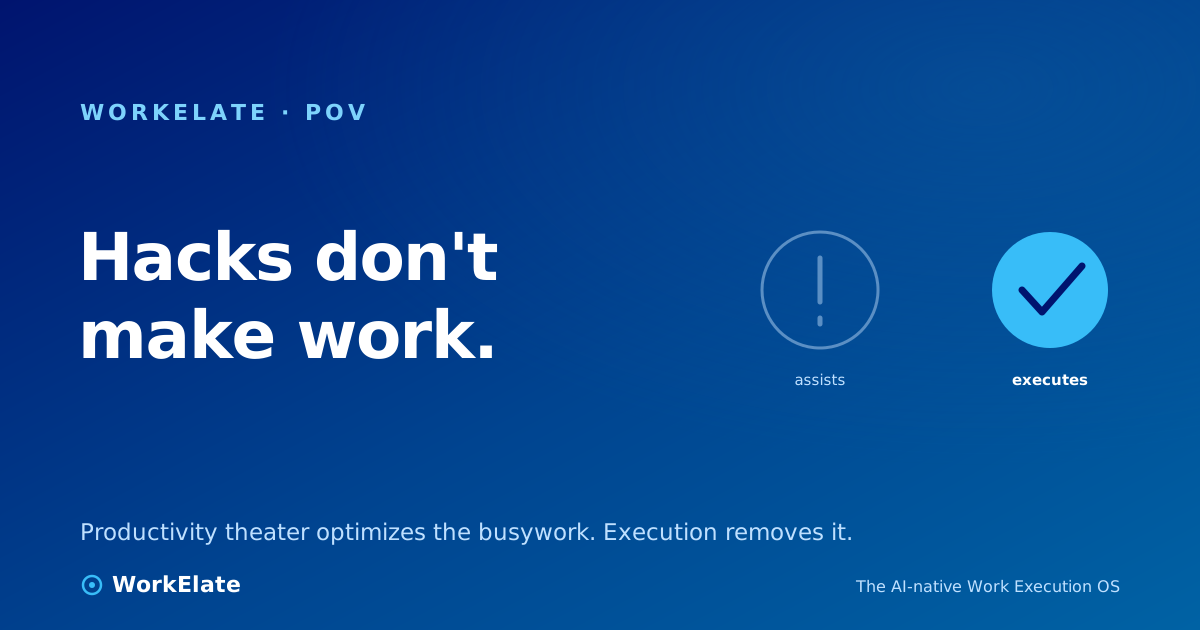
A productivity hack is a faster way to do work you shouldn't be doing at all.
Read that again, because it's the whole argument. The keyboard shortcut, the color-coded calendar, the Notion template you spent a Sunday building — each one makes a piece of busywork quicker. None of them ask the only question that matters: why is this busywork on your plate in the first place?
We've all bought the premise. Block your time. Batch your email. Master the two-minute rule. The promise is that if you optimize the inputs hard enough, output takes care of itself. And for a week, it kind of works. Then Slack pings during your deep-work block, the Zapier flow breaks and makes more cleanup than it saved, and you quietly fall back to chaos — with one more system to maintain.
You didn't fail the hack. The hack was solving the wrong problem.
Most of your day isn't the work. It's the connecting of the work.
You read a form response and decide it matters. You open a board and make a card. You ping the right person and paste in the context they're missing. You go back and mark the first thing done. That sequence — the reading, the deciding, the routing, the relaying — is the actual content of a modern knowledge worker's afternoon. And not one productivity hack addresses it, because every hack lives inside a single tool, while this work lives between them.
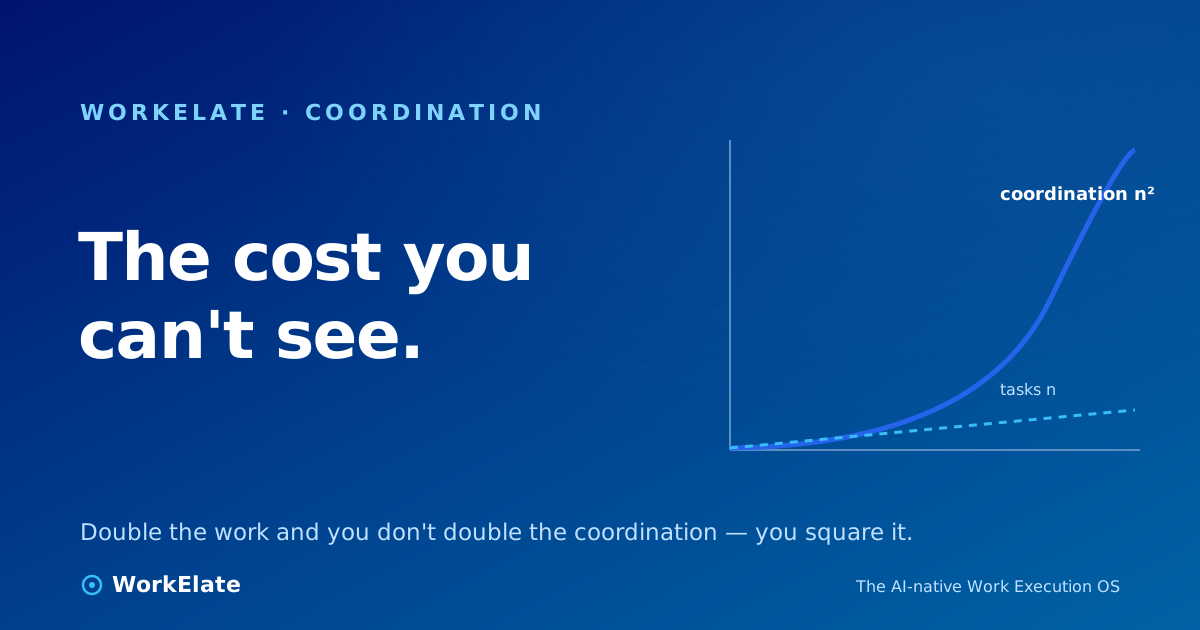
This is the coordination tax. It's the gap between the apps, paid in your attention, and it's the most expensive line item nobody puts on a budget.
Hacks fail at the thing that matters for three plain reasons.
They're personal; the problem is shared. A perfect template organizes your tasks. It does nothing for the moment your work hands off to a teammate — when the why has to be re-typed, re-linked, or simply lost. The instant work crosses a person, the optimization stops at the border.
They add load instead of removing it. Every hack is a new thing to remember and maintain. Use this routine. Check this dashboard. Apply this method. Stack enough of them and you're managing your productivity system more than you're producing anything.
They treat symptoms. The real issue isn't that you need sharper task management. It's that your work is scattered across disconnected surfaces, and a person is forced to be the wiring between them. You cannot template your way out of that. The problem isn't tactical. It's structural.
Here's the reframe. Stop optimizing how you push work through fragmented tools. Change what does the pushing.
Productive work isn't doing more, faster. It's a system that carries the connecting load you carry today — that routes the next step to the right owner with the context already attached, surfaces what needs you without you searching for it, and remembers what just happened so nobody re-pastes the backstory at every boundary. Your job stops being "operate the tools." It becomes "do the work only a human can."
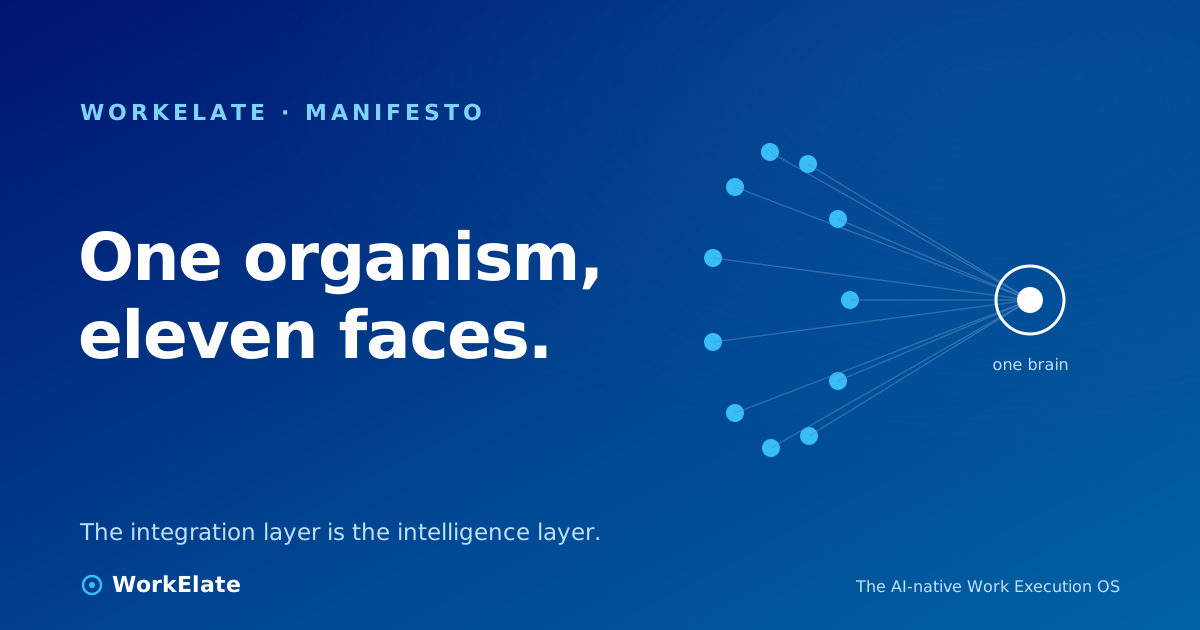
This isn't a motivational abstraction. At WorkElate it has a shape. Every app emits what happens into one live map — the cross-app work-graph, keyed on the client or project a thing belongs to. And one orchestrating intelligence, WAO, reads that map and acts on it, running a loop with two stages most assistants skip: it recalls what's already known and remembers what it just did. Sense, recall, reason, decide, act, remember. The recall-and-remember bookends are exactly why context stops being something a person re-types — the system holds it by default.
One concrete proof, not a slide: in WorkElate's form app, a "book my time" request doesn't produce a dead dropdown for someone to chase later. It produces a genuinely bookable scheduler — a slot that locks, an event that lands on the calendar, a link that can be cancelled — and it emits that into the work-graph so the rest of the system knows the booking happened. The form didn't just collect data. The work took its own next step, and the system remembered it did.
That's the line between a hack and a system. A hack speeds up one keystroke. A system removes the relay between every step.
The honest part: this isn't "set it and forget it." The moves that touch a client, or money, or anything you can't take back still pause for a human to confirm. Suggest, confirm, execute. What disappears isn't your judgment or your oversight — it's the manual courier work running between every decision. The routine relay goes; the deciding stays exactly where it belongs.
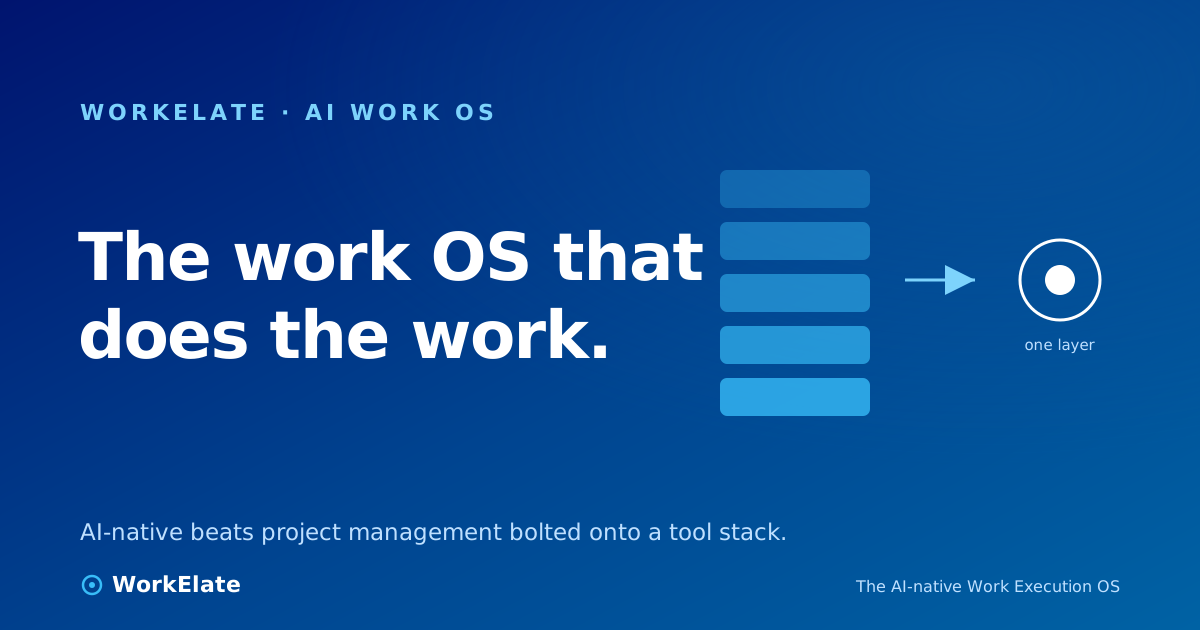
And nothing gets ripped out. You keep the surfaces your team already likes. What changes is that they stop being islands you personally connect and start emitting into one graph a single brain can read and write. The coordination tax comes off the table. The tools stay on it.
▶ Watch on WorkElate See work take its own next step across apps youtube.com/@WorkElate · videoId: TODO — swap when publishedHacks will always have a place for a quick personal win. But you cannot hack your way out of a system that makes a human do the connecting. The future isn't a sharper routine. It's a system that doesn't need one — because it was built for the work to flow, not for you to push it.
So here's the question worth sitting still with. If you stopped optimizing your busywork and instead made it move on its own — what would your best hour of the day actually go to?
Related reading: