The Shift
From Desktop to Cloud to AI: The Evolution of Productivity Suites
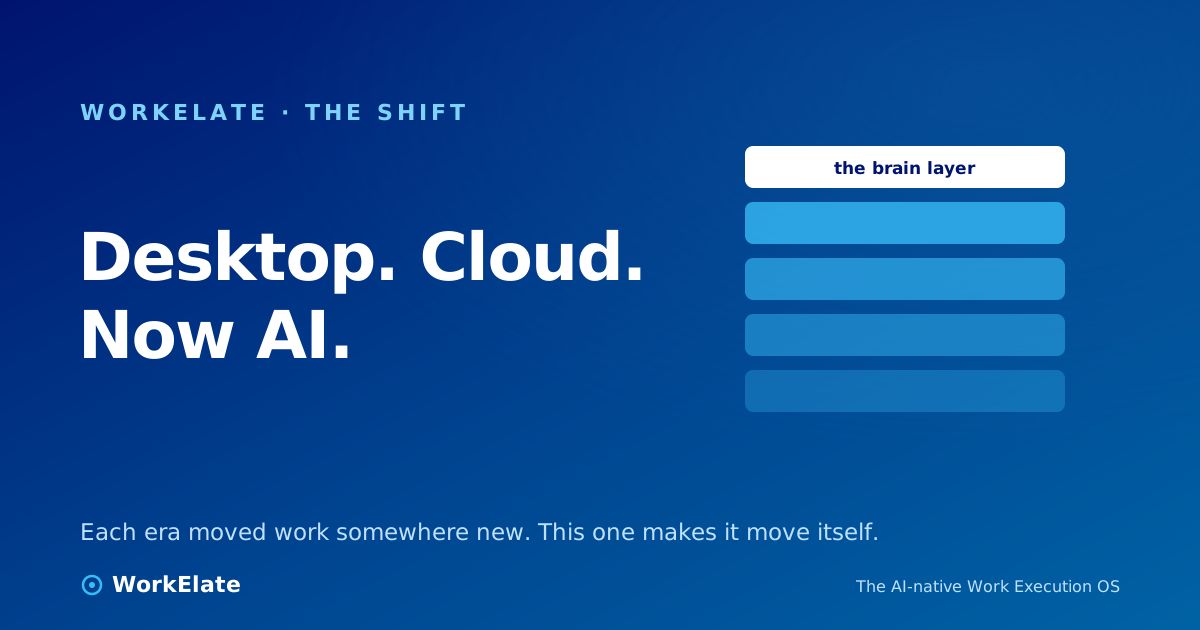
Productivity suites evolved desktop → cloud → AI. Each era moved work somewhere new. The AI era is the first where work moves itself — across the graph, by one brain.
Productivity suites evolved desktop → cloud → AI. Each era moved work somewhere new. The AI era is the first where work moves itself — across the graph, by one brain.
In 2004, Gmail shipped. By any reasonable measure, Google then owned the most connected set of work apps on the planet — mail, docs, sheets, calendar, drive, chat, all under one login, all storing the same company's work. And yet it took Google roughly fourteen years before any of those apps could reason across the others. Only in the 2024–2026 stretch did Gemini begin to pull context across Gmail, Chat, and Drive at the same time — to answer a question in your inbox using a file in your Drive and a thread in your Chat.
Sit with that number. Fourteen years, same company, same login, same data — and the apps still could not think together. That is not a story about Google being slow. It is a story about the shape of productivity software, and how hard each era is to escape once you're built for it.
Because productivity suites have evolved in three acts, and the interesting thing is not that the tools got better. It is where the work moved each time.
The desktop era moved work onto the machine. The cloud era moved work into a shared place. Both were enormous shifts. But notice what they had in common: in both, the human was still the thing that moved the work. You opened the file. You shared the doc. You copied the number from the spreadsheet into the deck, pasted the deadline into the calendar, told three people in chat. The software changed where the work lived. It never changed who carried it from one app to the next.
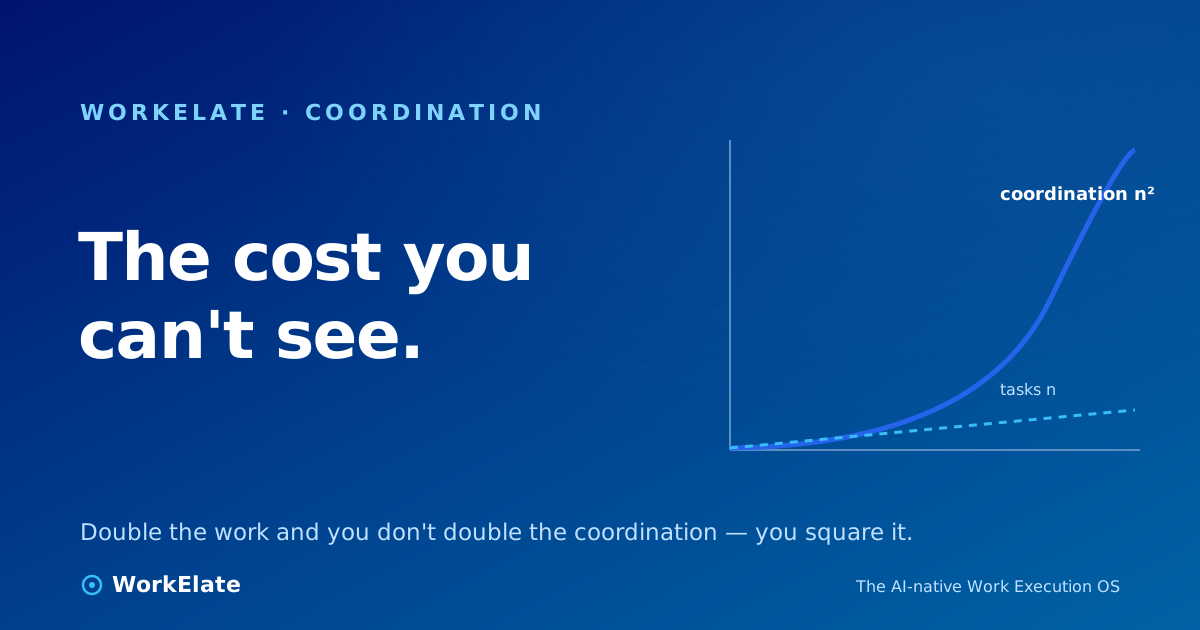
That carrying — the copying, pasting, status-updating, cross-referencing, reminding — is the coordination tax. And for thirty years, no era touched it, because no era was built to.
The obvious move, when AI arrived, was to bolt it onto the suite you already had. Microsoft did exactly that with Copilot — GA in late 2023, the best distribution in software, sitting inside Word and Excel and Teams. And here is the number that should stop a strategy meeting cold: as of early 2026, only about 3.3% of Microsoft 365 users pay for Copilot.
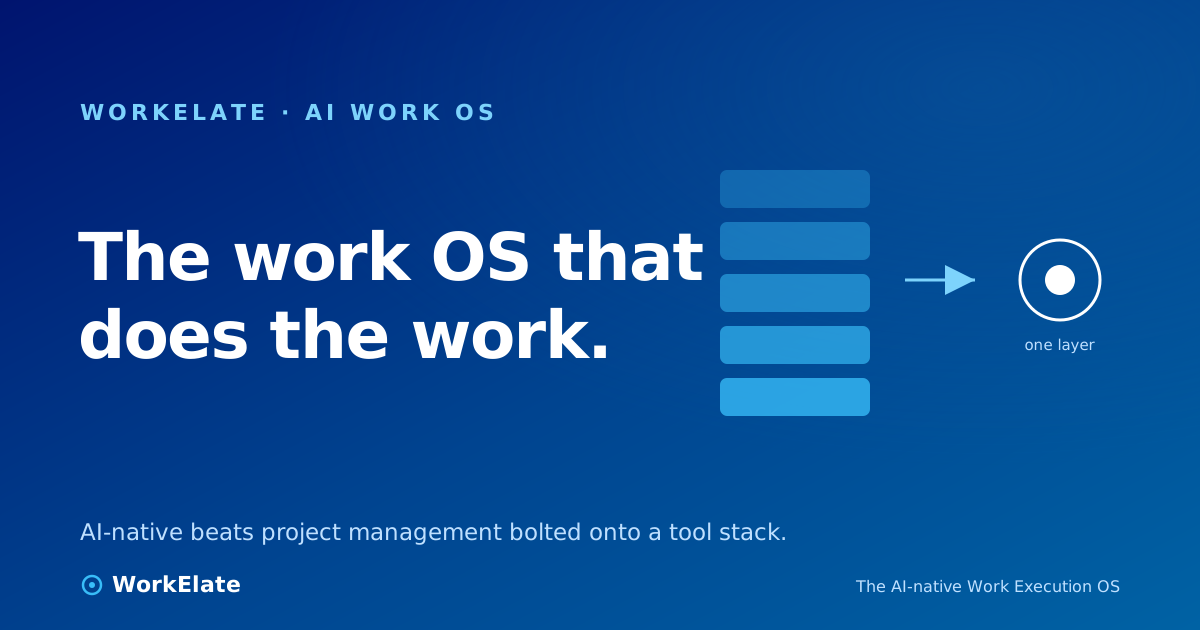
That is not a marketing failure. It is a structural one. An AI assistant living inside one app is brilliant inside that app and blind to every other one. It can rewrite your paragraph; it cannot see that the paragraph contradicts a commitment you made in an email three days ago, because the email is in a different application with a different brain. Bolting intelligence onto a suite built for humans to carry work between apps gives you a smarter app. It does not give you a system that carries the work for you.
Here is the one idea this whole essay is built around, stated as plainly as we can: in the AI era, the work moves itself.
For that to be true, two things have to exist that no prior era had. First, a cross-app work-graph — a single, living map of who is doing what, for which client, due when, blocked on whom, keyed across every app at once. Not eleven separate datasets you can search; one graph the apps emit into as they're used. Second, one brain reasoning over that graph and able to act back into any app on it — a single orchestrating intelligence, not a copilot bolted into each tool.
This is why the substrate matters more than the model. The clearest proof in the market is Glean, which spent roughly three boring years (2019–2022) building a permission-aware enterprise graph and a hundred-plus connectors before the LLM wave arrived. When ChatGPT hit and every company wanted AI over their own data, the model was a commodity anyone could call; the governed graph was the thing nobody could conjure overnight. The valuation ladder that followed tracked the substrate, not the model. The lesson generalizes: in the AI era, the integration layer is the intelligence layer. (We've argued this at length in The Operating System Era of Work Has Begun and Work Systems Are Eating SaaS.)
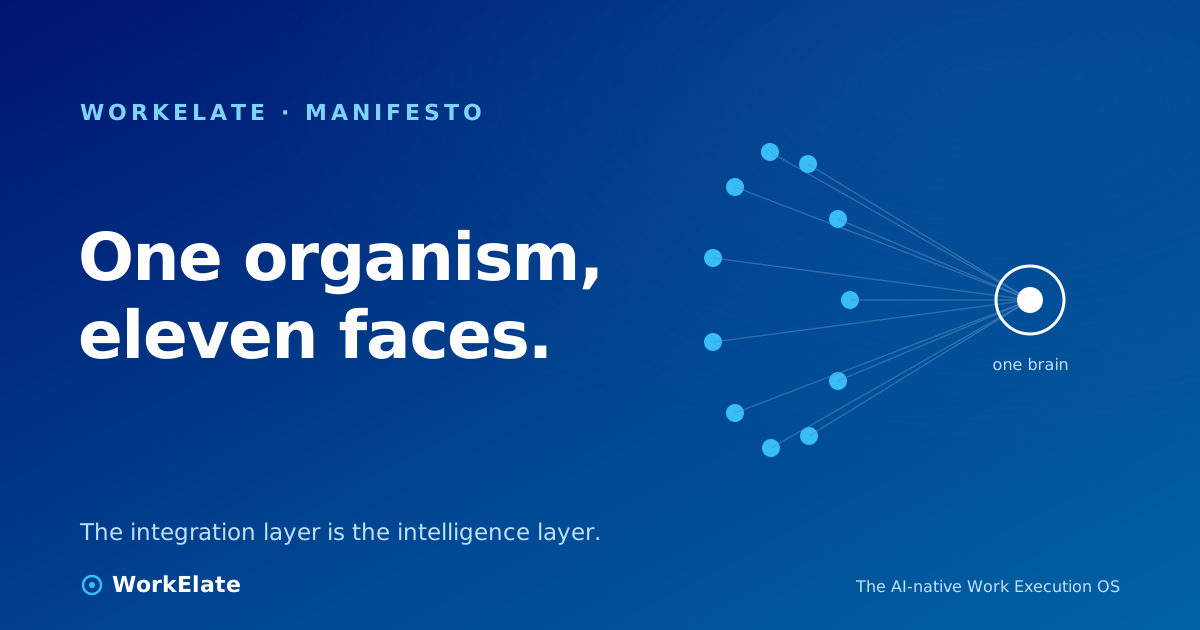
The distinction Google's fourteen years makes vivid is this: incumbents infer the graph and can only read it. A system designed for this era emits the graph and can write to it. When WorkElate's form app turns "book my time" into a real bookable scheduler, that booking doesn't just sit in the form — it emits a signal the same brain can see in the calendar, mention in chat, and reason about against a client's deadline. One organism, eleven faces. The apps are the hands and senses; the orchestrator is the mind. That last part — a mind that remembers across apps and acts across them — is the part no prior era's architecture can grow into without being rebuilt.
▶ Watch on WorkElate See one prompt move work across apps — no human carrying it between them youtube.com/@WorkElate · videoId: TODO — swap when publishedIt's tempting to assume the AI era is just the cloud era with a better assistant. The fourteen-year gap argues otherwise. A suite built for humans to carry work between apps has its architecture organized around separation — each app its own data store, its own brain, its own surface. You cannot graft a single cross-app mind onto that by adding a chat box to each tool. You'd have eleven copilots that each see a sliver and none that sees the whole — which is exactly the multi-agent anti-pattern that produces a smarter app and no smarter system.
This is also why the AI era won't be won by whoever has the best model. Models commoditize; everyone gets the same API. What doesn't commoditize is the substrate underneath — the graph, the memory, the write-path into every app. That's the part that takes the boring years to build, and the part that, once built, the model makes suddenly priceless. (We make the project-management-specific version of this case in The AI Work OS Is Replacing Project Management.)
So the honest framing is not "Office, but smarter" or "Workspace with AI features." It's a different question entirely. The desktop era asked: where does your work live? The cloud era asked: where do you and your team meet around it? The AI era asks something neither of the first two could: who has to carry the work from one app to the next — and what if the answer were no one?
Google needed fourteen years to make its own apps think together, and it's still mostly reading the graph rather than writing to it. The opening isn't that the incumbents are asleep. It's that the era they were built for is over, and you can't retrofit your way out of a shape.
Which leaves the only question that actually matters for the next decade of work: when the work can finally move itself, do you want tools built for that — or the ones you'll spend the decade carrying?