POV
Why Modern Work Feels Busy but Goes Nowhere
Watch a busy team for one day and count the verbs. Checking. Pinging. Updating. Forwarding. Asking where something is. Confirming someone got the file. Nudging the person sitting on the approval. Re-e
Watch a busy team for one day and count the verbs. Checking. Pinging. Updating. Forwarding. Asking where something is. Confirming someone got the file. Nudging the person sitting on the approval. Re-e
Watch a busy team for one day and count the verbs. Checking. Pinging. Updating. Forwarding. Asking where something is. Confirming someone got the file. Nudging the person sitting on the approval. Re-explaining the thing you explained on Tuesday. By 5pm everyone is exhausted, the calendar is full, the Slack count is brutal — and the actual deliverable has barely moved.
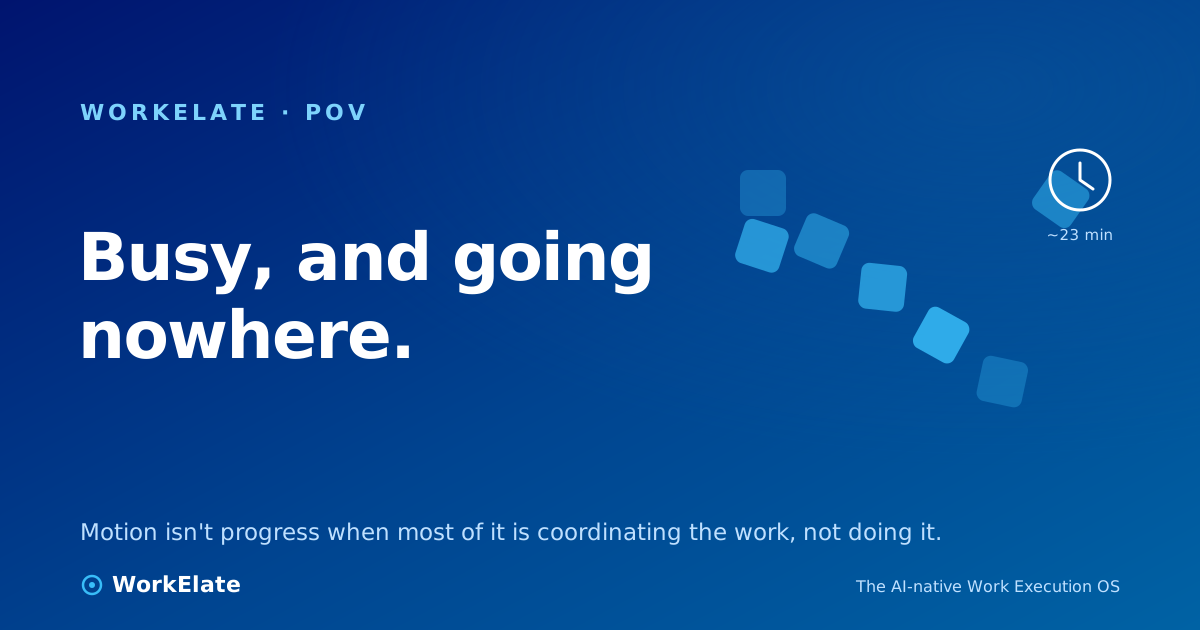
This is the strange disease of modern work. Effort is at an all-time high. Output is not. And the usual explanation — people aren't focused, the team needs better discipline — is wrong, because the people are working extremely hard. They're just working hard at the wrong layer.
Almost everything a knowledge team does falls into one of two buckets.
The first is doing the work: writing the proposal, designing the screen, closing the deal, building the feature, shipping the report. This is the work the customer pays for.
The second is coordinating the work: figuring out what's done, telling the next person they're up, tracking what's blocked, chasing the approval, rebuilding context after a tool switch, producing a status update so someone else doesn't have to ask. None of this changes the deliverable. It only moves information about the deliverable from one head to another.
Here's the reframe that explains your whole calendar: most of what feels like work is the second kind. The meetings, the threads, the dashboards, the standups, the "quick syncs" — that is not execution. It's the overhead of getting humans aligned enough to execute. And we've spent fifteen years buying tools that made us better at the overhead instead of removing it.
The reason this gets quietly worse every quarter — even as you hire good people and add good tools — is math, not motivation.
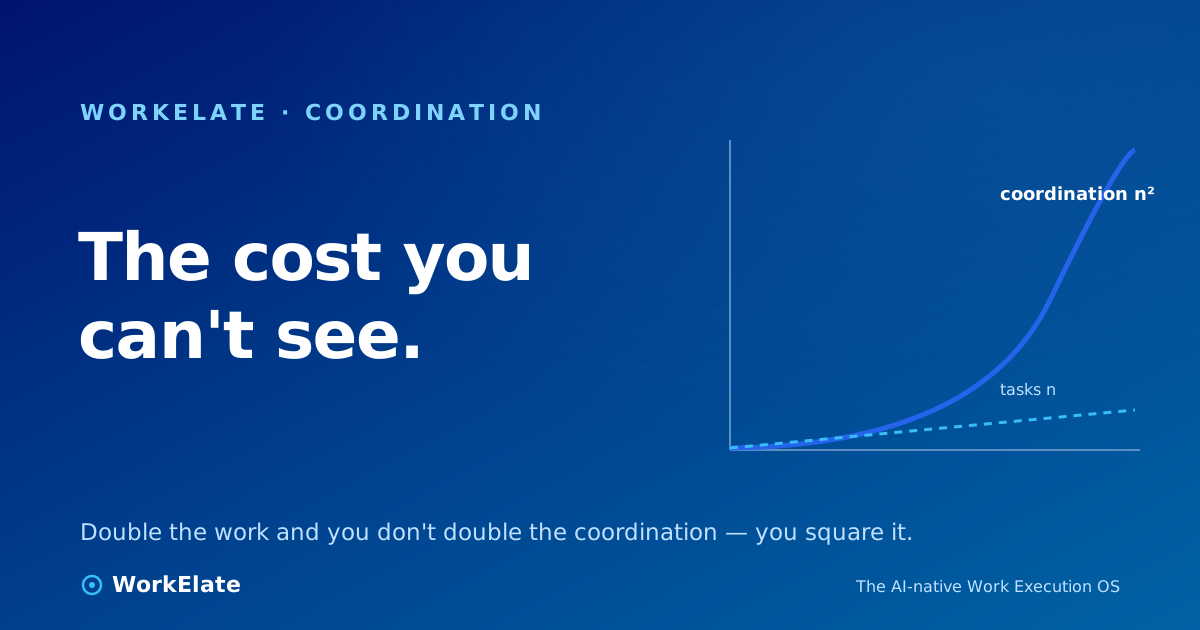
Doing the work scales with the number of tasks. Ten tasks is roughly ten units of effort. Coordinating the work scales with the number of connections between the people, tools, and tasks. And connections grow far faster than the things they connect. Two more people don't add two more conversations; they add a conversation with everyone already there. This is why a five-person team feels effortless and a twenty-person team feels like it's drowning in process despite doing the same kind of work.
So the day fills up. Every handoff is manual, so every handoff needs a human to be awake and responsive. That's why everything feels urgent — execution is literally waiting on someone to see a message and react. The ping isn't an interruption to the work. For most of the org, reacting to pings is the work.
You can feel the consequence even if you've never named it. Visibility replaced execution. We built dashboards so we could see the slowness in real time, which is not the same as making it move. We hold meetings because work doesn't flow on its own, so the meeting becomes the place handoffs happen by hand — but a meeting about the work is not the work. It's a symptom of execution that can't route itself.
Here's the part most tools get wrong. They try to make coordination pleasant. A nicer status field. A cleaner board. A faster way to @-mention the next person. That's optimizing the overhead. It keeps the human in the loop and just gives them a prettier loop to run.
Removing the layer means the coordination stops being a human job at all. For that, two things have to be true that aren't true in your stack today.
First, the system has to actually know the state of the work — not a status someone typed in, but the real fact: this finished, that's blocked, this one slipped. When work lives in eleven disconnected tools, no system holds that picture; only the busiest person on your team does, in their head. Manually-produced status is coordination theater — a snapshot that's stale the moment it's posted. (Manual status updates are coordination theater.)
Second, something has to read that whole picture and act on it — notice the moment one task finishes and pull the next forward, route the work to the right desk, chase the blocker, brief the next person with the context they need. Today that "something" is a human, and that human is the rate limiter on the entire team.
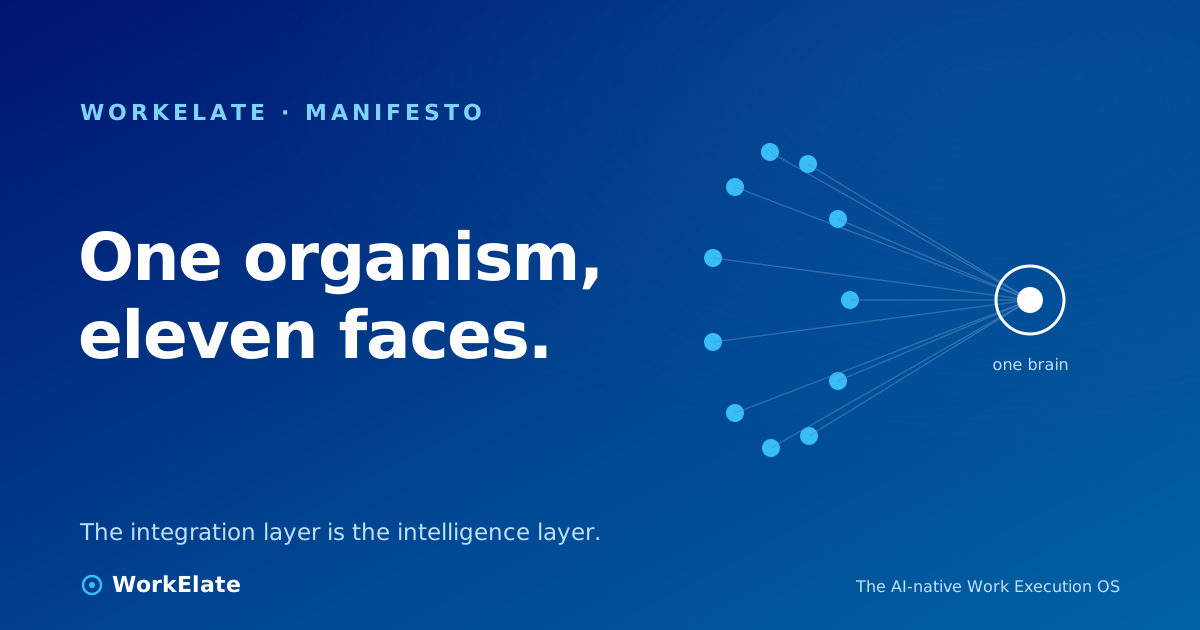
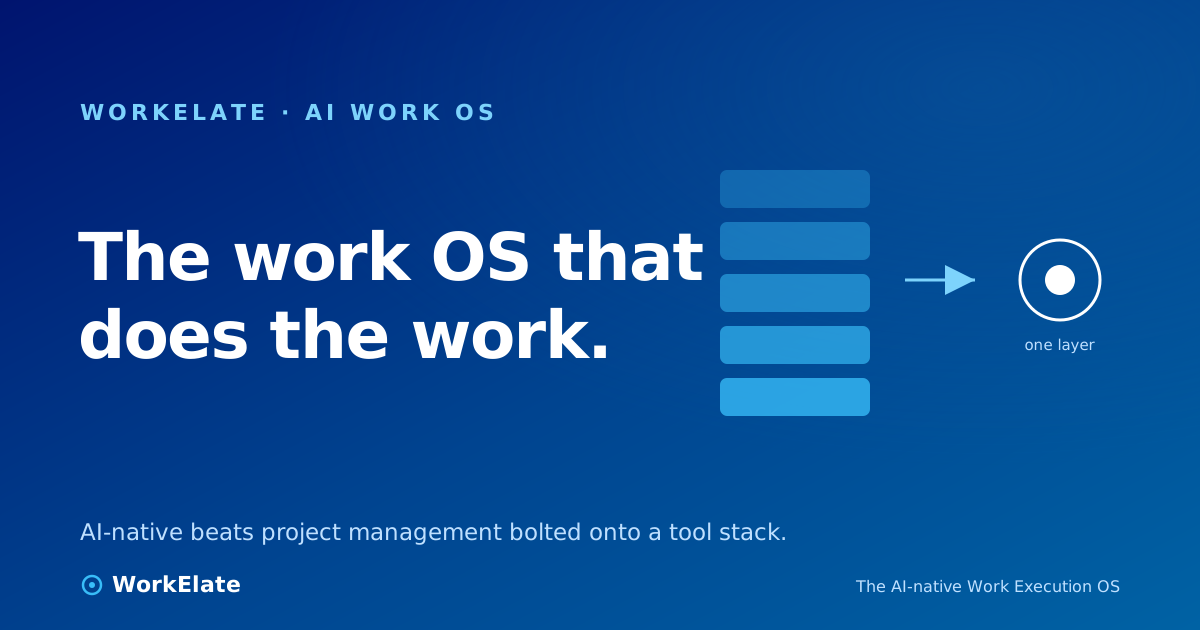
This is the work WorkElate is built to take off your people. Every app — task, docs, calendar, weMail, form, the rest — emits what happens into a shared cross-app work-graph instead of trapping it on one screen. One orchestrating intelligence, WAO, reads that graph and runs the coordination: it routes the handoff, surfaces what's actually blocked, drafts the update no one should have to write. Not "you're managing notifications faster" — the notifications stop being yours to manage. (You're not managing work, you're managing notifications.)
The honest version: nobody removes all of it. Judgment, relationships, the genuinely hard calls — those stay with people, and should. What's removable is the mechanical slice — the checking, routing, chasing, status-producing that eats the day. That slice is real, it's large, and the whole point of an AI-native work system is that it's the system's job, not a person's. The deeper truth underneath it: the real cost of a task is coordination, not the doing — which is exactly why removing it changes the curve.
▶ Watch on WorkElate See WAO run the handoff instead of you youtube.com/@WorkElate · videoId: TODO — swap when publishedHere's how you'll know it worked, and it's counterintuitive. A team that has removed the coordination layer doesn't look more impressive. It looks calmer. Fewer meetings, because the work routes itself. Fewer urgent pings, because execution isn't waiting on a human to react. Fewer dashboards, because progress is just happening rather than being anxiously watched.
We're trained to read calm as low-energy, and busy as committed. That instinct is exactly backwards. Busy is the sound of a team doing the coordination by hand. Calm is the sound of a team that got it back.
So the question isn't how to be more productive. You're already pouring in the effort. The question is which layer your best people spend their day on — the work, or the coordination that surrounds it. If it's the second, no amount of focus will save them, because the problem was never their effort. It was the design.