Dependencies Don't Manage Themselves — A Human Is Doing It
There's a person on your team who isn't on the org chart. They don't have a title for it. But every morning they open four tools, scan for what finished overnight, figure out who's now unblocked, and
WorkElate Team
May 25, 2026 · 8 min read
There's a person on your team who isn't on the org chart. They don't have a title for it. But every morning they open four tools, scan for what finished overnight, figure out who's now unblocked, and start typing the messages that move work to the next desk. "Hey, design's done — you're clear to start." "Legal still hasn't signed off, sitting on it." "Heads up, the deadline slipped two days, here's the new plan."
That person is your dependency tracker. And they are the single most expensive piece of infrastructure you own — because they're a human being doing the job of a database.
Marking a dependency isn't managing it
Every project tool will let you draw the arrows. Task A blocks Task B. Testing depends on development. Deployment depends on testing. You link them, you set the blocker, you get a tidy red indicator when something upstream is late.
But look closely at what that red indicator actually does. It does not message the person sitting on the blocker. It does not escalate when the blocker rots for three days. It does not notice the moment Task A finishes and pull Task B forward. It documents that someone, somewhere, needs to do all of that — and then it waits for them.
That's the quiet lie inside "dependency tracking." Tracking is a record of coordination that still has to happen. The arrow on the screen is a to-do list addressed to a human, and the human is the runtime.
THE POINT
A tracked dependency is a job assigned to a person. A managed dependency is a job the system runs.
Until the work-graph is emitted and one brain reads it, the manager of every dependency is a human — and that human is the bottleneck.
The human-in-the-loop is the bottleneck
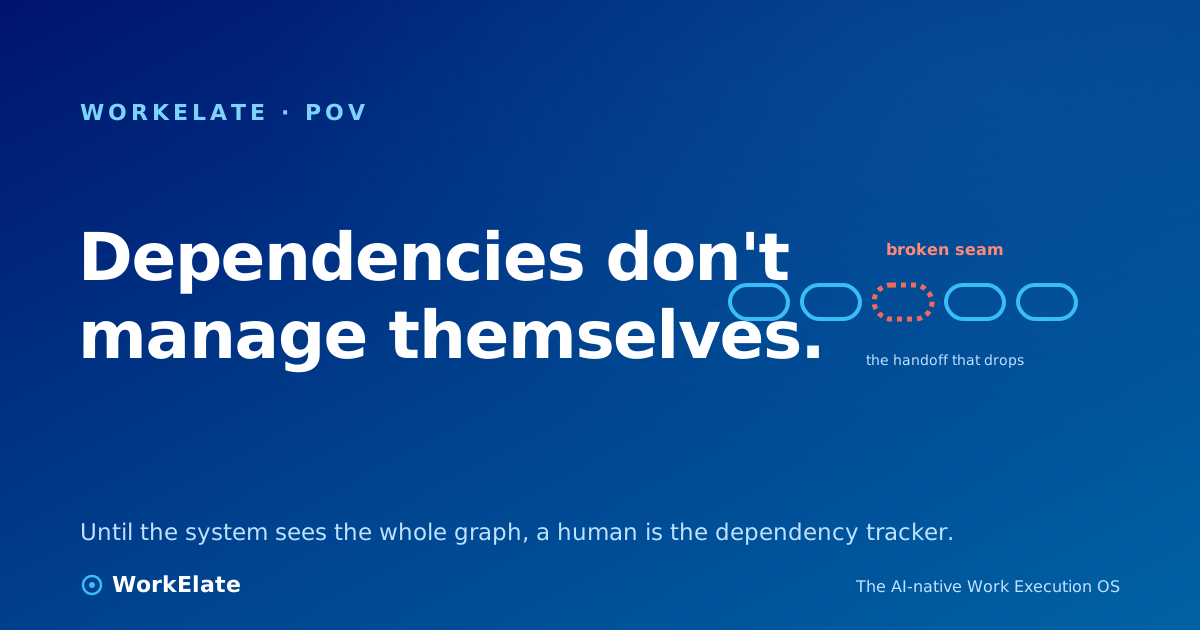
Picture the chain. Research → design → build → test → ship. Five stages, four handoffs. Now drop a person into each gap, because that's where they actually live — in the seams between the tools.
Every handoff is the same small ritual. Check if upstream is really done. Gather the context the next person needs. Write the message. Confirm it landed. Track the reply. None of that is the work. All of it is the glue that connects the work — and your best operators are the ones forced to do it, because they're the only ones who hold the whole picture in their heads.
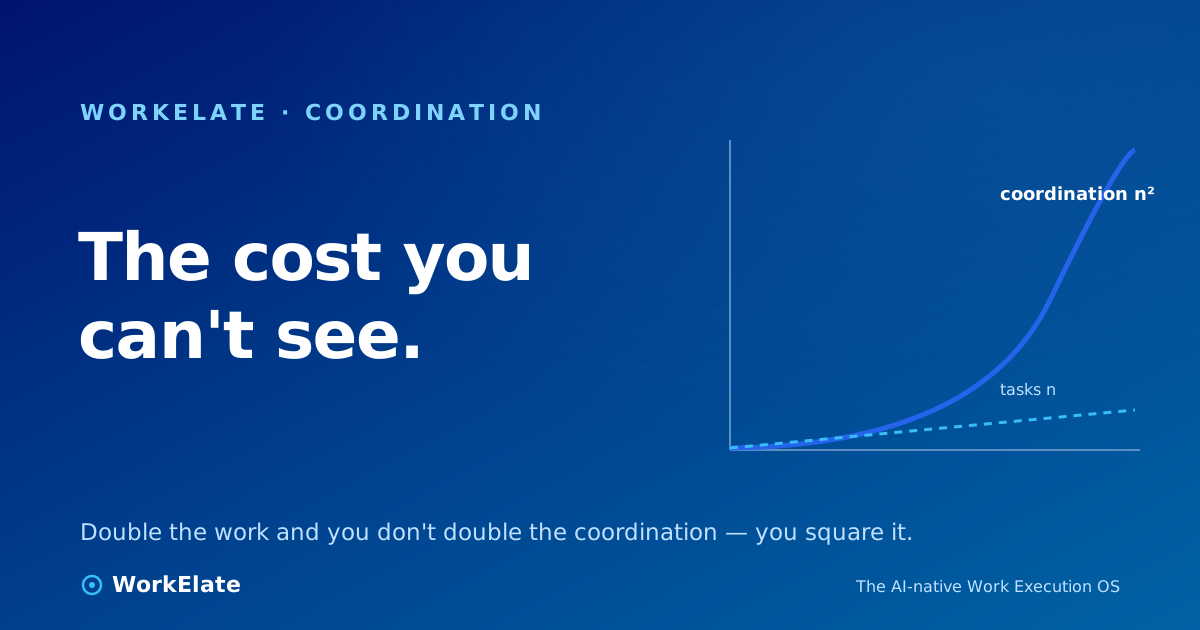
Here's why that doesn't scale. With ten tasks, one person can carry the map. With a hundred tasks across a distributed team, the map doesn't fit in a head anymore, and the coordination cost doesn't grow with the number of tasks — it grows with the number of connections between them. Add people and tools, and the lines between things multiply far faster than the things themselves. At some point your team is spending more hours coordinating than executing, and the dependency tracker is underwater.
▤ The chain runs through a human, and the human is the rate limiter
Delay is where the cost actually shows up
The bottleneck stays invisible until something slips. Task A runs two days late. In a perfect world, every downstream task simply shifts two days and the team moves on. In the real world, nothing shifts until a person notices the slip, traces every downstream task it touches, messages each owner, renegotiates the dates, and updates five plans by hand.
That replanning work appears nowhere in your task tool. There's no card for it, no estimate, no burndown line. But it's the most fragile work on the team, because it depends entirely on one person catching the slip in time. Miss it, and a two-day delay compounds into weeks of scramble — not because the work got harder, but because the coordination fell behind the work.
n²coordination scales with connections between tasks, not the count of tasks
~23 minto refocus after a single "is this unblocked yet?" context switch
0cards on your board for the replanning work — yet it's the most fragile work you have
Dependencies manage themselves only when the graph is emitted
So why can't the system just do it? Because most tools can't actually see the work. They store tasks as records in separate apps that don't talk to each other. The dependency only exists in a person's head, or in a link they remembered to draw. There's no single picture of how the work connects — so there's no picture for software to read, and the human stays the only thing that holds it.
Two conditions have to be true before a dependency can manage itself.
First, the work-graph has to be emitted — not inferred. Every meaningful event ("design finalized," "approval granted," "deadline moved") has to be a signal the system actually receives, across every surface, the moment it happens. Most stacks try to guess the graph by reading scattered APIs after the fact. The durable version is one where the apps themselves emit the graph as work moves — so the connection between Task A and Task B is a fact the system holds, not a guess it pieces together.
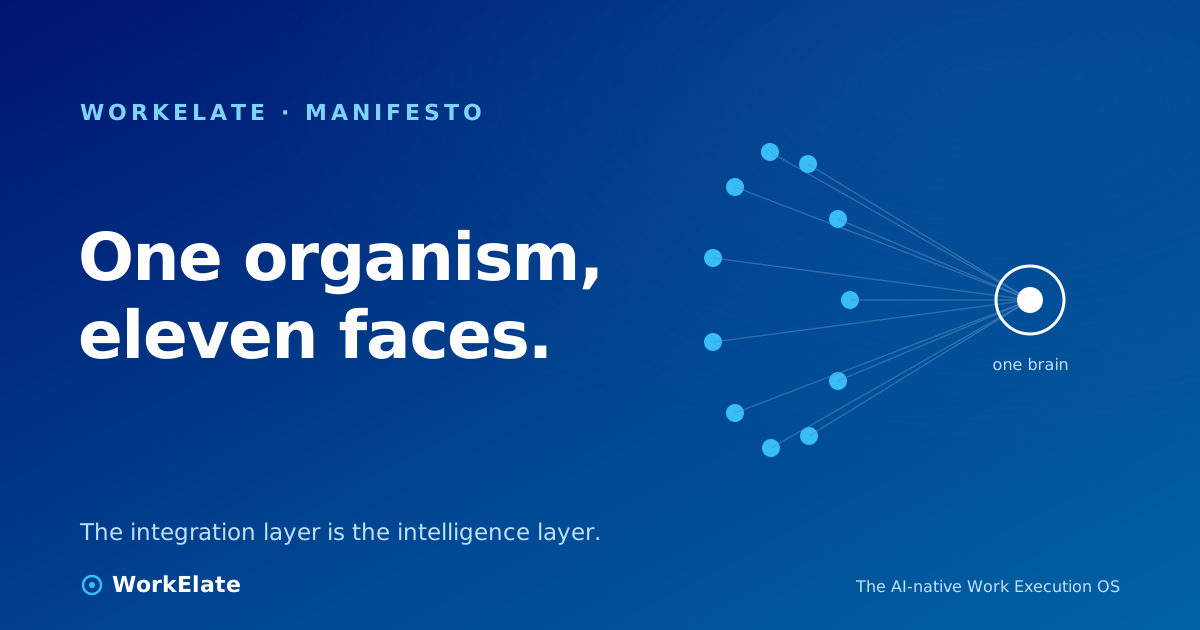
Second, one brain has to read that whole graph. A dependency that crosses from your design tool to your dev tool to your calendar can't be managed by three separate copilots that each see one slice. The coordination is the cross-app part. It can only be handled by a single intelligence sitting above the stack — one that sees the finished design, the unblocked ticket, and the open calendar slot as one connected picture, and acts on the seam between them. WorkElate calls that one brain WAO, and the cross-app picture it reads is the work-graph.
When both are true, the morning ritual stops being a person's job. The "design's done, you're clear" message becomes a signal the graph emits and the brain acts on — surfaced to you as here's what moved and what now needs you, with the destructive or client-facing steps still gated behind your confirmation. You don't lose control of coordination. You stop being the manual machinery of it.
"They infer the graph and can only read it. We emit the graph and can write to it."
— WorkElate
That's the whole reframe. The reason dependencies don't manage themselves today isn't that the software is lazy. It's that the software was never given the graph to manage. Give it the emitted graph and one brain to read it, and the most expensive person on your team — the one whose real job title is "keeps the work connected" — gets to go back to the work itself.
So the question to sit with isn't "does my tool track dependencies." It almost certainly does. The question is: when the next upstream task slips at 9am, who finds out — your system, or the one tired human who happens to still be holding the whole map?