POV
AI Doesn't Replace Your Work. It Replaces the Coordination Around It.
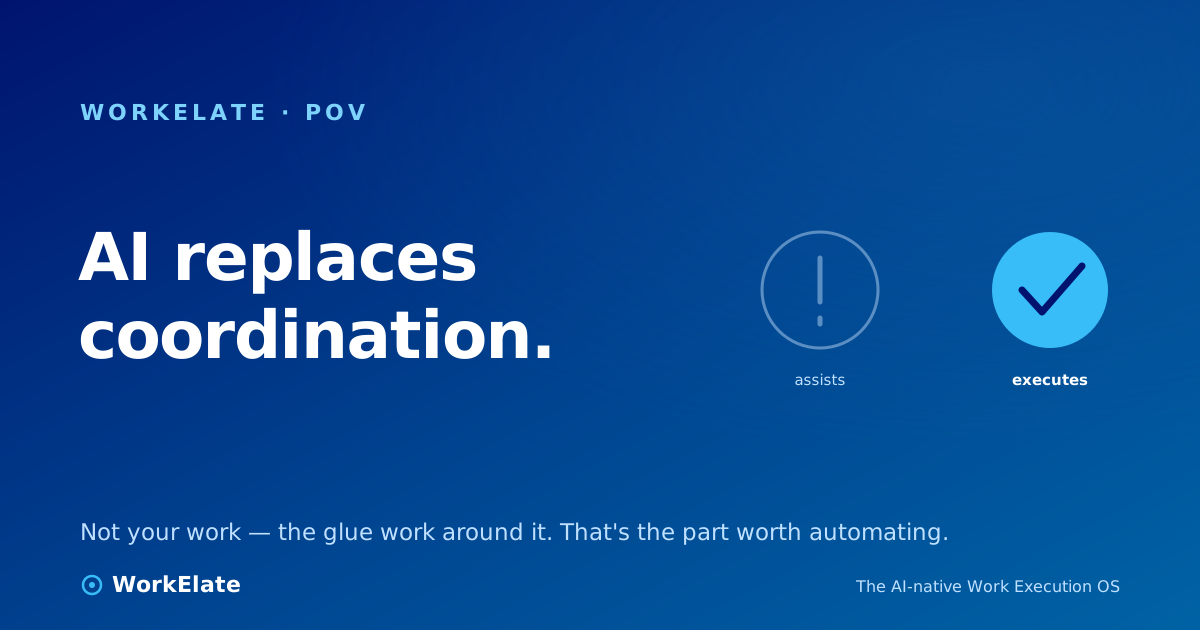
AI won't do your real work — it replaces the glue around it: status, handoffs, follow-ups. That's the least-loved part of the job, and the part worth automating.
AI won't do your real work — it replaces the glue around it: status, handoffs, follow-ups. That's the least-loved part of the job, and the part worth automating.
Ask people what they're afraid AI will take, and they name the wrong thing. They picture the machine writing the brief, building the deck, closing the deal — the part they're proud of. But watch a real day, and that's not where the hours go. The hours go to the in-between: pinging someone to see if their part is done, re-explaining context to the next person in the chain, chasing the follow-up that fell through a crack on a Friday.
That in-between has a name. It's coordination — the glue. And it's the part of your job nobody loves.
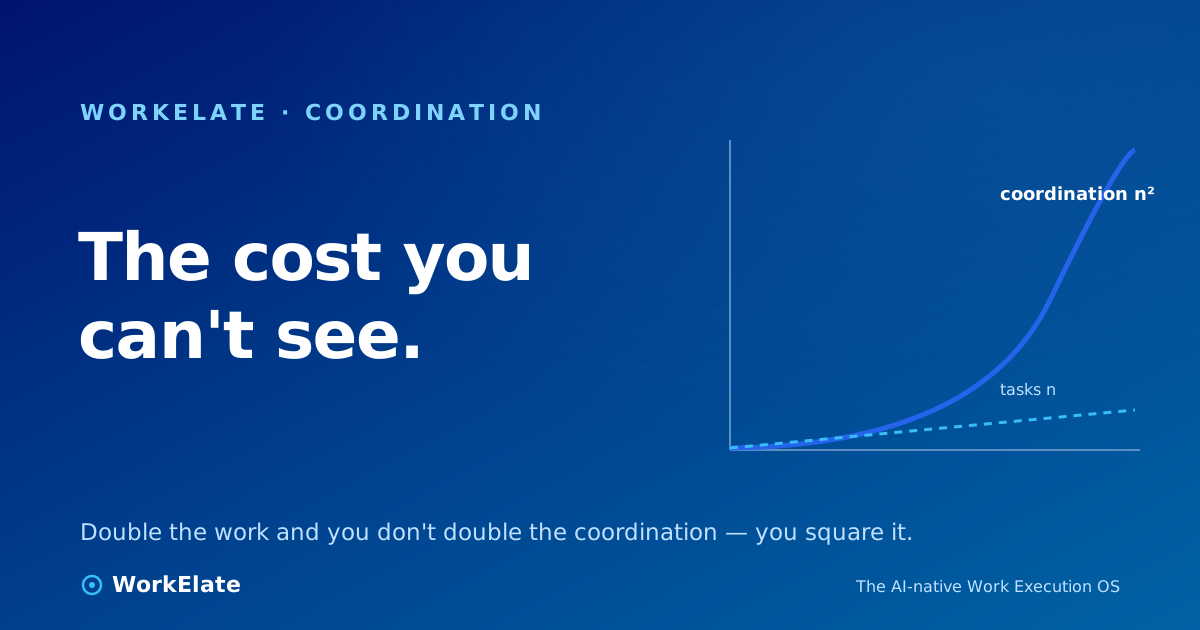
The actual work — the thinking, the judgment, the taste — doesn't scale badly. One good person produces one good deck. But the coordination around that deck scales with every person who touches it. Two people need one handoff. Five people need ten. The connections grow faster than the headcount, and at some point your most expensive people spend more time reporting on work than doing it.
This is the trap. You don't feel it as one big cost. You feel it as a thousand small ones: the "any update on this?" Slack, the standup that re-narrates yesterday, the dependency nobody flagged until it was late. None of it is the work. All of it is the price of work moving between people.
Here's the clean line most AI tools miss. The craft is yours — it's where your judgment lives, and a model that "helps" you write the brief is just a faster intern you still have to manage. But the glue has no judgment in it. Checking who's done. Routing the next step. Updating the state. Remembering the follow-up. That's pure overhead, and overhead is exactly what a system should carry instead of a person.
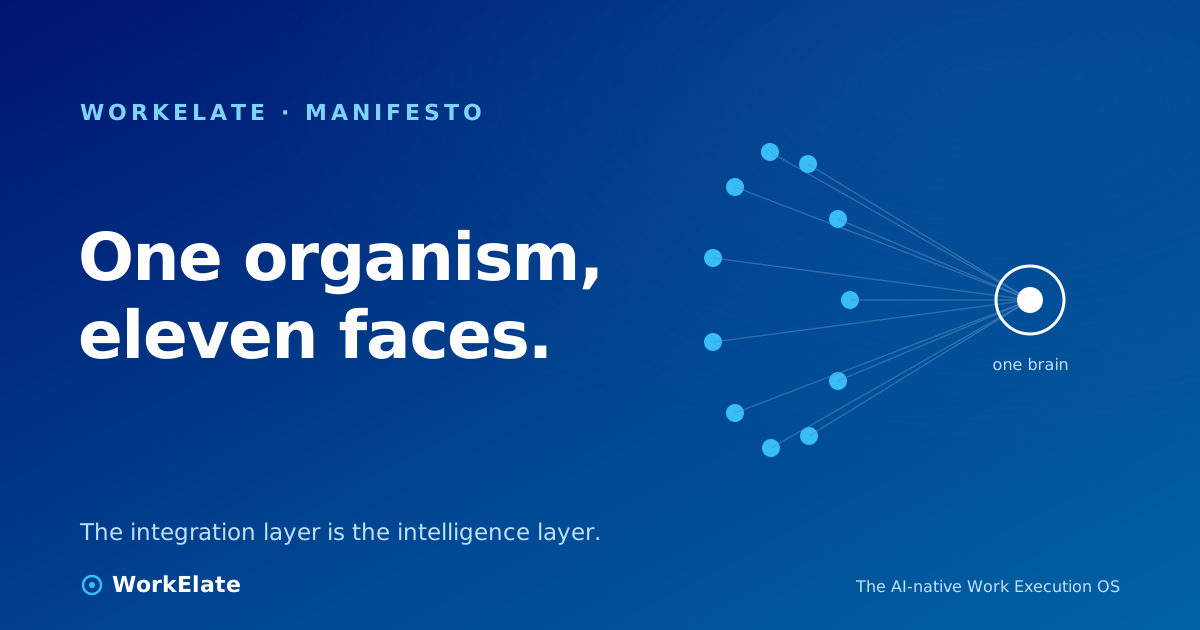
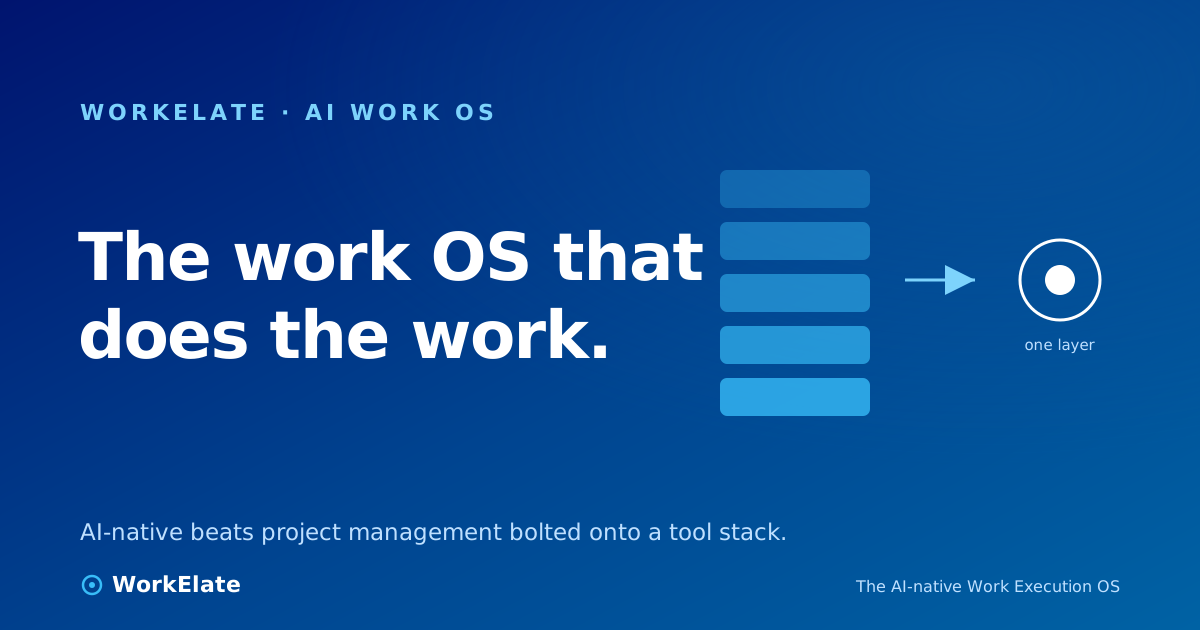
So the right question isn't "can AI do my job?" It's "can AI hold the state of the work, so nobody has to perform it?" That's a different machine entirely. Not a copilot that drafts inside one app, but a brain that sees the whole work-graph across every app — and quietly does the coordination.
"Your best people are forced to do the work of glue. That's the part to take off their plate — not their craft."
— WorkElateThat's the whole shift. When a task finishes, the system already knows what comes next, who owns it, and what context they need — so it routes it, with the brief attached, and never forgets the follow-up. You didn't get replaced. You got the most thankless third of your week back.
There's a tell, too, for which AI is the real thing. The kind that drafts at you is loud and impressive in a demo. The kind that does the coordination is quiet — you notice it by what didn't go wrong. The handoff that just happened. The follow-up that didn't slip. The status nobody had to write because the system already knew.
▶ Watch on WorkElate See WAO carry a handoff across apps youtube.com/@WorkElate · videoId: TODO — swap when publishedThis is why the interesting frontier isn't AI that executes instead of assists, or invisible AI you measure by what didn't break — it's both pointed at the same target. Because the real cost of a task was never the task. It was everything around it.
So here's the question to sit with. If a system held the state of your work the way you currently hold it in your head — every handoff, every dependency, every owed follow-up — what would you actually do with the hours you spend being that system?