POV
The End of Tool-Hopping as We Know It
Count the tabs open on your screen right now.
Count the tabs open on your screen right now.
Count the tabs open on your screen right now.
Not to shame you — you opened every one of them for a good reason. The task lived in one. The thread that explains the task lived in another. The doc you need to finish it is in a third, and the spreadsheet that proves the doc is right is in a fourth. None of that is sloppiness. That is just what finishing one piece of work requires in 2026.
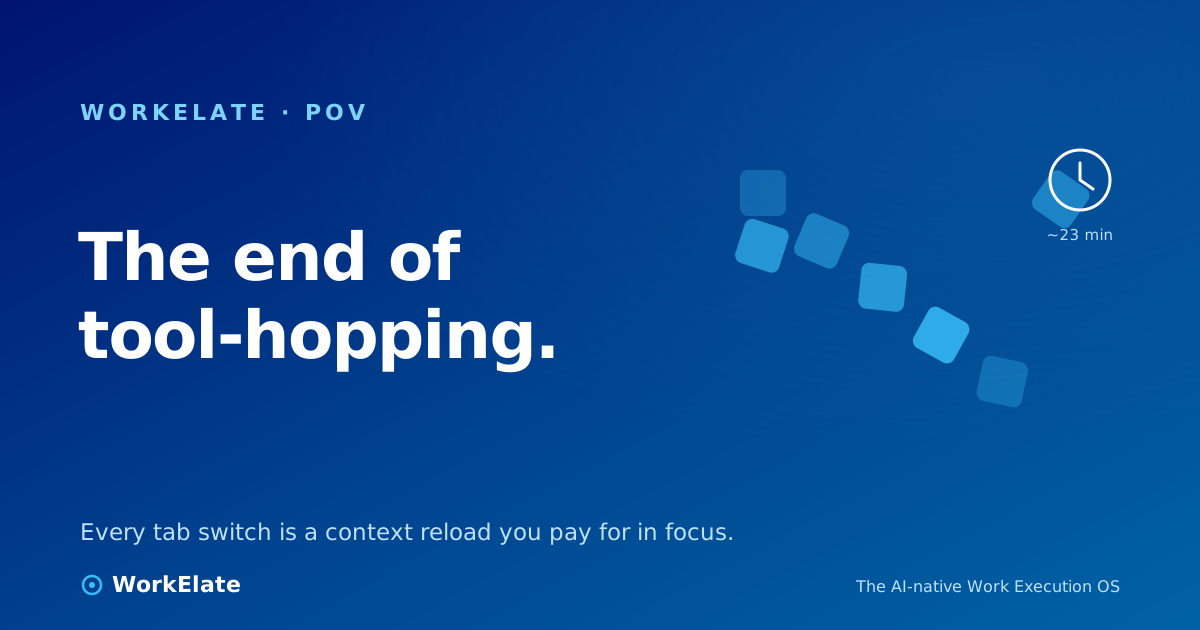
Here is the part nobody put on the pricing page: each of those switches is a reload. You don't move between tools for free. You carry the whole mental model of what you were doing into the new tab, set it down, pick up the new context, and pay — in attention — to get back to where you were. The popular estimate, from Gloria Mark's research at UC Irvine, is that it takes around 23 minutes to fully return to a task after an interruption. Treat that number gently; it's an average across a study, not a law of physics, and a quick glance at Slack is not a full task switch. But the direction is honest and it matches your Tuesday: the switch is not the cost of the work. The switch is a cost on top of the work.
For about fifteen years the deal was clean. Have a problem, buy a tool. Tasks scattered? Get a board. Conversations everywhere? Get a chat app. Approvals lost? Get a form. Each tool was good. Each one solved the problem on its label.
What no tool solved was the space between tools — and that space is where most of the day now goes. The card lives in one app, the decision that justifies the card lives in a thread, and the file that satisfies the decision lives somewhere a search bar has to find. Nobody designed that gap on purpose. It assembled itself, one excellent purchase at a time.
So we tried to bridge it. First with integrations — pipes that shovel a record from one silo to another. Pipes move data; they don't carry meaning, and they certainly don't carry why. Then with all-in-one suites that promised to be every app at once, which mostly meant being adequate at all of them while your team quietly kept the specialized tools they actually liked. Either way the gap survived. We'd been treating disconnection as a plumbing problem. It was never a plumbing problem.
If the only cost were the 23 minutes, you could budget around it. The real bill is quieter and larger, because it compounds. Here's where it actually shows up.
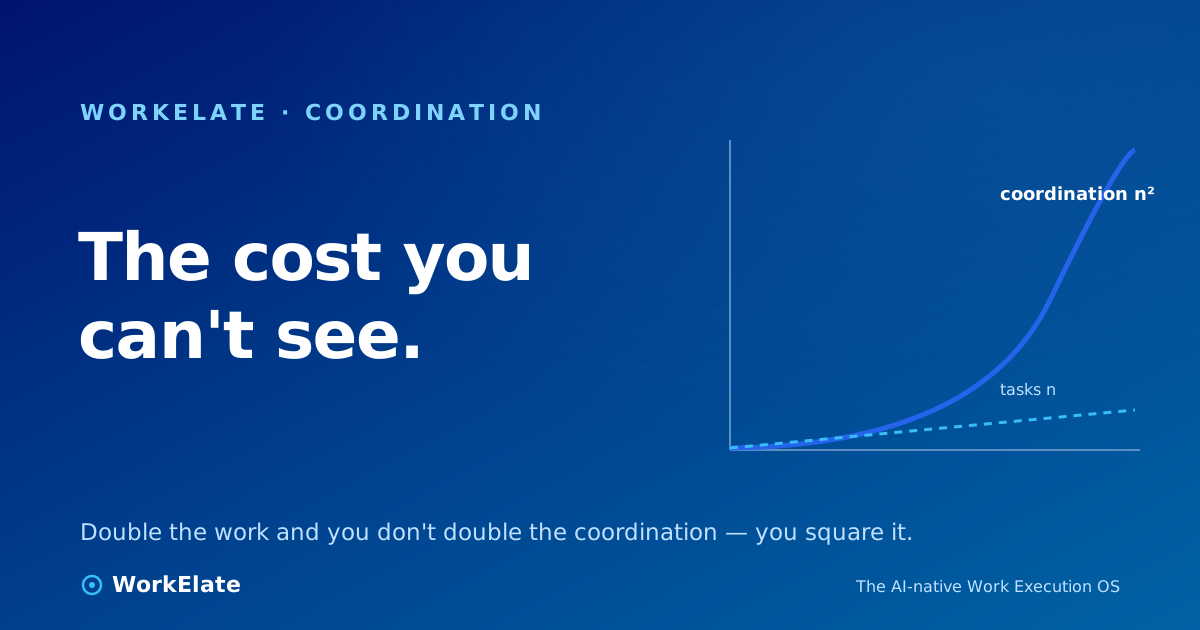
That last one is the part most "productivity" advice misses. Buy your tenth tool and you haven't added one more thing to check; you've added a fresh set of seams between that tool and the nine you already had. The work of holding it together grows faster than the team does. That's the coordination tax, and your best people pay it — they're the ones trusted to do the gluing, which means they're the ones least free to do the actual job.
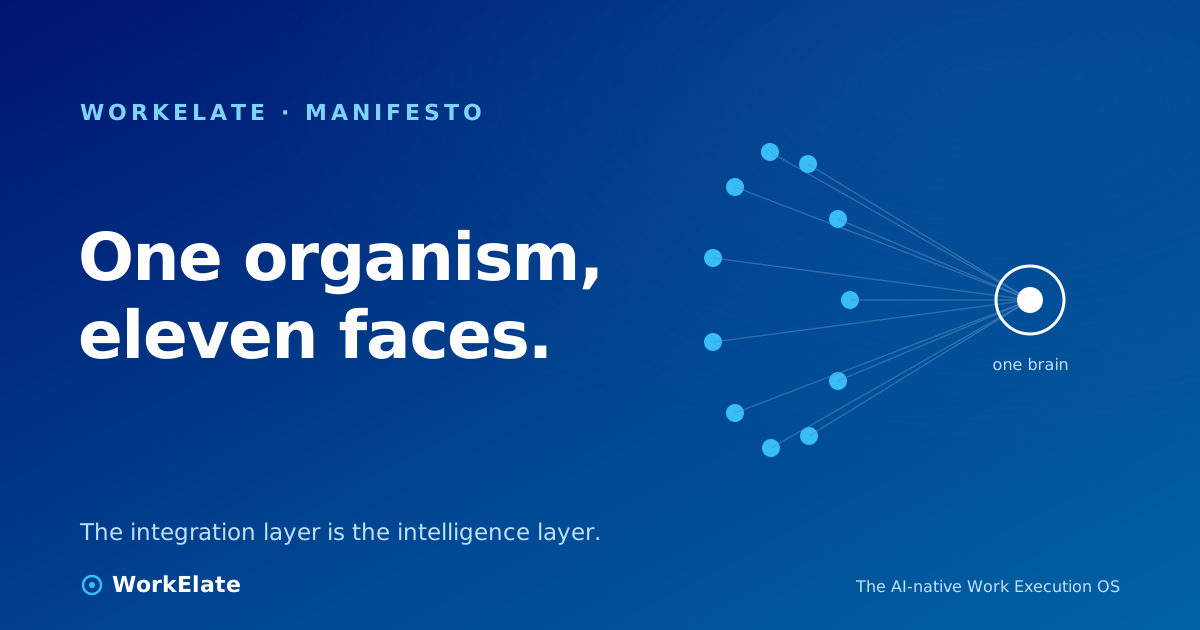
So the goal was never "fewer tools." We build eleven surfaces ourselves — hub, weMail, chat, data, docs, ppt, calendar, task, board, journey, form — and we have no interest in arguing that you should own fewer good tools. A spreadsheet is the right shape for a spreadsheet. A whiteboard is the right shape for a whiteboard. Asking you to give those up to escape switching is asking you to lose the thing that made each tool worth opening.
The end of tool-hopping is a different move entirely. Instead of you hopping between surfaces to reassemble context, the context travels with the work, and the work comes to you. One Brain — WAO, the orchestrator — sits across every surface, watches what happens in each, and keeps the connective thread that no individual tool can hold. A decision made in chat is attached to the card it changes. The file that proves a doc lands next to the doc. When something needs you, it arrives already assembled, with the why attached — not as a row in a sixth app you have to go find.
That's the shift: the tabs don't disappear, but the reloads do. You're not toggling between eleven contexts trying to rebuild a picture in your head. The picture is already built, and it follows you into whatever surface you happen to be in. The integration layer stops being plumbing and starts being the thing that actually understands the work.
▶ Watch on WorkElate See WAO carry context across apps — no reload youtube.com/@WorkElate · videoId: TODO — swap when publishedPicture the day without the reload. You don't open five tools to answer "where does this project stand" — the answer is already known, because the system saw every move as it happened, not because someone spent an hour assembling a deck about it. New hires don't navigate a maze of apps to learn how work flows; the work flows to them with its history attached. And the people you hired for judgment spend their hours on judgment instead of on re-gluing what the tools split apart.
This is the same idea underneath a few things we keep coming back to: what context-switching really costs you, why the real cost of a task is coordination, and what it feels like when work flows instead of fights you. Different doors, one room.
The era of tool-hopping isn't ending because tools got bad. It's ending because we finally stopped asking each tool to be the whole picture — and started asking the picture to follow the work.
So, one honest question before you close a tab: how much of today did you actually spend doing the work, and how much did you spend getting back to it?