Project Tracking vs. Task Tracking: A Buyer's Comparison Guide
Project tracking vs. task tracking, compared fairly: clear definitions, when to use each, and the deeper truth — both track work, neither executes it. That gap is what a work system fills.
WorkElate Team
Apr 24, 2026 · 9 min read
If you're comparing project tracking vs. task tracking, you're really asking one question with two layers: what's the difference, and which one does my team actually need? This guide answers both, fairly, with clear definitions and a comparison table you can act on.
But there's a third question underneath the first two, and it's the one that decides whether either choice fixes your problem. We'll get to it, because it changes the answer.
TL;DR
Task tracking monitors individual work items — who's doing what, by when, done or not. It's the granular, day-to-day view.
They're not rivals. Most teams need both: project tracking for strategic oversight, task tracking for tactical execution.
Here's the part the usual comparison skips: both of them only track. Neither one executes. They tell you the state of the work after a human has already done — or failed to do — the work of moving it forward.
That gap between knowing the status and the status being true is where teams quietly lose hours. A work system closes it by acting on the work, not just recording it.
What is task tracking?
Task tracking operates at the level of the individual work item. It answers small, immediate questions: who owns this, when is it due, what's the priority, is it done?
In practice, task tracking gives you:
Assignment — a specific person attached to a specific item.
Due dates and priority — so today's work is clear and ordered.
Status — to-do, in progress, done; the card moving across the board.
Personal workload — what's on my plate this week, what's next.
It's the tool of the individual contributor and the team lead. A developer working a sprint, a support agent clearing a queue, a designer working through a list — all live in task tracking. Its whole job is to make sure nothing on the day-to-day list falls through the cracks.
What is project tracking?
Project tracking operates one altitude up. Instead of single items, it watches the whole initiative from kickoff to delivery, and answers the questions a manager or client asks: Are we on schedule? On budget? What's blocking us?
In practice, project tracking gives you:
Milestones — progress measured against planned checkpoints.
Dependencies — which work streams gate which, and where the chain is fragile.
Resourcing and budget — who and how much, tracked across the lifecycle.
Stakeholder visibility — a status everyone above the work can read.
It's the tool of the project manager, the executive, the client. A product launch, a migration, a multi-phase client engagement — anything with interlocking parts and a deadline that matters — needs project tracking to keep the parts moving as one.
The honest difference, in one table
The cleanest way to hold the two apart is by scope, time horizon, and who's looking. Here it is laid flat — no thumb on the scale.
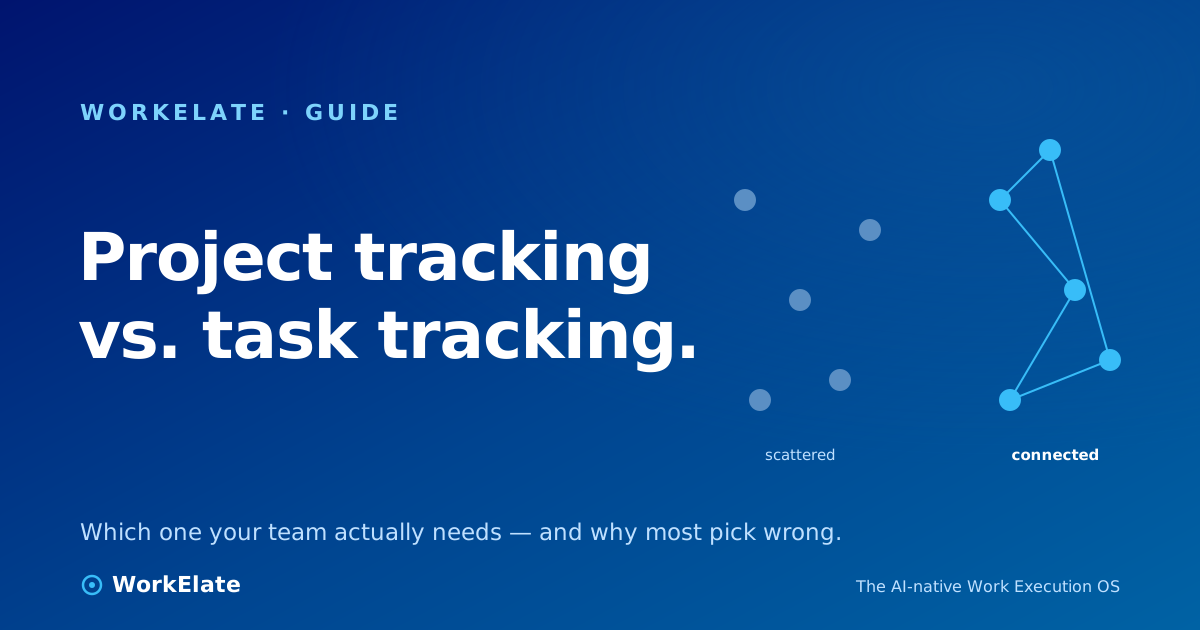
▤ Project tracking vs. task tracking — and the line both share
| Dimension | Task tracking | Project tracking |
|---|---|---|
| Scope | One work item | A whole initiative |
| View | The trees | The forest |
| Time horizon | Today / this sprint | Weeks to months |
| Primary user | Contributor, team lead | PM, exec, client |
| Answers | "What do I do next?" | "Are we on track?" |
| Key objects | Assignee, due date, status | Milestones, dependencies, budget |
| Best when | Work is independent, day-to-day | Work is complex, interdependent |
| What it does with the work | Records its status | Records its status |
Read the last row twice. Across every other dimension these two approaches differ — but on the one that matters most, they're identical. Both track. Neither executes.
When to use which
The fair, boring, correct answer first: it depends on your bottleneck, and most teams need both layers.
Reach for task tracking when work is relatively independent, accountability for daily output is the priority, and people mostly need clarity on their own next step. Small teams with straightforward work often need nothing more.
Reach for project tracking when initiatives are complex, span multiple phases, carry real dependencies between people, and have stakeholders who need to see overall status. Budgets, deadlines, and cross-functional coordination push you up to this altitude.
Use both — the layered approach — when you need strategic oversight and tactical execution at once, which describes most real organizations. Project tracking keeps daily work connected to the larger goal; task tracking makes sure the larger goal is actually being chipped away at. The mistakes to avoid are equally simple: don't use heavy project methodology on simple task work (you'll drown the team in overhead), and don't run a complex, interdependent project on task tracking alone (you'll miss the dependencies and the risk).
So: task tracking, project tracking, or both. That's the comparison you came for, and it's genuine. Now the third question.
The thing both approaches share — and neither solves
Here's the test. Picture your team perfectly tracked. Every task has an owner and a status. Every milestone is green. The dashboard is immaculate.
Now ask: does the work get done because of any of that?
It doesn't. A board that says "in progress" doesn't move the card forward. A milestone marked at-risk doesn't unblock itself. The status is a reading — and the reading is only true if a human has already done the carrying: noticed the form submission, created the task, chased the dependency, updated the field, told the client. Tracking is the instrument panel. It is not the engine.
THE POINT
Tracking tells you where the work is. It never moves the work forward.
That gap — between knowing the status and the status being true — is the whole difference between a tool and a work system.
This is why "which tracker should I buy" is the wrong final question. Both project tracking and task tracking sit on the same side of a line. On one side: systems that observe work and ask a human to keep them accurate. On the other: a system that can act on the work — actually create the task, book the slot, send the update, move the state.
Here's that line drawn out:
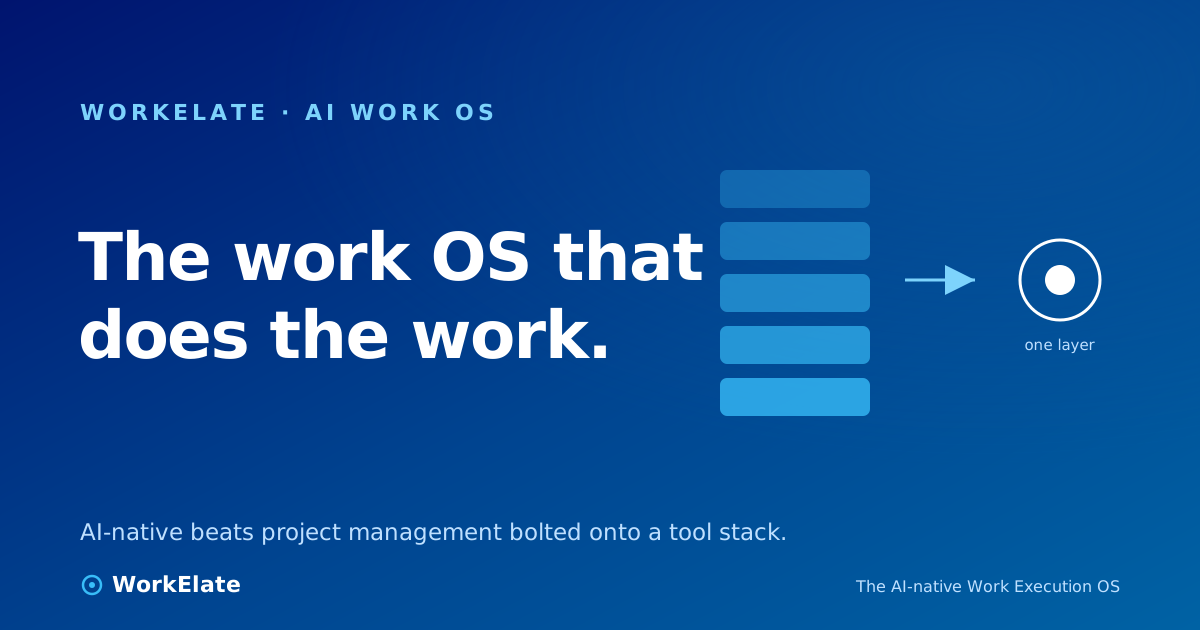
▤ Two jobs: tracking the work vs. executing it
A tracker that owns this distinction stops being a place you report work and becomes something that helps do it. That's not a better tracker. It's a different category.
From tracking to a work system
This is the shift the market is making, and it's worth naming plainly. A tracker is honest but passive: it holds a model of your work and waits for you to keep it true. A work system holds the same model — task-level and project-level — but adds an intelligence that can sense what happened across your apps, reason about what it means, and act, with your confirmation on anything that matters.
Concretely: when a client form is submitted, a tracker creates a row you'll later have to process. A work system can read the submission, understand "they want to book a call," create the task, surface the right context, and produce a real bookable slot — carrying the work across the form, the task board, and the calendar without a human routing it by hand. (WorkElate's form app does exactly that today: "book my time" yields a genuine scheduler with cancel links, not a dead dropdown that records a preference and books nothing.) The status on the board is true because the system made it true — not because someone remembered to update it.
That's the difference between an instrument panel and an engine. Both matter. But if your real bottleneck is the coordination — the carrying of work between tools, the chasing, the keeping-the-status-honest — then no tracker, project or task, fixes it. Only something that executes does.
What's the main difference between project tracking and task tracking?
Scope and altitude. Task tracking watches individual work items — assignee, due date, status — for day-to-day execution. Project tracking watches whole initiatives — milestones, dependencies, budget, timeline — for strategic oversight. Task tracking is the trees; project tracking is the forest.
Do I need both project tracking and task tracking?
Most teams do. Project tracking keeps daily work connected to the larger goal; task tracking makes sure that goal is actually being worked. Small teams with simple, independent work may only need task tracking. Complex, interdependent, deadline-driven work needs both.
Which is better for a small team?
Usually task tracking on its own. If your work is mostly independent and the priority is daily accountability — who's doing what, by when — heavy project methodology just adds overhead. Add project tracking when dependencies, phases, and stakeholders enter the picture.
Is task tracking the same as to-do lists?
It's a structured version of one. A to-do list is personal and informal; task tracking adds shared assignment, due dates, priority, and status that a team and its leads can see. The shape is similar; the visibility and accountability are the difference.
If tracking doesn't execute the work, what does?
A work system. Trackers record the status of work and rely on a human to keep that status true. A work system adds an intelligence that acts on the work itself — creating the task, booking the slot, sending the update — so the status is true because the system made it true, not because someone remembered to update the board.