POV
Modern Work, Reimagined: When the System Carries the Coordination
Modern work isn't more tools or more meetings. It's a system that carries the coordination — so less of your week goes to managing the work and more of the work actually moves.
Modern work isn't more tools or more meetings. It's a system that carries the coordination — so less of your week goes to managing the work and more of the work actually moves.
Picture a Monday at 9am. Before anyone does a single piece of real work, the day begins with a tax: a round of status pings, a standup that re-narrates Friday, a hunt through three apps to find the version that's actually current. Nobody chose this. It just accreted — one more tool, one more thread, one more "quick sync" — until the act of moving work between people became a job of its own.
That's the quiet truth about most "modern" work. It isn't modern. It's the same coordinating it always was, now spread across more surfaces.
For two decades, "better work" has mostly meant "more software." A tool for tasks. A tool for chat. A tool for docs. A tool for the deck, the form, the spreadsheet. Each one is genuinely good at its slice. And each one made the same silent promise: use me and you'll be more organized.
But organization isn't where the hours leak. The hours leak in the seams between the tools — the place no single app can see. You finish your part in one app; the next person has no idea, so you message them in another; they need context that lives in a third; and the status everyone's chasing only exists in someone's head until they type it into a fourth. The board always lies, because the board is something a human has to keep true by hand.
Adding a better app to that picture doesn't fix it. It adds a surface. The disconnection between the surfaces is the actual cost — and that's the part nobody was selling a fix for.
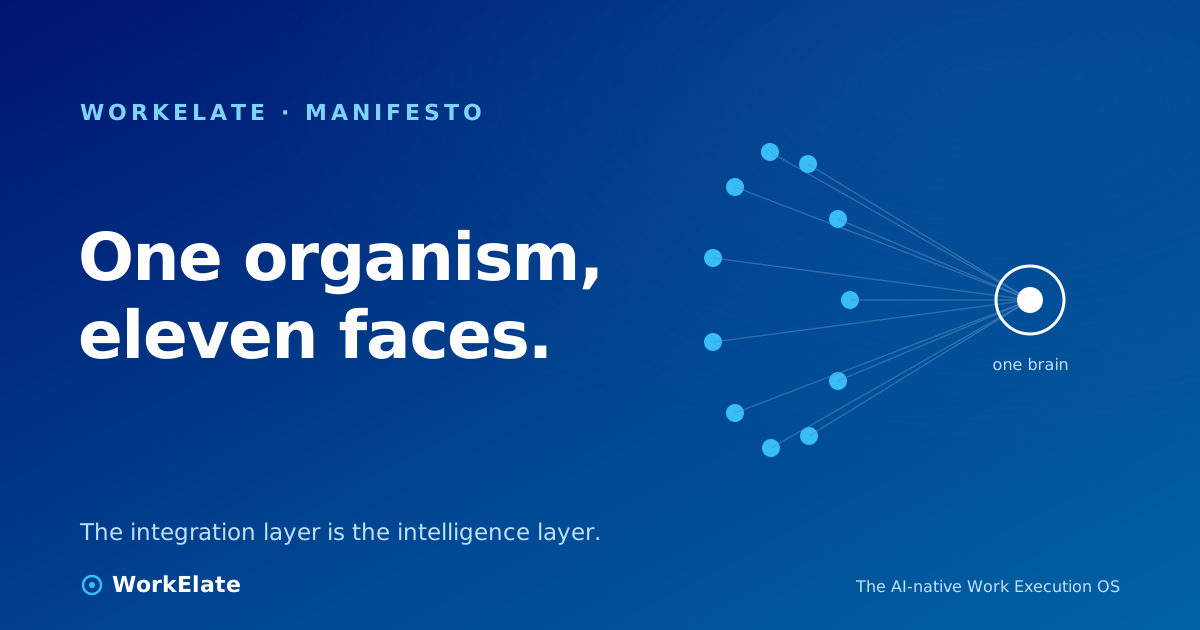
Here's the reframe modern work has been missing. The problem was never that you had too many places to do work. It's that none of those places knew about each other — so a person had to be the connective tissue, manually, all day.
So imagine the opposite. Imagine the work itself lives on a graph the system can read across every app — who owns what, what depends on what, what just finished, what's owed. Now status isn't something a human produces in a standup. It's something the system already knows. The handoff isn't a message you remember to send. It's a thing that happens, with the right context attached, because the system saw the first task close and knew what came next.
"Status should be something the system knows — not something humans produce."
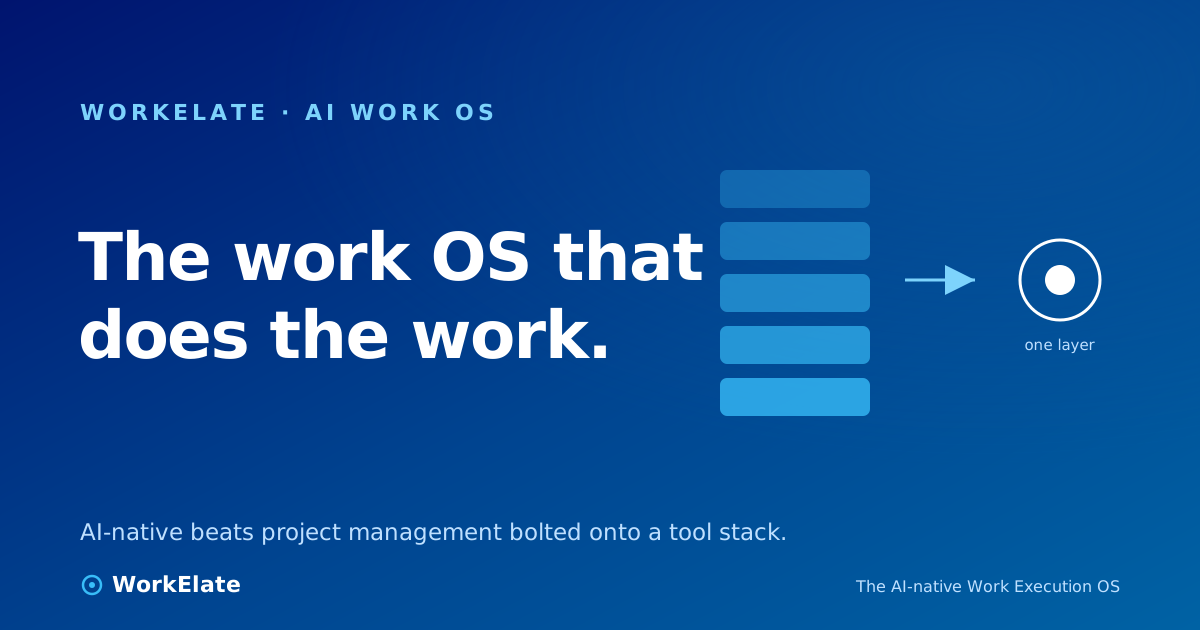
— WorkElateThat single shift is the whole difference between a tool and a work system. A tool waits for you to operate it. A system carries the coordination so you don't have to perform it. Your craft — the judgment, the taste, the actual deck — stays entirely yours. What gets lifted off your plate is the glue: the routing, the chasing, the remembering, the re-explaining. The least-loved third of the week, and the part most worth handing over.
You feel modern work not by what you do, but by what you stop having to do. The standup that didn't need to happen because everyone could already see the real state. The follow-up that didn't slip because the system held it. The "wait, which version is current?" that simply never came up. The day where the work moved while you were thinking, instead of waiting on you to relay it.
That's the texture of it. Quiet, not loud. You notice it the way you notice good plumbing — by the absence of the problem you used to live with.
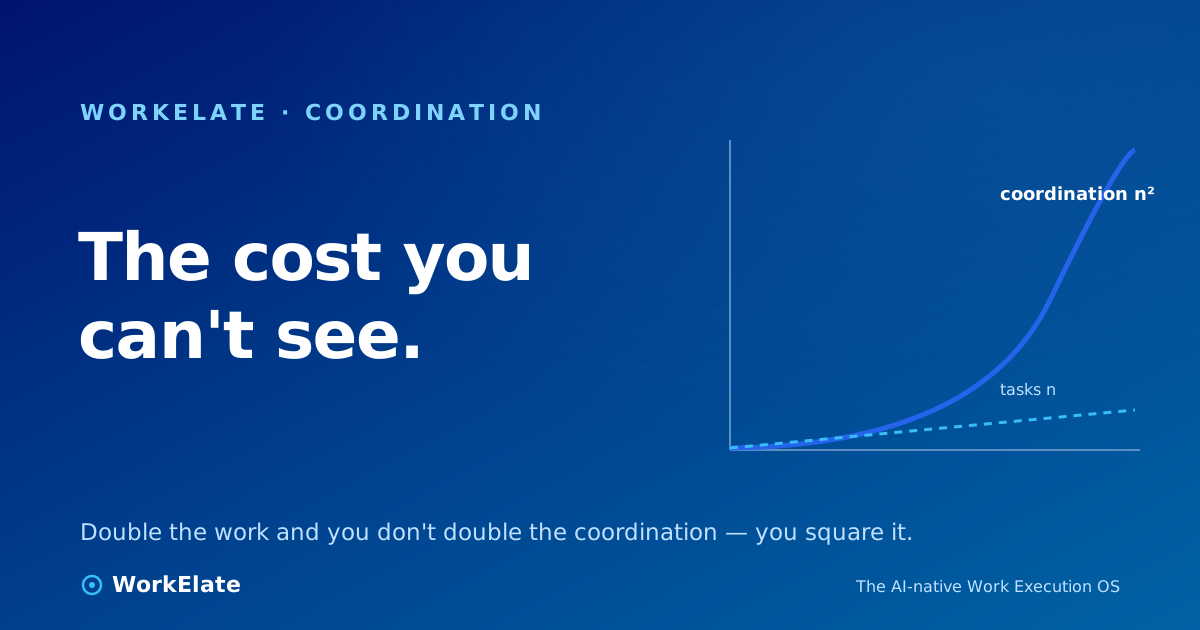
▶ Watch on WorkElate See the system carry a handoff across apps youtube.com/@WorkElate · videoId: TODO — swap when publishedThis is the version of work worth building toward: one where the real cost of a task is the coordination around it, and a system absorbs that cost so work feels like flow, not friction. It's less a productivity upgrade than a change in what a workplace is — a direction we've sketched in our note on the future of work.
So here's the question to sit with. If the coordination you currently hold in your head — every status, every handoff, every owed follow-up — were something the system simply knew, what would your team do with the week it got back?