POV
Meetings About Work Aren't Work
Look at the recurring blocks on your calendar this week. The Monday status sync. The Thursday check-in. The "quick alignment" that runs 45 minutes. Now ask one question about each of them: what would
Look at the recurring blocks on your calendar this week. The Monday status sync. The Thursday check-in. The "quick alignment" that runs 45 minutes. Now ask one question about each of them: what would
Look at the recurring blocks on your calendar this week. The Monday status sync. The Thursday check-in. The "quick alignment" that runs 45 minutes. Now ask one question about each of them: what would I miss if I didn't know it already?
For most of those meetings, the answer is nothing new. You are gathering people in a room to read aloud the current state of work. That isn't collaboration. It's a database query, performed by humans, out loud, at $200 an hour.
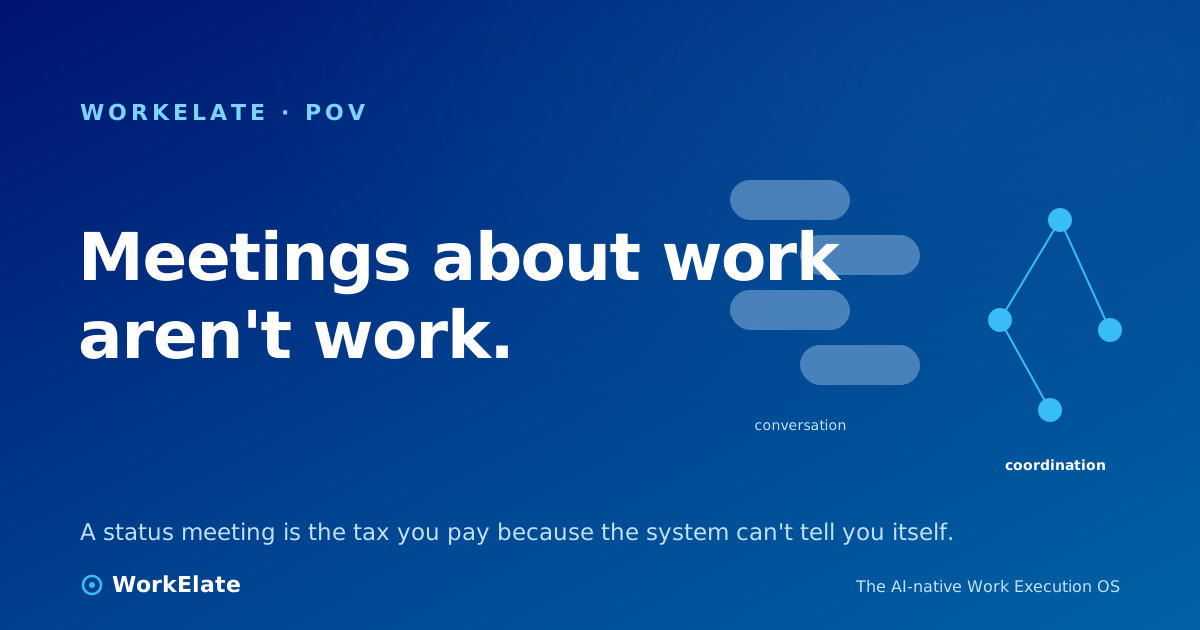
A status meeting is the tax you pay because the system can't tell you the state itself.
That's the reframe. We treat the status meeting as a meeting — a thing teams do — when it's actually a symptom. The system that should know who's blocked, what slipped, and what shipped doesn't know. So you convene people to reconstruct it from memory. Six people spend half an hour assembling a picture the tools already hold in fragments and refuse to assemble.
Notice that talking about work feels like work. You leave the sync having spoken, nodded, written things down — the bodily sensation of progress. But nothing moved. The card is still in the same column. The reframe is uncomfortable precisely because the feeling is so convincing. Coordination is not execution; it's just the part of execution that's easiest to schedule.
And meetings about work breed more meetings about work. A planning meeting decides the work. A kickoff aligns on it. A status sync tracks it. A review assesses it. A retro discusses why the tracking was wrong. Each one ends with "let's grab 30 minutes to align on that offline." The calendar fills with the overhead of staying coordinated, and the work itself gets done in the cracks between.
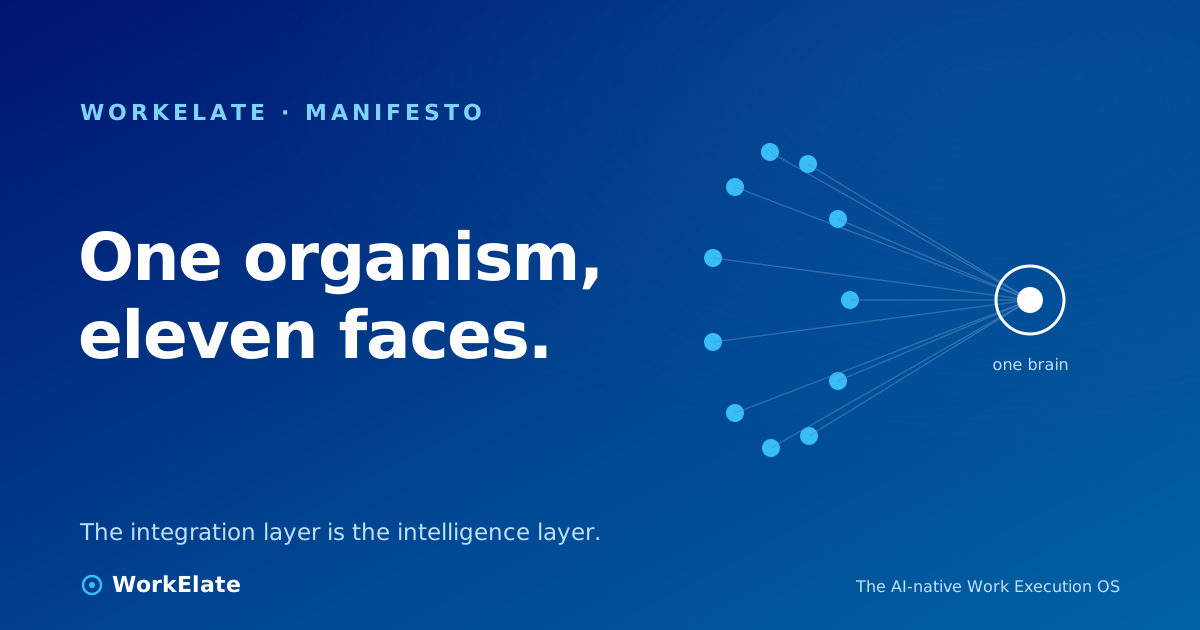
Here is the thing the status meeting is really compensating for: status lives in eleven places and agrees in none of them. The board says one thing, the thread says another, the doc is three days stale. So no single tool can answer "where are we" — and the meeting becomes the only place all eleven fragments sit in one room. You're not bad at meetings. Your tools can't talk to each other.
That's the gap WorkElate closes. When every app emits what happened — a card moves, a doc ships, a reply lands — into one shared work-graph, the state isn't reconstructed in a meeting. It's already known. WAO, the orchestrator reasoning over that graph, can answer "what changed since Friday, what's at risk, what needs me" without anyone reciting it. Status stops being a thing humans produce and becomes a thing the system reports. (This is the same idea behind why manual status updates are coordination theater — the update only exists because the system went silent.)
This doesn't kill every meeting, and it shouldn't. Strategy, hard tradeoffs, the conversation where two smart people disagree and have to think it through — those are real work, and they get better when nobody in the room is exhausted from four status syncs first. What dies is the ceremony whose only job was to read the database aloud.
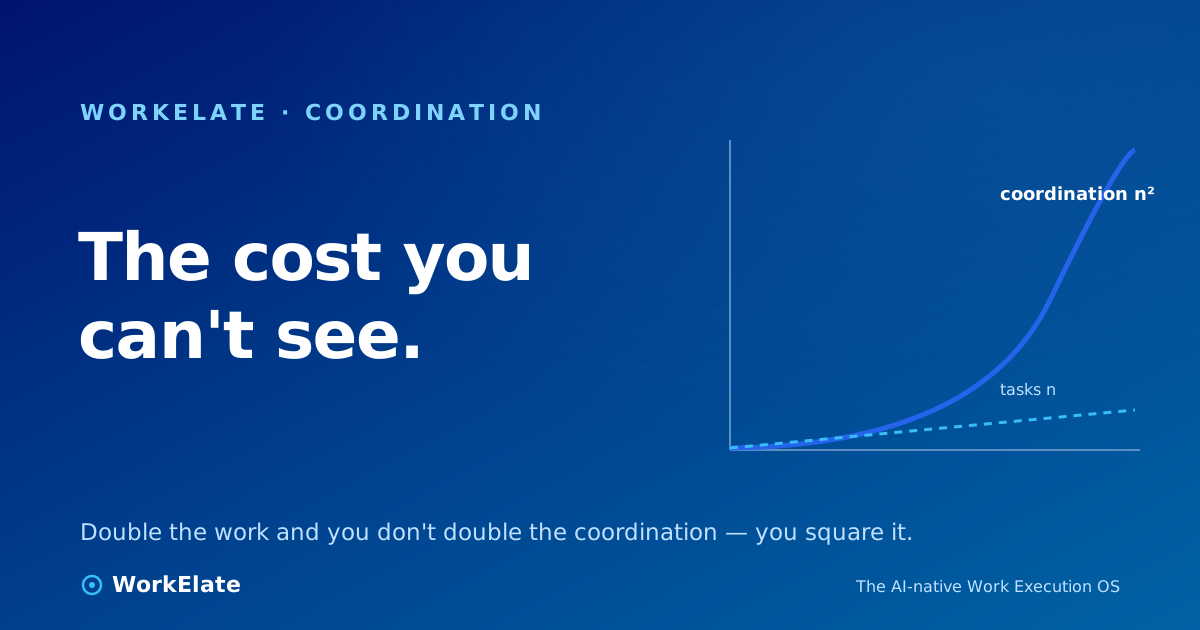
So the test for any meeting is brutal and simple: could a system that actually knew the state of the work have told me this instead? If yes, you weren't in a meeting. You were paying a tax. (The cost of that tax has a name — and it scales faster than the work does.)
▶ Watch on WorkElate See WAO answer "where are we" without a status meeting youtube.com/@WorkElate · videoId: TODO — swap when publishedThe next time someone schedules a sync, don't ask whether the meeting is well-run. Ask why your system needs you to hold the meeting at all.