POV
Loud AI Is the Wrong AI
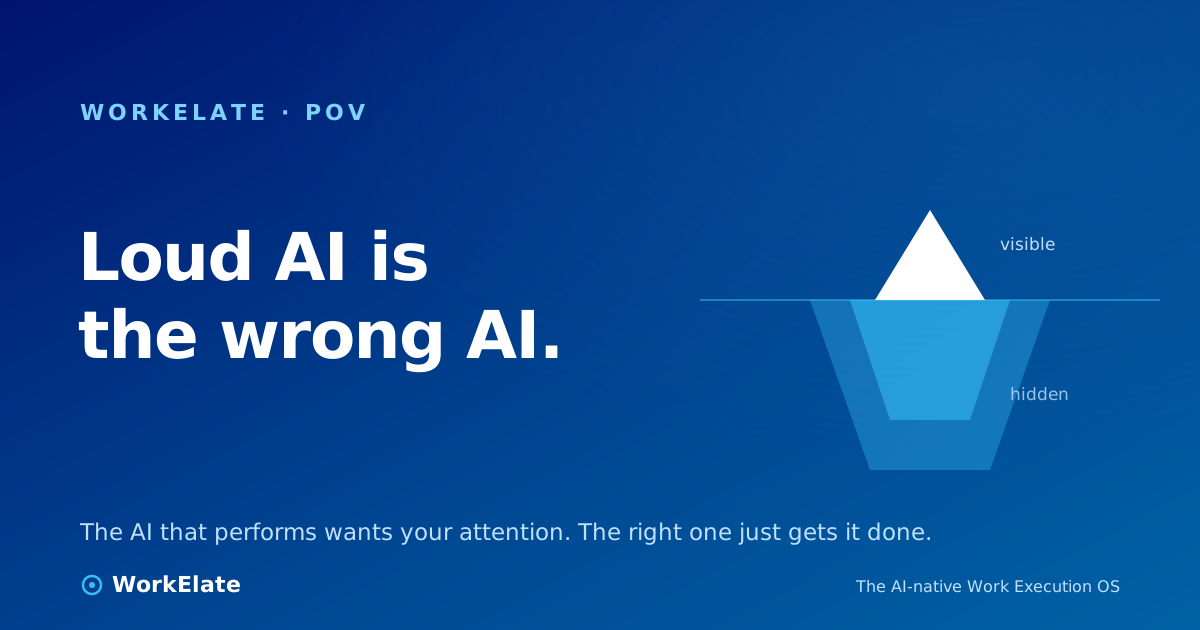
Loud AI performs — it chats, demos, and wants your attention. The right AI is quiet: it gets the work done and surfaces only what actually needs you. Quiet is an outcome, not a vanishing interface.
Loud AI performs — it chats, demos, and wants your attention. The right AI is quiet: it gets the work done and surfaces only what actually needs you. Quiet is an outcome, not a vanishing interface.
Watch how most AI behaves at work. It opens a chat window. It waits for a prompt. It asks you to confirm it understood. It shows you, in a little typing animation, that it's thinking. Then it hands back a draft and waits for applause — or correction. Every step is a small performance, and you are the audience.
That's loud AI. It's everywhere because it demos beautifully: a clean box, a clever answer, a moment that looks like magic on a stage. But a demo is a performance, and your Tuesday afternoon is not a stage. The loud AI that wowed you in the pitch becomes, by Thursday, one more thing you manage. You craft the prompt. You read the output. You catch what it got wrong. You spent the time you were promised back.
Here's the trap to avoid: "quiet AI" does not mean the interface vanishes and the machine acts in the dark. That would be terrifying, and rightly so. The visible surface is the trust surface — when AI is about to send an email to your client, move money, or restructure a board, you should see it coming and say yes.
Quiet means something narrower and more useful: the AI doesn't make you babysit it. It does the mechanical work without a running commentary, and it interrupts you only at the moments that are genuinely yours to decide. The drawer is still there. The confirm step is still there. What's gone is the constant tap on the shoulder.
The reflex that makes this safe has a name: Suggest → Confirm → Execute. WAO proposes the action, shows you exactly what it's about to do, and waits for your yes before anything irreversible happens. You're not flying blind. You're flying without having to steer every inch.
"You don't manage the AI. You manage the one decision it brings you — and it already did the other nine."
— WorkElateLoud AI says: "Write me a status update." You prompt, you edit, you paste, you send. Four moves, all yours.
Quiet AI already knows the state of the work — because the work happens inside the same system, across every connected app, not scraped from screenshots after the fact. The status is something the system holds, not something you reconstruct. When something actually needs you — a client approval, a slipping deadline, a decision only you can make — it surfaces that one thing and asks. The rest, it handled.
This is why the shape matters more than the smarts. A genius that demands a prompt for every action is still a genius with no hands — you're doing the lifting. The point of AI at work was never a better chat box. It was AI that executes, not one more thing to assist. When the AI carries the coordination and brings you only the decisions, the relationship inverts: you stop operating the tool, and the tool starts operating on your behalf — with you holding the wheel at the turns that matter.
The companies winning with AI right now aren't the ones with the loudest copilots. They're the ones whose AI is so quietly competent that people forget how much it's carrying — until they try to go back. That's the test. Not how impressive is the demo? but how little does it make me babysit it, and how rarely does it interrupt me wrongly?
So here's the question worth sitting with: the AI you're evaluating — does it want your attention, or does it earn the right to keep it?
▶ Watch on WorkElate See WAO do the work and surface only what needs you youtube.com/@WorkElate · videoId: TODO — swap when publishedFor the longer argument on why quiet is the only kind that matters, see Invisible AI: The Only AI That Matters.