Execution Debt: The Hidden Liability on Every Company's Balance Sheet
Every engineer knows technical debt. You take a shortcut in the code, ship it, and the shortcut quietly charges interest for years — every future change has to route around it. The reason the metaphor
WorkElate Team
May 15, 2026 · 8 min read
Every engineer knows technical debt. You take a shortcut in the code, ship it, and the shortcut quietly charges interest for years — every future change has to route around it. The reason the metaphor stuck is that it named something everyone felt but nobody could point to on a spreadsheet.
There's a second debt that does the same thing to a company, and it doesn't have a name yet. So here's one: execution debt. It's the compounding liability of work that was started and not finished, handed off and not caught, decided and not done. A project stuck at 80%. A thread that went quiet after the third forward. An approval somebody is "sitting on." None of it shows up in your books. All of it charges interest.
What execution debt actually is
Technical debt lives in code. Execution debt lives in the seams between people — the handoffs, the threads, the dependencies that connect one person's finished work to the next person's start.
It accumulates the same way. You take a shortcut in coordination — a handoff done by a hallway message instead of a system, a dependency held in someone's head instead of a record — and it works fine today. Then the person who held it leaves, or gets busy, or simply doesn't notice the upstream task slipped. Now the shortcut charges interest. Work that was 90% done sits untouched because nobody pulled it forward. The cost wasn't the work. The cost was the coordination that never happened around it.
THE DEFINITION
Execution debt is the compounding cost of unfinished handoffs, dropped threads, and uncoordinated work — invisible on the balance sheet, lethal to delivery.
Technical debt is interest on code shortcuts. Execution debt is interest on coordination shortcuts. Both compound silently.
Why it stays invisible
Financial debt has a number. Technical debt at least shows up as bugs and slow releases. Execution debt hides better than either, for three reasons.
It has no line item. There's no card on your board titled "chase the approval that's been rotting for three days." There's no estimate for "figure out who's now unblocked because design finished overnight." The most fragile work on your team — the work of keeping work connected — is the work nobody tracks, because it lives in the gaps between the tools, not inside any one of them.
It compounds unpredictably. Financial debt has a fixed rate. Execution debt doesn't. An abandoned initiative from last year suddenly blocks this year's launch. A half-migrated process quietly wastes an hour every week for everybody who touches it. A dropped thread surfaces as an angry client email two weeks after the moment it could have been caught for free.
And it degrades with every handoff. Work moves from person to person, team to team, tool to tool. Each transfer loses context — why this started, what "done" looks like, what's still owed. By the time it reaches the last desk, the original intent has been photocopied so many times it's barely legible. That lost context is the interest payment.
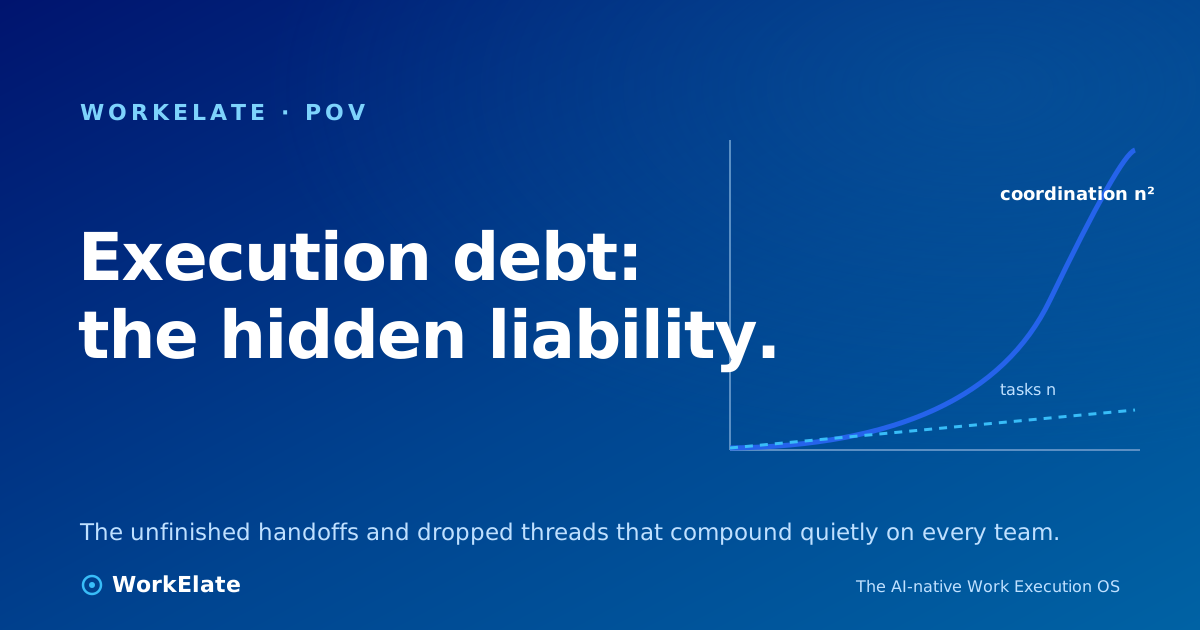
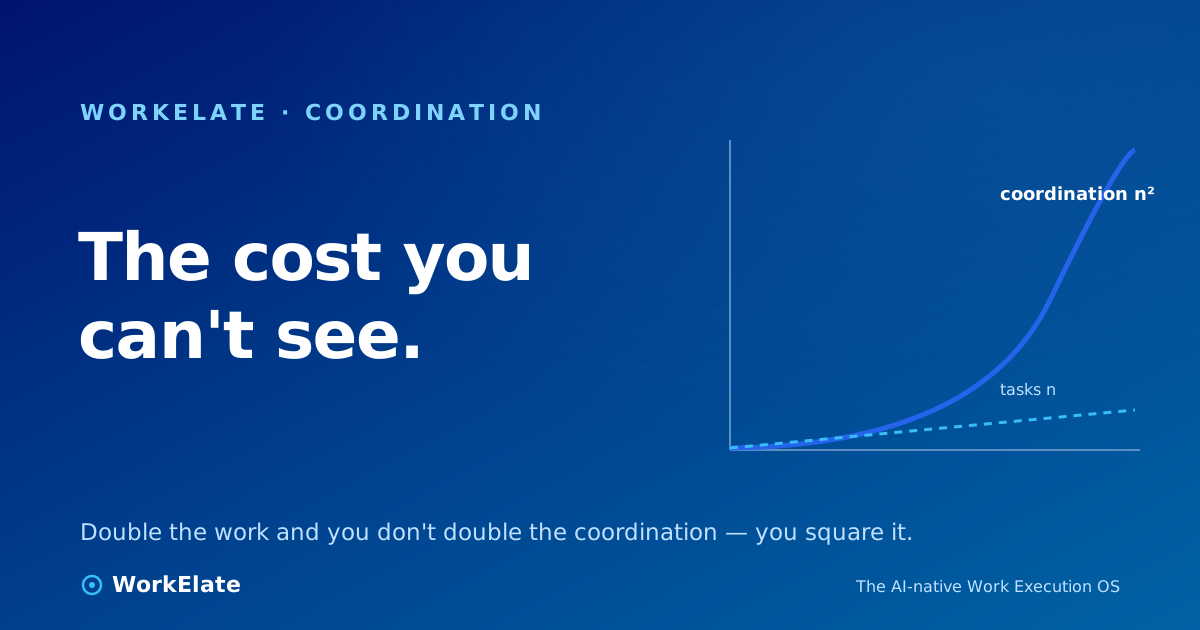
n²execution debt scales with the connections between tasks, not the count of tasks
~23 minto refocus after a single "is this unblocked yet?" context switch
0line items on your books for the most expensive coordination work you do
The interest is paid in delivery
Here's where the debt collects. The day an upstream task slips two days, nothing downstream should be on fire — in a sane world, every dependent task shifts two days and the team moves on. But nothing shifts until a human notices the slip, traces every task it touches, messages each owner, renegotiates dates, and updates five plans by hand.
Miss that window and a two-day delay compounds into weeks of scramble. The work didn't get harder. The coordination just fell behind the work, and the gap accrued interest until it came due as a missed deadline. That's execution debt cashing out — and it always cashes out at the worst possible moment, in front of a client, at the end of a quarter.
There's a second cost, harder to measure and worse: cynicism. When teams watch initiatives get announced and quietly die, they stop believing their work will ship. And people don't pour quality into work they expect to be abandoned. Unpaid execution debt doesn't just slow the company down — it teaches the company that finishing is optional.
Why you can't just "finish what you start"
The usual advice is willpower: start fewer things, finish more, kill zombies cleanly. It's correct and it isn't enough, because the debt isn't really a discipline problem. It's a visibility problem.
Most tools can't see the work. They store tasks as records inside separate apps that don't talk to each other. The dependency between the finished design and the blocked ticket exists only in someone's head, or in a link they happened to remember to draw. There's no single picture of how the work connects — so there's nothing for software to read, and a human stays the only thing holding the map. You can't pay down a debt you can't see, and right now the only instrument that sees execution debt is a tired person's memory.
So the real question is: what would it take for the system to hold the map instead?
Paying it down: emit the graph, give it one brain
Two things have to be true.
First, the work-graph has to be emitted, not inferred. Every meaningful event — "design finalized," "approval granted," "deadline moved" — has to be a signal the system actually receives, the moment it happens, across every surface. Most stacks try to guess the graph by scraping scattered APIs after the fact, which is always late and always partial. The durable version is one where the apps themselves emit the graph as work moves, so the link between Task A and Task B is a fact the system holds — not a reconstruction it pieces together once the damage is done.
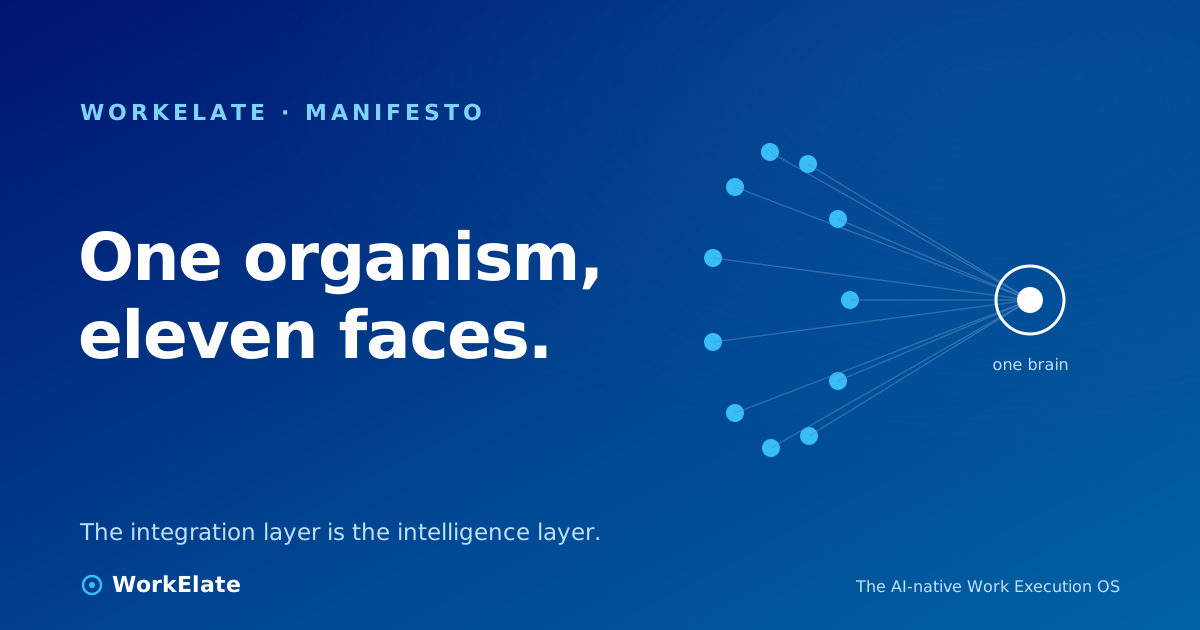
Second, one brain has to read that whole graph. A dependency that crosses from your design tool to your dev tool to your calendar can't be managed by three copilots that each see one slice — the coordination is the cross-app part. It takes a single intelligence sitting above the stack, one that sees the finished design, the unblocked ticket, and the open calendar slot as one connected picture and acts on the seam between them. WorkElate calls that brain WAO, and the cross-app picture it reads is the work-graph.
When both are true, the interest stops accruing. The slip gets caught the moment it's emitted, not whenever a human happens to look. The "you're clear to start" message becomes something the system surfaces — here's what moved and what now needs you — with anything destructive or client-facing still gated behind your confirmation. You don't hand over control of coordination. You stop being its manual machinery.
That's the difference between a tool that records your execution debt and a system that pays it down.
So before the next quarter closes, total it up — not the cash you owe, but the work you started and never finished, the threads that went dark, the handoffs nobody caught. That number isn't on any statement. But it's the truest measure of how fast your company can actually move. The only question left is whether you find out from a dashboard — or from a client who got there first.