The Shift
The Operating System Era of Work Has Begun
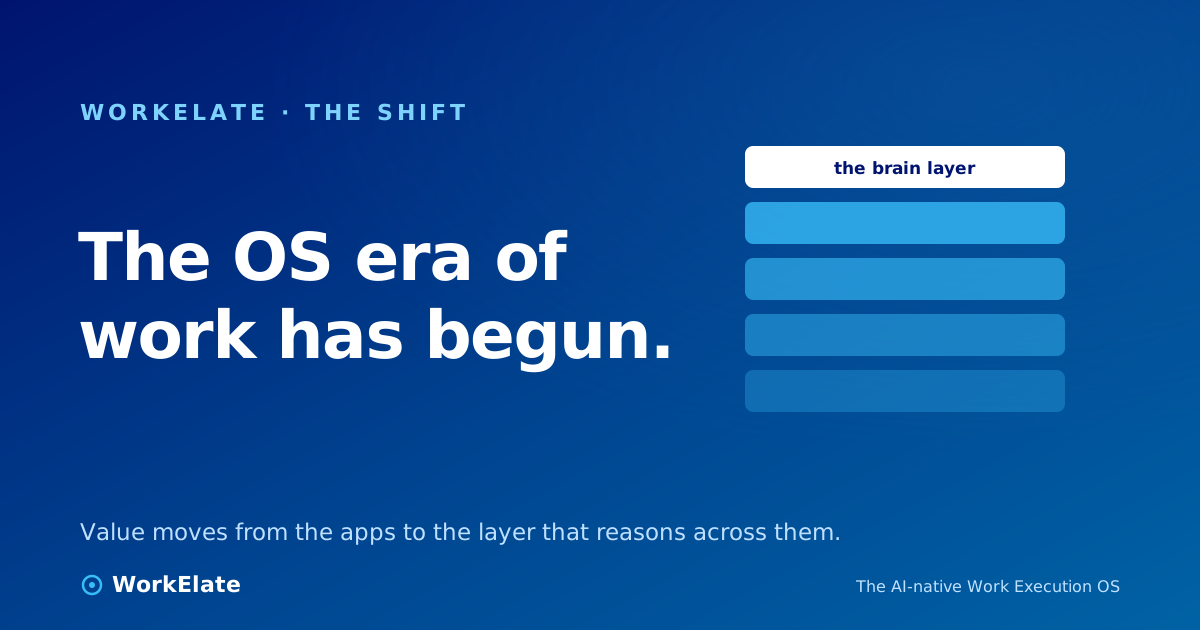
Work software is entering its OS era. The value is leaving individual apps and moving to the layer that reasons across all of them — the work-graph and one brain.
Work software is entering its OS era. The value is leaving individual apps and moving to the layer that reasons across all of them — the work-graph and one brain.
In May 2022, Glean was a search box. A startup founded by ex-Google engineers had spent three years building the least exciting thing in software: connectors. One hundred of them. A permission-aware map of who in a company is allowed to see what — every Slack message, every Jira ticket, every Drive folder, joined into a single graph. Nobody wanted to fund a search company. Enterprise search had a graveyard reputation; the founder later said the status quo of employees manually hunting for files was his "biggest competitor."
Then ChatGPT happened, and overnight every enterprise on earth wanted the same thing: a chatbot that could answer questions over their own data, safely. Almost nobody could build it. The model was a commodity — anyone could call the OpenAI API. What you could not call an API for was a governed, permission-aware map of all your company's work. Glean already had one. It had spent the boring years building the substrate the model would need to be useful.
The valuation ladder that followed tells the story plainly: $1B in May 2022, $2.2B in February 2024, $4.6B that September, $7.2B by June 2025. The model did not move those numbers. The substrate did.
This is the most important pattern in work software right now, and it is worth saying flatly: the value is leaving the apps and moving to the layer that reasons across them. We are entering the operating system era of work.
The phrase gets thrown around — "Work OS" has been a marketing slogan for years. But there's a precise version of the claim, and it's worth holding to it.
An operating system is not an app. It is the thing apps run on. It owns the resources, schedules the work, remembers the state, and brokers between programs that were never designed to talk to each other. The first personal computers shipped with applications and no real OS, and the experience was exactly what you'd expect: every program owned its own world, and moving anything between them was the user's manual labor. The OS didn't add features. It added a layer — and that layer turned out to be where the durable value lived. Decades later we don't argue about which spreadsheet to buy nearly as much as which platform it runs on.
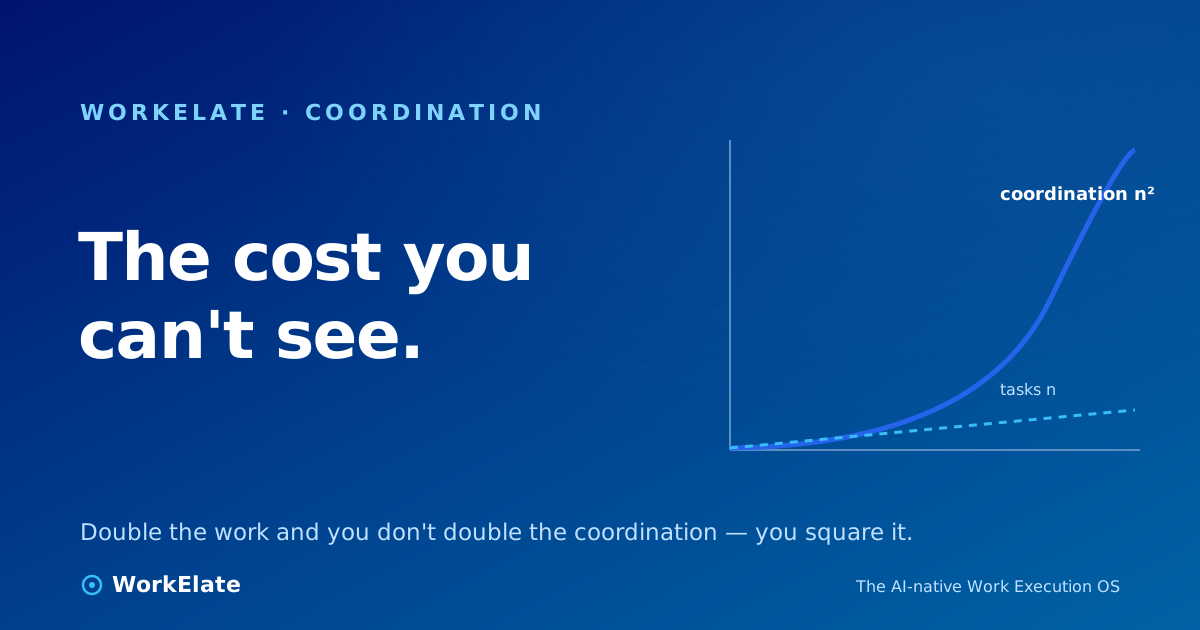
Work software is at that same inflection. For thirty years the answer to any new work problem was a new app: a tool for tasks, a tool for chat, a tool for docs, a tool for design. Each one solved its slice well. None of them owned the thing that actually runs a company, which is the work between the apps — the handoffs, the context, the "did the design get to the client, did the client reply, did anyone update the board." That connective work has no home. It lives in people's heads and in the tax they pay re-explaining themselves all day.
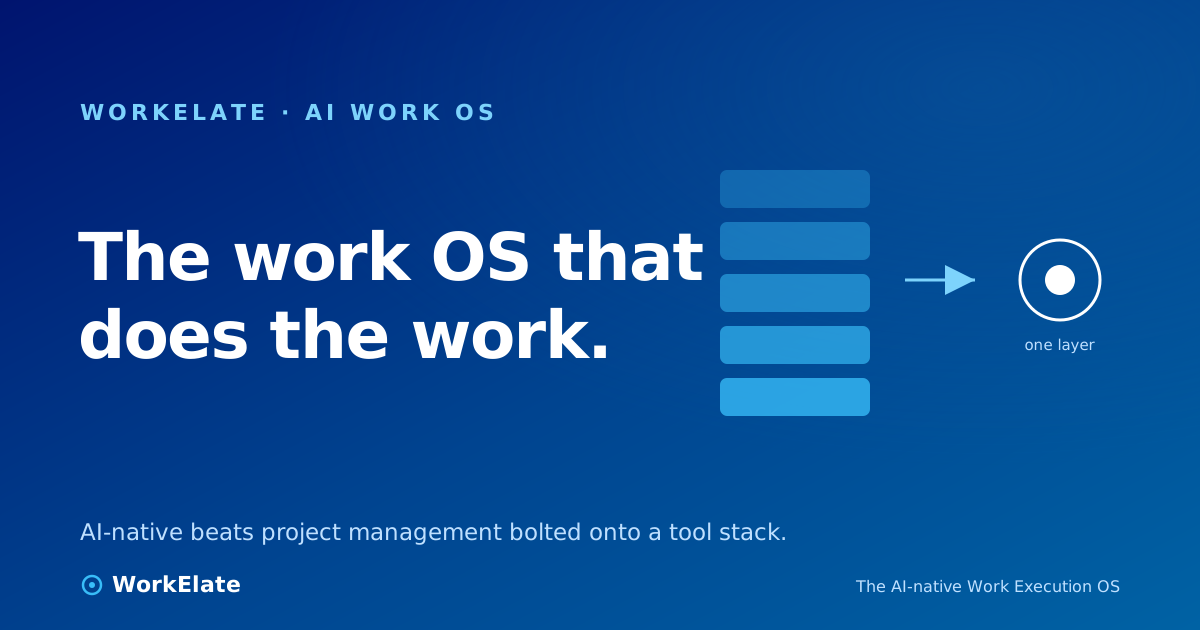
The OS era is the moment a layer finally claims that space. Not by replacing the apps — the apps are the hands and the senses, and you still need them — but by sitting above them and reasoning across all of them at once.
If the layer above the apps is so valuable, why doesn't the company that already owns the apps just build it? They are trying. They are also structurally slow, and the slowness is instructive.
Take Google, which has owned a suite since Gmail launched in 2004. For roughly fourteen years, Gmail and Calendar and Drive and Chat were glued together at the edges — shared login, a few inline buttons — but they did not reason across each other. Only in the 2024–2026 stretch did Gemini begin genuinely pulling context across Gmail, Chat, and Drive at once. Owning the apps for fourteen years did not give Google the cross-app brain for free. The monolith had to be rewired, app by app, and that is hard, slow, and politically fraught inside a company organized around individual products.
Microsoft tells the same story from the demand side. M365 Copilot shipped in November 2023 with the best distribution in software history — 450 million people already inside the suite. By third-party reporting, only around 3.3% of those users pay for Copilot, and only about 16% of pilots reach production. An AI feature bolted onto a suite built for humans does not automatically become the layer that runs work. The brilliance inside one app does not cross the wall to the next one.
This is the opening, and it is a structural one rather than a clever one. The incumbents own the surfaces but were architected for a pre-OS world: each app a silo, coordination left to the human. Rewiring a monolith for cross-app reasoning is exactly the kind of work large organizations do worst and slowest. The window is the years it takes them to catch up to their own footprint.
Here is the part most people get backwards. They look at the OS era and assume the prize goes to whoever has the best model. It doesn't, and Glean is the proof. The model Glean uses is the same model anyone can rent. What it had — and what nobody could conjure overnight — was the permission-aware graph the model needed to be safe and useful. Three boring years of substrate beat any amount of model cleverness, because the model was always going to be a commodity and the substrate never was.
The lesson generalizes into a single sentence, and it is the thesis of this whole shift: the integration layer is the intelligence layer. Not metaphorically. The thing that makes a work brain smart is not how good its reasoning is in the abstract — it's how much of your actual work it can see, remember, and touch. Reasoning is cheap now. Context is the scarce input. And context only exists if someone built the unglamorous plumbing to capture it: the connectors, the emissions, the graph, the memory that compounds across months instead of resetting every conversation.
This reframes what "winning" even looks like. Every winner in work software started narrow and earned the suite — none launched as an "OS." Slack started as searchable chat. Notion started as a doc. The companies that announced themselves as platforms on day one mostly lost to the ones that did one job visibly well and grew the substrate underneath. The OS era doesn't reward the loudest claim of breadth. It rewards depth of integration — the company that can see and act across the most of your real work, with memory that gets better the longer you use it.
We'll be plain about our own position, because that's the brand. WorkElate is a native example of this shift, not the finished article.
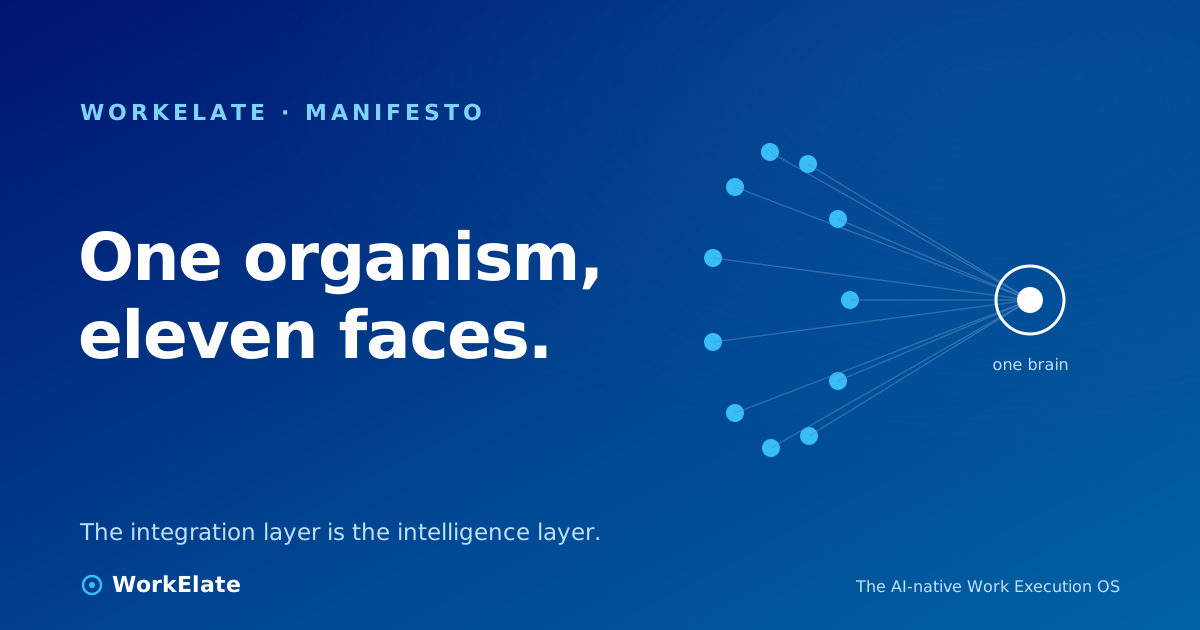
We run eleven surfaces — hub, weMail, chat, data, docs, ppt, calendar, task, board, form, and journey — and a single reasoning layer above all of them. That layer is the part that matters. Every app mounts the same AI drawer, and that drawer posts to one brain through one route. There is one cognitive loop — sense, recall, reason, decide, act under a confirm gate, remember — and the two stages most copilots simply don't have are recall and remember. A copilot answers and forgets. A work execution layer remembers, which is the difference between a clever assistant and an operating system.
The structural bet underneath is the one Glean's story validates: we don't infer the work-graph by reading APIs from the outside — the apps emit the graph as work happens, keyed on the client. Inferring it means you can only read; emitting it means you can write back. That write-path — the ability to actually do the coordination work, not just describe it — is the substrate we're investing in while it feels slower than shipping features. Because the model will be a commodity, and the graph won't.
Is it all the way there? No. Some surfaces are deep and some are thin, and we keep that honest in public. But the architecture is the OS-era architecture: not eleven apps with AI bolted on, but one organism with eleven faces.
The app era gave us thirty years of tools that each solved one problem and left the connective work to us. That work — the glue, the handoffs, the re-explaining — was always the real job, and it never had a home. The OS era is the moment a layer finally claims it.
The companies that win that layer won't be the ones with the best model or the loudest claim to be a "platform." They'll be the ones who did the boring work first: built the graph, captured the context, earned the right to act across it. Glean spent three years on connectors before the moment arrived. Google spent fourteen years owning a suite and still had to rewire it app by app. The substrate, every time, is the thing.
So the question for anyone choosing work software now isn't which app is best. It's the harder one: when your work moves between tools, who is the one thing that remembers — and can act? If the answer is still "you," you're living in the app era. The OS era is the one where it isn't.