POV
The Getting Started Problem
The blank page is the most expensive moment in any project. Work stalls before it starts. AI's real job is to kill the cold-start with a believable first draft.
The blank page is the most expensive moment in any project. Work stalls before it starts. AI's real job is to kill the cold-start with a believable first draft.
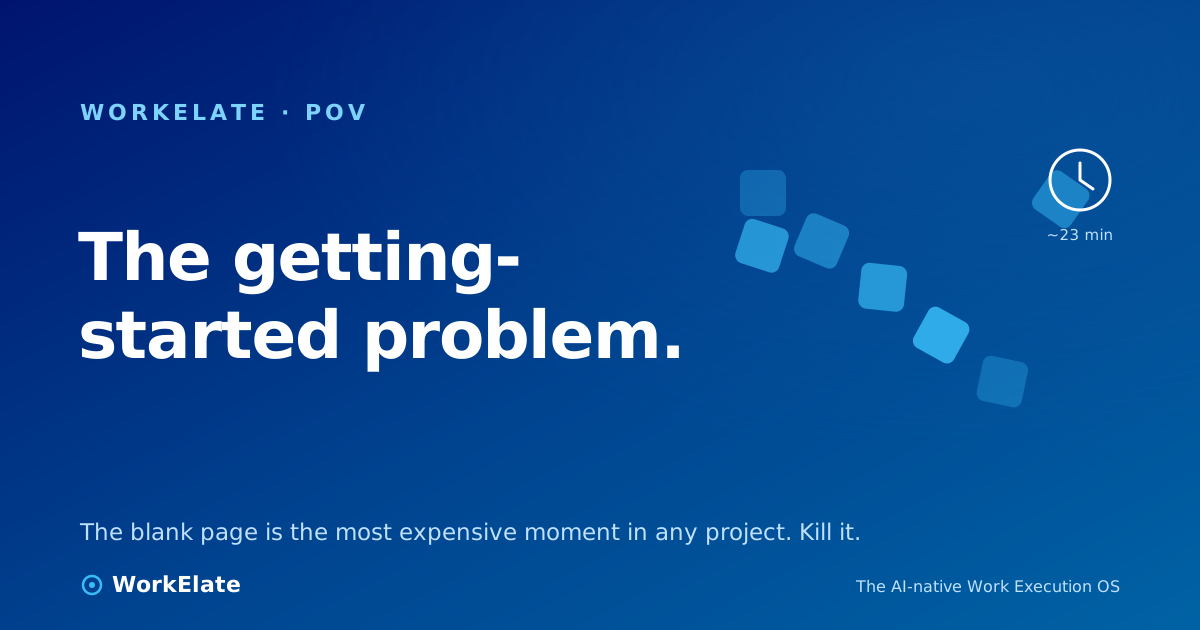
Count the times this week a piece of work sat untouched for a day — not because it was hard, but because nobody wanted to face the empty version of it. The blank deck. The first row of the spreadsheet. The doc with a title and nothing under it.
That moment is the most expensive one in the whole project. And almost nobody budgets for it.
We tell ourselves the cost of work lives in the doing. It doesn't. It lives in the starting — the cold open, where the page is blank and the brief is vague and the next move isn't obvious. A task that's 80% defined gets done. A task staring back at you as an empty box gets a "let's circle back tomorrow." Tomorrow it's still empty. The work didn't fail. It never began.
Software people have a clinical term for this: the empty state — the screen you see before you've put anything in. For years it was treated as a design afterthought, a place to drop a friendly illustration and a "Create your first project" button. Turns out it's where products quietly die.
The clearest evidence is Gamma, the AI deck tool. For years it had a beautiful product and a fatal problem: people landed on a blank canvas and froze. The cliff between signing up and making the first real thing was where most users walked away. Then in March 2023 it shipped one thing — type a prompt, watch a deck build itself — and the empty canvas was gone. The growth that followed was not subtle: by its own account it took roughly eight months to reach the first 60,000 signups, and under a week for the next 60,000.
Read that twice. Gamma didn't change what the product was. It changed who could start. The feature wasn't slides. The feature was never facing a blank page again.
Here's the part most "AI for work" pitches get backwards. The promised payoff is usually the finish — AI that does the whole job. But the moment AI is most valuable is the one before the job exists: the cold start. Its real job isn't to replace your judgment. It's to make sure you're never editing from zero.
A believable first draft changes the physics of the task. Reacting to something — "no, move this, cut that, the tone's off" — is a fundamentally easier act than conjuring something from nothing. Give a person a wrong-but-real starting artifact and they'll have it right in ten minutes. Give them an empty box and the same work takes three days, most of it spent not-starting.
This is why "AI assists you" undersells the point. Assistance waits for you to begin. The win is killing the cold-start for you — a real deck, a structured doc, a populated board, already on the screen when you arrive. Then your expertise does what it's good at: judging, cutting, sharpening. That's the difference between AI that executes and AI that merely assists.
The catch: the first artifact has to be believable. A generic, obviously-machine-shaped draft is worse than blank — now you're cleaning up before you can start. The bar is a first move good enough that the person picks it up instead of deleting it. That bar is high, and it's the whole game.
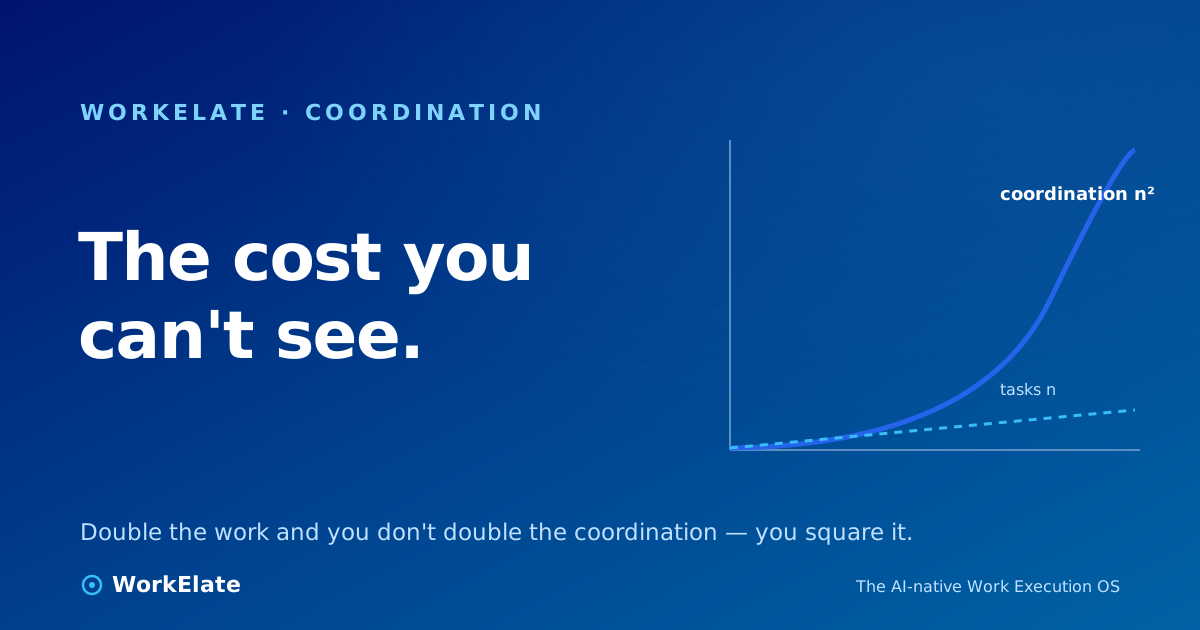
Move the cost from doing to starting, and you see your projects differently. The bottleneck was never your team's capacity. It was the count of blank pages between an idea and a moving task — and every one of them is a stall you didn't schedule. Most of the real cost of a task is coordination and cold-starts, not the work itself.
It also resets the oldest excuse in the building: that the plan is what's missing. It usually isn't. Planning is easy; getting things done is hard — and the hardest inch of getting-done is the first one, off zero.
▶ Watch on WorkElate Watch a cold-start turn into a real first draft youtube.com/@WorkElate · videoId: TODO — swap when publishedSo count them this week — the tasks that aren't hard, just unstarted. That number is your real backlog. The question isn't whether your people can do the work. It's how many of them are still standing at the edge of a blank page, waiting for someone to make the first move.