Case Study
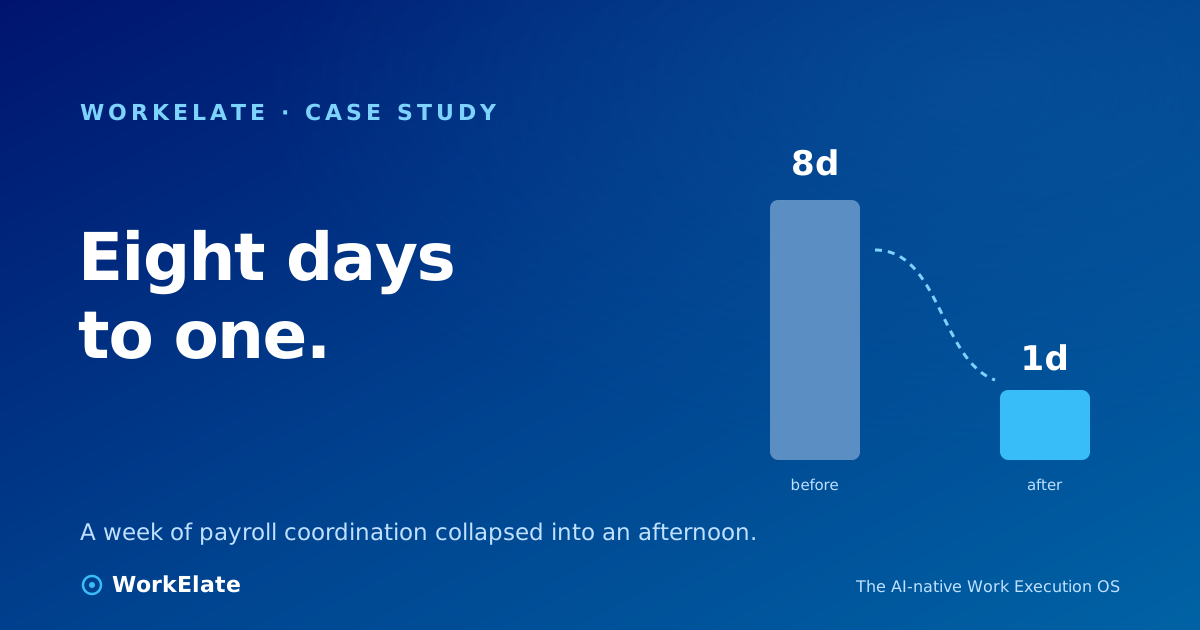
8 days to 1: how Navjyot Engineering took their month-end back
A 150-person manufacturer ran payroll across 7 spreadsheets and 8 days a month. Here's how one connected work-graph cut it to a single day.
A 150-person manufacturer ran payroll across 7 spreadsheets and 8 days a month. Here's how one connected work-graph cut it to a single day.
⚠️ Confirm Navjyot is a real, approved reference before publishing. Replace every [VERIFY] tag with a confirmed fact or remove it. The source post was explicitly labeled a hypothetical scenario. A second, harder flag: the source frames this as an "HRMS / payroll module with biometric sync and PF/ESI compliance" — WorkElate does not ship a payroll engine or statutory-compliance module (see CONTENT-PLAYBOOK §5). This rewrite re-grounds the story on what WorkElate actually does — connect the work across apps with One Brain — and treats payroll as the coordination problem it really is. Do not republish the original "HRMS features" framing; it claims capability we don't have. Honesty over polish.
---
On the eighth day of every month, Priya [VERIFY — name] from HR at Navjyot Engineering [VERIFY — approved reference] would still be reconciling.
Not because she was slow. Because the truth about 150 people's pay lived in seven different places, and none of them agreed with each other. Attendance in one spreadsheet. Leave in another. Salary components in a third. Deductions, overtime, the new joiners from the 4th — scattered across files that someone had emailed, someone had renamed _FINAL_v3, and someone had quietly edited the wrong copy of.
Every month, the same eight days. Every month, a 25% [VERIFY — self-reported] bite out of the HR team's bandwidth, spent not on people but on cross-checking cells. And every few months, an error that reached an actual paycheck — the kind that turns a quiet employee into an angry one by lunchtime.
This is what payroll actually is at a 150-person manufacturer. Not a calculation problem. A coordination problem wearing a calculation costume.
The instinct is always to fix the spreadsheet. Add a tab. Lock a column. Write a meaner formula.
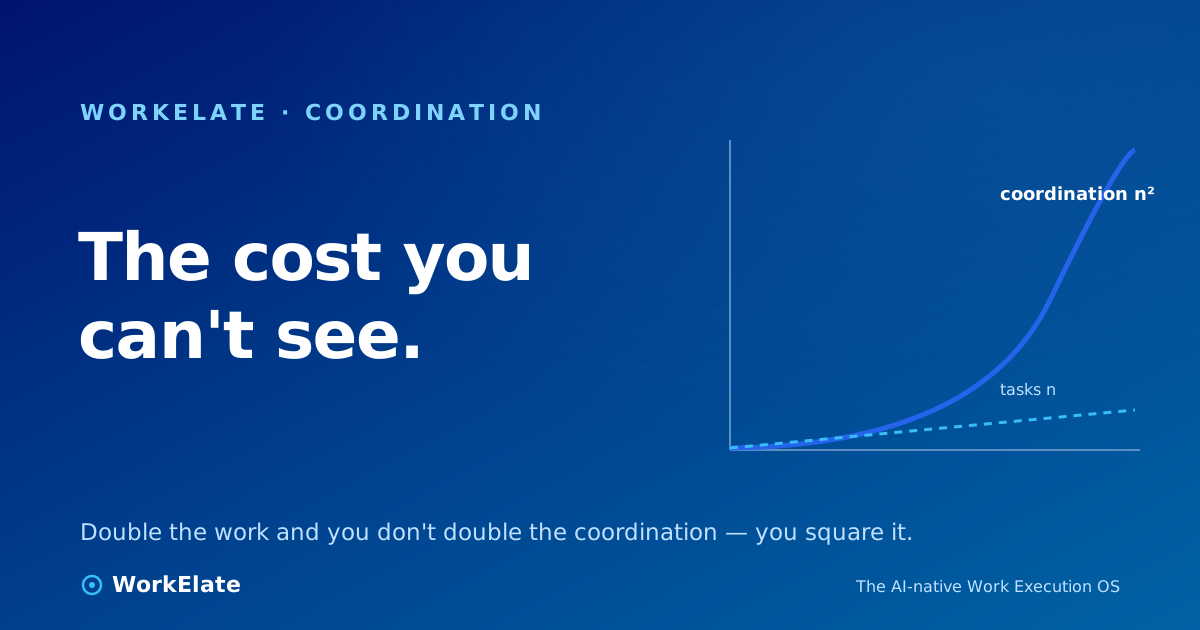
It never works, because the spreadsheet was never the problem. The problem was the seven seams between them — the hand-offs where attendance becomes leave-adjusted days, where days become a salary line, where a line becomes a number on a payslip. Every seam was a human, copying one number from one file into another, hoping the source hadn't changed since they opened it.
The board, as we say around here, always lies. Seven boards lie seven different ways. No formula reconciles a hand-off that happens in someone's inbox.
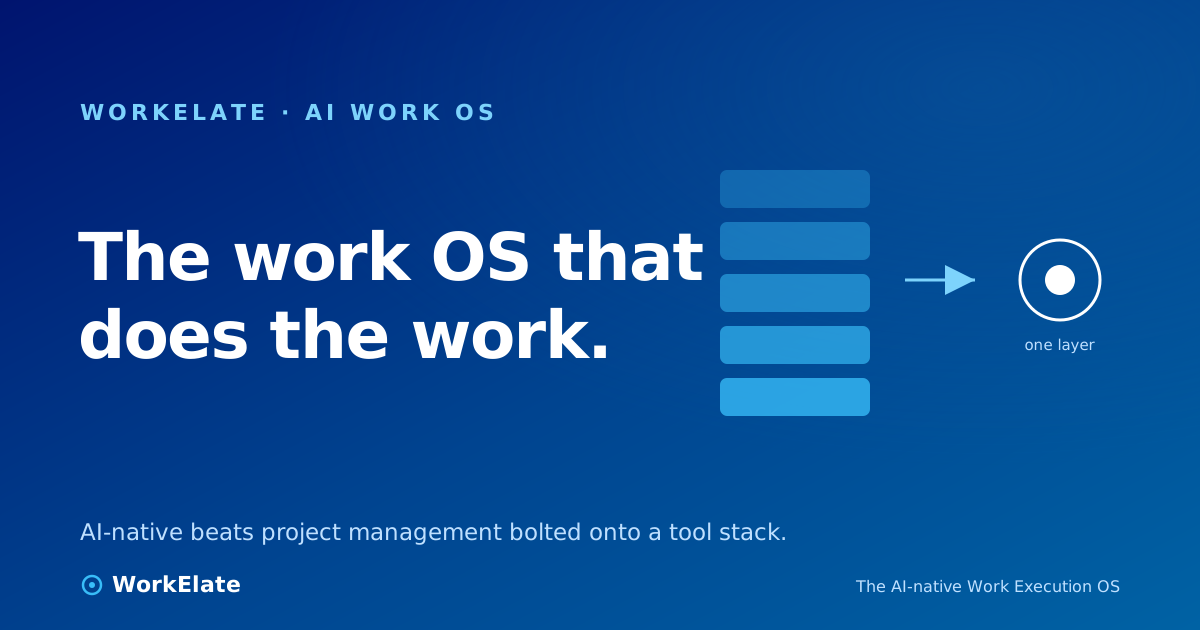
Navjyot didn't buy a better spreadsheet. They moved the whole month-end onto WorkElate, where the apps share one connection instead of seven disconnections.
Attendance, leave, the approvals, the running salary sheet — they stopped being seven files emailed around and became one cross-app work-graph: the same facts, in one place, that every app reads from and writes to. When a leave gets approved in one surface, the days that feed payroll update in the next. No re-keying. No _FINAL_v3. No "wait, which copy is current?"
Sitting over that graph is WAO, the One Brain — the part that does the glue work a person used to do by hand. It watches the hand-offs the team used to babysit: the new joiner whose attendance hasn't synced, the leave that double-counts, the row that doesn't reconcile. It surfaces the three things that genuinely need a human, and quietly handles the mechanical reconciliation that doesn't. Suggest → confirm → execute — a person still signs off on what reaches a paycheck. The machine just stops being the bottleneck between the truth and the number.
That's the whole move. Not "AI that does payroll." A connected graph plus a brain that does the coordination the seams used to demand.
Within two months [VERIFY — timeframe], month-end stopped being a project and became a task.
"I used to spend the first eight days of the month making seven files agree with each other. Now I spend the first day checking the things that actually need me." — Priya [VERIFY — real, approved quote required before publishing]
The eight days were never about math. A spreadsheet can multiply. What it can't do is reconcile itself with six other spreadsheets that an organization keeps changing — that's coordination, and coordination is the work that quietly eats your best people's months.
Navjyot's win wasn't a payroll feature. It was deleting the seams. When the work lives in one graph and one brain watches the hand-offs, the eighth day just doesn't arrive.
So the question for anyone still reconciling: how many of your eight days are arithmetic — and how many are just the cost of your tools not talking to each other?