POV
Fragmentation Is the Real Productivity Killer
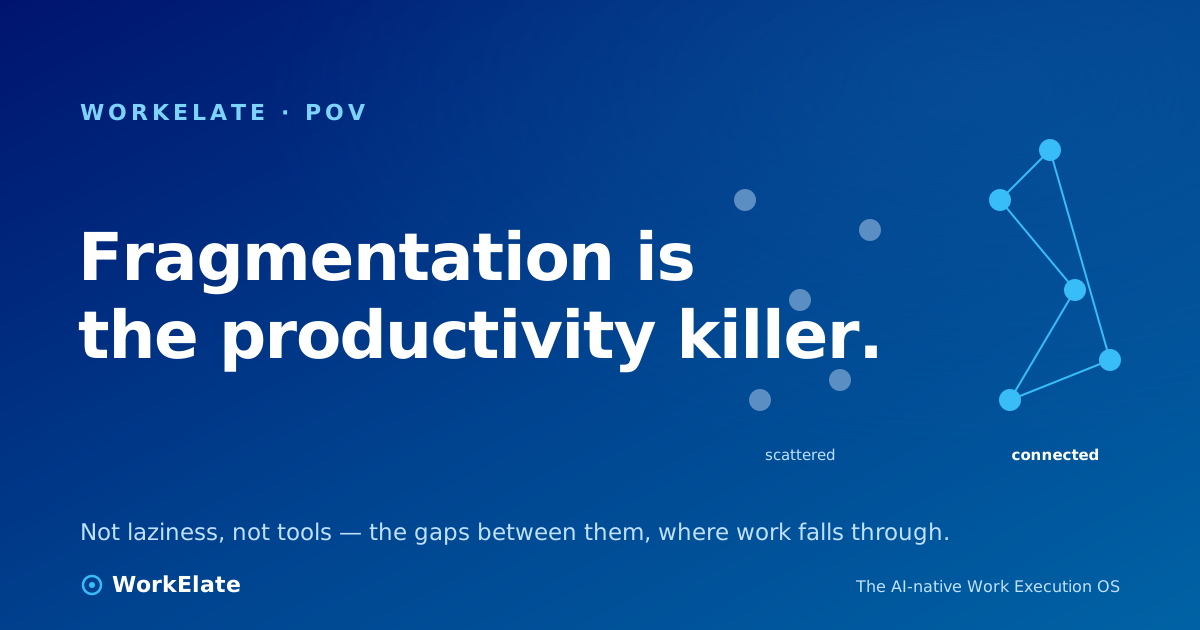
The productivity killer isn't laziness or too many tools — it's the gaps between them where work falls through. The fix connects the work, not the apps.
The productivity killer isn't laziness or too many tools — it's the gaps between them where work falls through. The fix connects the work, not the apps.
A designer finishes a logo on Friday. The brief that started it sits in an email thread from three weeks ago. The feedback that shaped it is spread across nine chat messages. The approved version lives in a shared drive folder nobody can name from memory. The status — is this done? — exists only in one person's head, and that person is in a different meeting.
Nothing here is broken. The email works. The chat works. The drive works. Every tool did its job perfectly. And yet the work fell through the seam between them, the way water finds the gap between two tiles. That seam is where most teams lose their week — not to laziness, not to bad apps, but to fragmentation: the gaps between tools where context goes to die.
We blame the wrong villain. We reach for focus hacks and morning routines and a cleaner folder structure, as if the problem were inside us. It isn't. The problem is structural, and you can feel exactly where it lives — in the handoff.
Walk one project across one day and count the seams. The brief is in email. The feedback is in chat. The final file is in the drive. The spec is in a doc. The status is in a board. The next step is in someone's head. That isn't six places to look. It's six context switches, and the research on switching is unkind: it can take more than twenty minutes to fully re-engage after a single interruption. Multiply that across a team and the cost stops being personal and becomes architectural.
The bill arrives in three line items, and you pay all three before you do any actual work:
There's a memory tax — the energy spent remembering where the decision lives, which version is current, who owns the next step. There's a search tax — even when you know where something should be, finding it means opening the right app, navigating to the right place, scrolling to the right message, and confirming it's the latest. And there's a translation tax — a chat message becomes an action item, the action item needs a doc, the doc needs an approval, the approval triggers a task. Every one of those arrows is a manual handoff, and every handoff is a place something quietly goes missing.
None of this is moving work forward. It's maintaining the scaffolding that fragmentation requires. It feels like work — your calendar is full, your apps glow with activity — but most of the day went to stitching, not shipping.
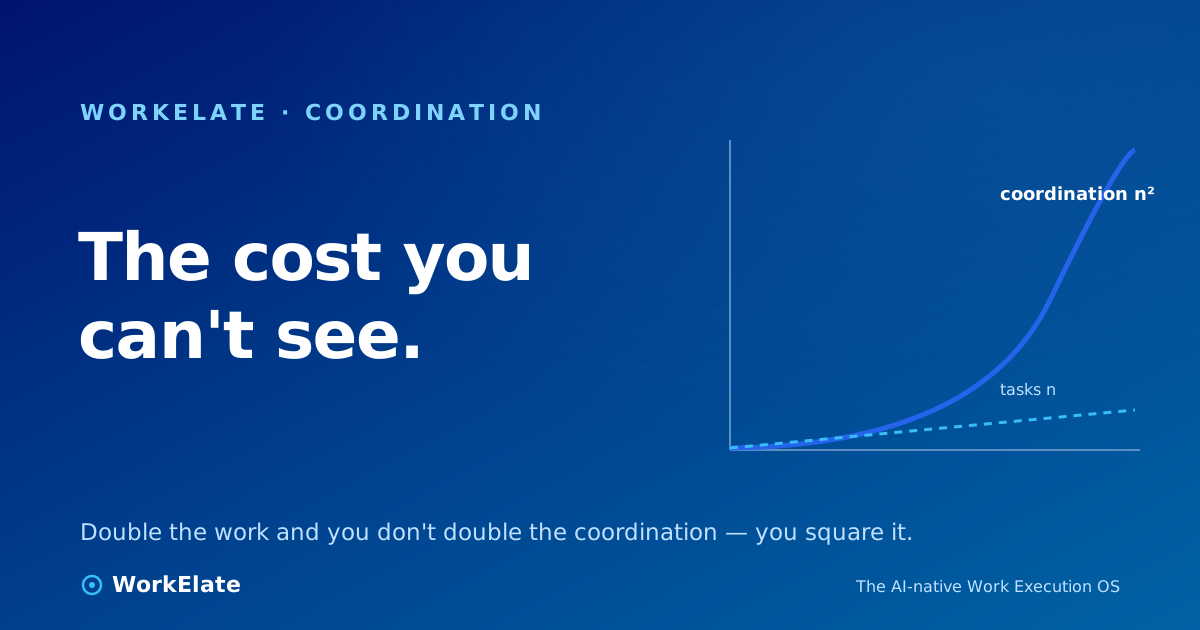
The standard advice is personal discipline: better tags, cleaner folders, tighter documentation, one unified inbox. It's a band-aid on a structural wound. The most organized person on earth still can't fix tools that don't share what they know, context that lives in different people's heads, or work that requires constant manual stitching by design. Discipline scales linearly. Coordination scales like n². In a team of five, everyone roughly remembers where things are. In a team of fifty, institutional memory becomes institutional archaeology — and the digging is done by your best people, the ones who hold the system together with heroic effort until they burn out.
And fragmentation doesn't only slow you down. It deletes. The rationale that existed only in a chat thread. The customer insight buried in a support ticket. The decision made in a 1:1 that nobody wrote down. None of this is lost to carelessness. It's lost because no system ensured it reached where it mattered. Every missing link becomes future rework.
So connect the tools, right? Wire email to the task manager and let data flow. But integration solves the wrong problem. Integration moves data; it doesn't understand what the data means, know what should happen next, keep context intact as work travels, or decide who needs to know. You can pipe an email into a task and still have a task that doesn't know why it exists, what depends on it, or what happens when it's done. Integration gives you connected silos. Fragmentation needs something else.
This is the reframe that matters, and it's the opposite of "buy fewer tools." The fix isn't connecting the apps — it's connecting the work. When there's one shared cross-app work-graph keyed to the client and the project, the why travels with the what. History follows work forward. The next step routes by logic, not by someone remembering to forward an email. Status becomes something the system already knows instead of something a human has to stop and produce. The apps stay exactly where they are — eleven of them, in our case — but the work underneath them stops falling through the gaps.
That's the whole game. Not one tool instead of ten. One coherent system of record for the work itself, so the seams close.
▶ Watch on WorkElate See context travel across apps — no copy-paste handoff youtube.com/@WorkElate · videoId: TODO — swap when publishedFragmentation is the one tax that gets more expensive the longer you leave it. Knowledge keeps scattering. Workarounds harden into "the way we work." The institutional archaeology gets deeper every quarter. Every day in a fragmented environment drains attention that could have gone to real work, blinds your decisions, and quietly taxes the people who hold it all together.
So here's the question worth sitting with. At the end of yesterday, you were tired and your tools showed a full day of activity. How much of that actually moved work forward — and how much was just you, paying rent on the gaps?