Iteration Speed Beats Initial Perfection — and Coordination Is What Slows It
The loop — ship, learn, adjust — is the work. What slows it between cycles isn't effort; it's the coordination drag of re-explaining where things stand. A system that carries state lets you iterate wi
WorkElate Team
Apr 13, 2026 · 3 min read
The first version is always wrong. Not a little wrong — wrong in the way that only becomes visible once it's in front of someone real. So the team that wins isn't the one that guesses right on draft one. It's the one that can get from wrong to right the fastest. The loop — ship, learn, adjust — isn't a phase before the work. It is the work.
Which makes one question the only question worth asking: what's the cycle time of your loop? And the honest answer, when you measure it, is rarely "thinking." It's the gap between the thinking.
THE POINT
The loop is the work. What slows it isn't effort — it's the re-explaining between every turn.
Ship, learn, adjust is fast. Catching everyone back up is the part that drags.
Effort isn't the bottleneck. Coordination drag is.
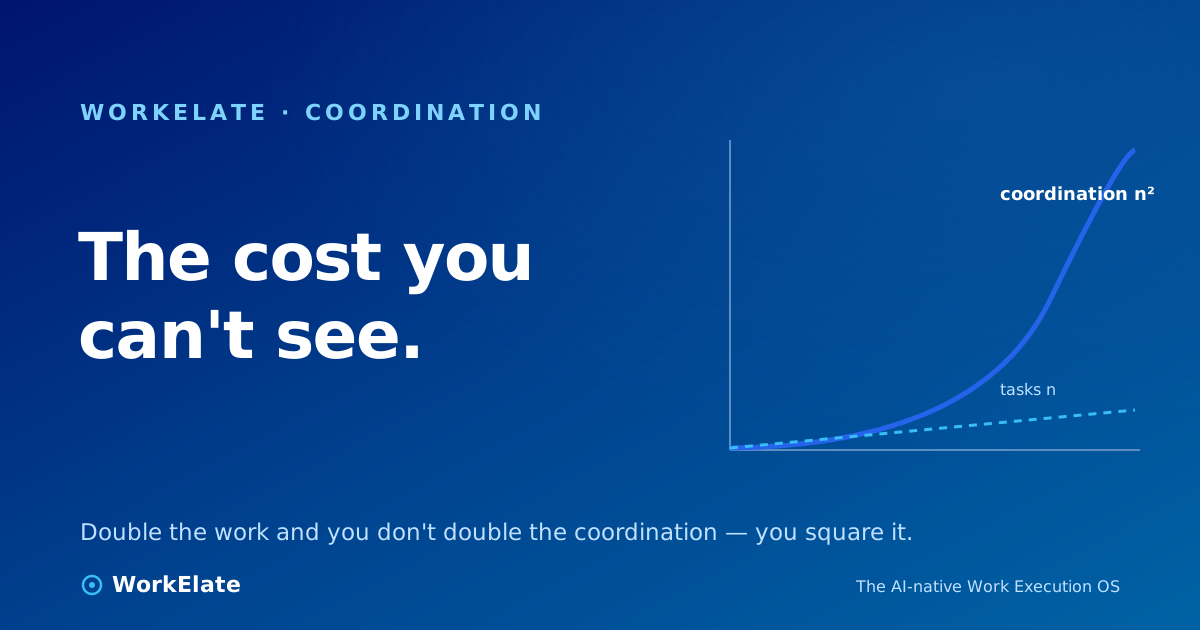
Watch where a cycle actually stalls. The build was a day. The feedback was an afternoon. The week vanished in the seam: the standup that re-narrates the same context, the handoff where the next person asks "wait, what changed since last time?", the dependency nobody flagged until the adjustment was already late.
None of that is iterating. All of it is the tax of moving a half-finished idea between people who don't share the same picture of where it stands. Every loop, you pay it again — because every loop, the state lives in someone's head, and heads don't sync for free.
That's why perfectionism is so seductive: if the drag between cycles is brutal, you rationally try to take fewer cycles. You polish draft one to death because the cost of a second pass feels enormous. The fix isn't more discipline. It's making the next cycle cheap.
A system that carries state lets you iterate without starting over
Here's the shift. If the work itself holds its own state — what changed, who's waiting, what the last round of feedback was — then a new cycle doesn't begin with a re-explanation. It begins where the last one ended. You adjust a priority and the dependents already know. A task finishes and the next owner gets it with the context attached, not a calendar invite to be briefed.
That's the difference between a tool you update and a system that remembers. WorkElate's WAO sees the work-graph across every app — task, board, calendar, the lot — so the state of an iteration is something the system already knows, not something a human has to perform at the top of each loop. Take the re-explaining out of the seam, and the loop tightens on its own.
So stop trying to be right on draft one. You won't be. The better bet is the cheaper loop. If your next iteration could start exactly where the last one ended — no catch-up, no re-brief — how many more times would you be willing to be wrong on the way to right?