POV
The Rule of 3 for Feature Scope
A feature that's 80% built is not 80% done. It's a thing nobody can use, owned by someone who's moved on, waiting on someone who's busy, sitting in a doc three people half-remember.
A feature that's 80% built is not 80% done. It's a thing nobody can use, owned by someone who's moved on, waiting on someone who's busy, sitting in a doc three people half-remember.
A feature that's 80% built is not 80% done. It's a thing nobody can use, owned by someone who's moved on, waiting on someone who's busy, sitting in a doc three people half-remember.
We like to call that "in progress." It isn't. Progress is what shipped. Everything else is inventory — and inventory you can't ship is just a bill you haven't been handed yet.
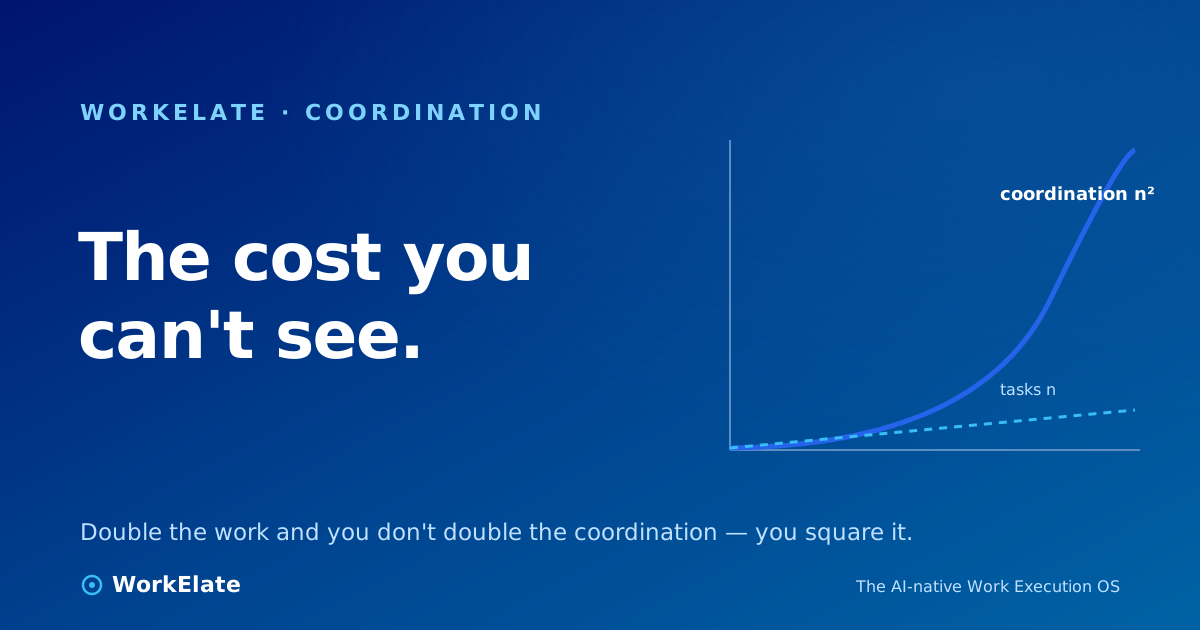
That bill has a name: coordination debt. Every unfinished piece of scope is a future handoff, a future status update, a future "wait, where did we land on this?" The more you carry, the more of your week goes to keeping things aligned instead of moving them. The work doesn't get heavier because it's hard. It gets heavier because there's more of it open at once.
So the question that actually matters isn't how good could this be? It's what's the smallest version of this that someone can use on Monday? Cut to that. Ship it. Then decide what's next with real information instead of a roadmap full of guesses.
Here's the discipline we use to force that cut. Call it the Rule of 3.
For any feature, name three things and no more: three core uses, three screens or steps, three benefits the person actually feels. If you can't say it in threes, you don't have a feature yet — you have a project, and projects are where momentum goes to die.
Three is not a cap on ambition. It's a forcing function for honesty. When you can only keep three, you find out fast which three matter — and everything you set down stops being half-built drag and becomes a separate, deliberate next thing. You're not deleting the rest. You're refusing to carry it open while it isn't moving.
The version that ships teaches you something. The version that's still "almost there" only costs you — a standup line here, a slack thread there, a context-switch back into work you'd already mentally closed. Multiply that across a team and the tax isn't the building. It's the keeping-track.
This is the thing most planning tools get backwards. They make it effortless to add — another requirement, another acceptance criterion, another "while we're in here." They never make it easy to cut. So scope grows by default, and the cost of that growth shows up later, as coordination, where nobody's measuring.
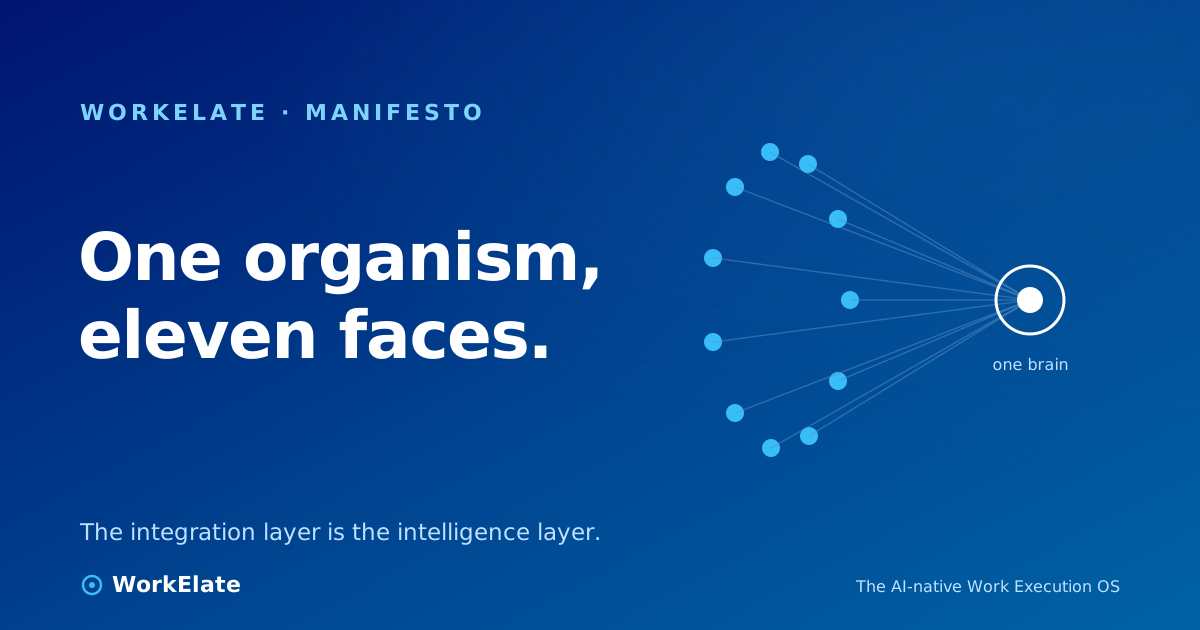
WorkElate emits a signal on every mutation across its eleven apps, so the work-graph reflects what's actually moving — not what a status doc claims. When the picture is real, the case for cutting stops being a vibe and starts being visible: this is open, this is stale, this hasn't shipped.
The discipline is older than any tool, though. Pick three. Ship them. Let what you set down wait in the open, honestly, instead of pretending it's in flight.
▶ Watch on WorkElate See WAO do this across apps youtube.com/@WorkElate · videoId: TODO — swap when publishedThe teams that move aren't the ones with the most in flight. They're the ones with the least left open. So before you add the fourth thing, ask the harder question: what would it cost you to ship three and stop?
Related reading: Productivity is overrated, execution is underrated · The real cost of a task is coordination · Decisions over alignment