POV
Slow Is Smooth, Smooth Is Fast
Real speed isn't people hurrying. It's the friction removed between steps — the handoffs the system carries so the work never has to stop and wait.
Real speed isn't people hurrying. It's the friction removed between steps — the handoffs the system carries so the work never has to stop and wait.
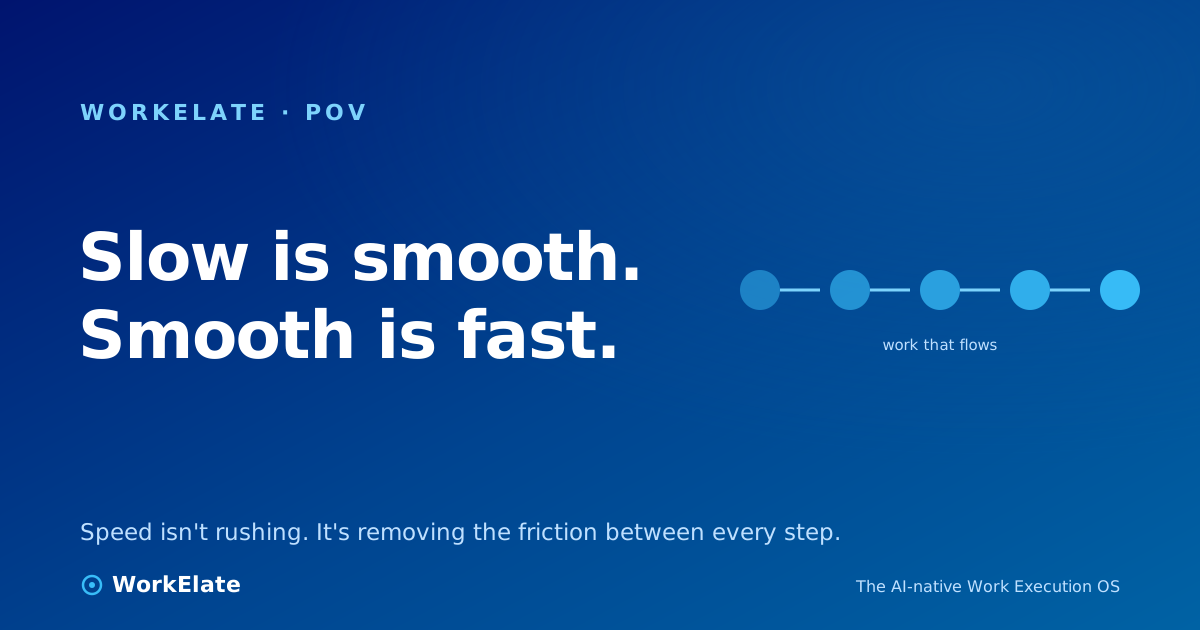
Shooters say it: slow is smooth, smooth is fast. People hear it as a license to slow down. It isn't. The line is about something narrower and harder — the absence of fumbling between movements. The reload that doesn't catch. The hand that already knows where the next thing is. Fast doesn't come from a faster hand. It comes from no hitch between hands.
Teams get this exactly backwards. When delivery is slow, the reflex is to push people to hurry. But watch where a project actually loses its days, and it isn't in the doing. It's in the gaps. The brief that sat in someone's drafts. The "any update?" that waited a day for an answer. The handoff where the next person had to re-learn what the last person already knew.
The steps are fine. The designer designs. The writer writes. The reviewer reviews. Each one, in isolation, moves at a perfectly good pace. What's slow is the space between them — the part where work has to be pointed at the next person, with the right context, and then chased until it lands.
That space has a price, and it's the one nobody budgets for. It doesn't show up as a missed deadline on any single task. It shows up as a project that took three weeks when the work inside it added up to four days. The other eleven days were the work waiting to move.
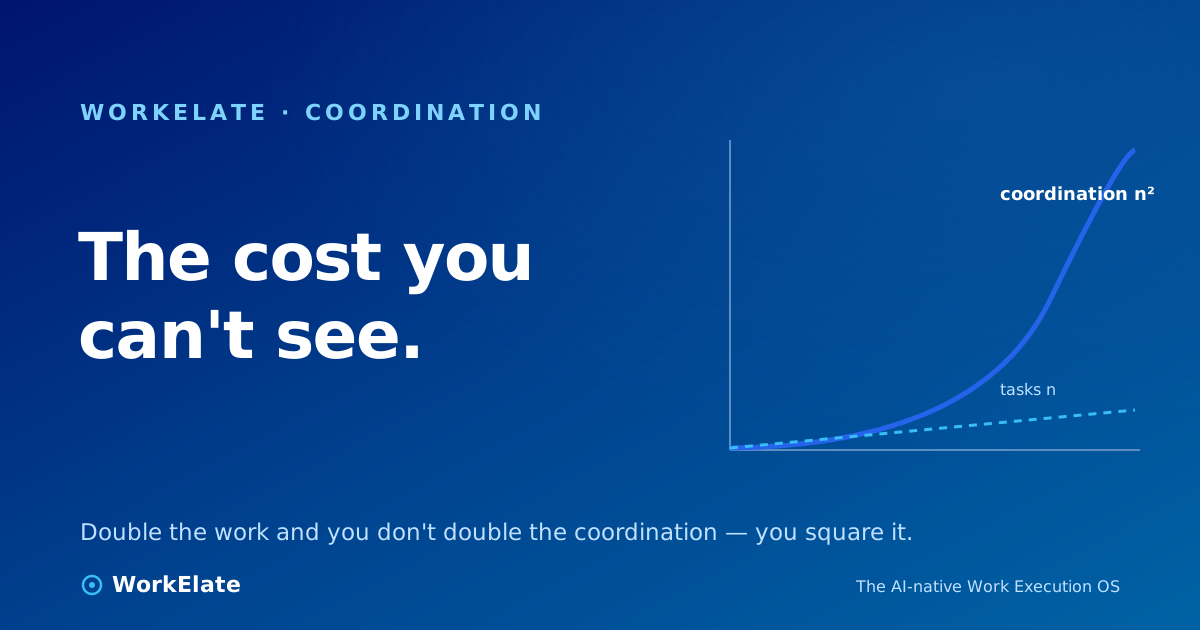
And it gets worse as you grow, not better. Two people share one seam. Five people share ten. The hurrying you ask for can't keep up, because the thing slowing you down isn't the people — it's the count of places the work has to be carried by hand.
You can't will a team into smoothness. A person can be careful; a handoff can't be. The reason the reload catches in a slow team is that the in-between depends on someone remembering to push the work forward — and humans are wonderful at the work and terrible at the relay.
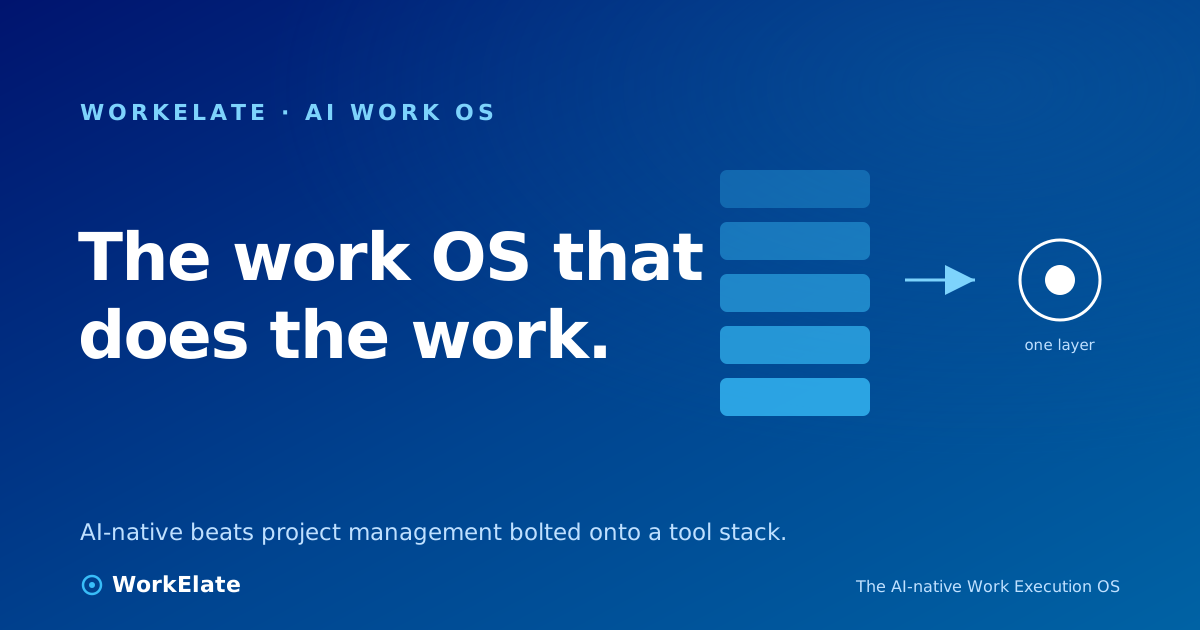
So the real lever isn't faster people. It's a system that carries the seams. When a task finishes, the next owner already has it, with the brief attached and the context intact — nothing waits in a draft, nothing gets re-explained, nothing gets chased. That's where the speed lives: not in rushing the steps, but in deleting the pause between them.
This is what WorkElate is built to do — the cross-app work-graph holds the state of the work, so when one step ends the coordination to the next just happens, instead of being performed by a person. The hands stay yours. The relay stops being a job.
▶ Watch on WorkElate See a handoff move itself across apps youtube.com/@WorkElate · videoId: TODO — swap when publishedThat's why work should feel like flow, not friction: smoothness isn't a vibe, it's the seams disappearing. It's also why the real cost of a task is the coordination around it, and why execution velocity beats activity velocity — a busy team and a fast team can look identical, except one keeps stopping to point the work at the next person.
So before you tell anyone to move faster, count the seams instead. How many times does a piece of work have to be carried by a human from one pair of hands to the next? That number — not anyone's speed — is how fast your team is allowed to go.