POV
What a Pull Request Knows That Your Task List Doesn't
A pull request is the rare piece of work that tells you where it stands without anyone narrating it.
A pull request is the rare piece of work that tells you where it stands without anyone narrating it.
A pull request is the rare piece of work that tells you where it stands without anyone narrating it.
Watch one move. It opens. It picks up a review. A check goes red, then green. Someone approves. It merges — or it sits, blocked, for three days. At every step the PR announces itself: a status changes, a notification fires, a state advances. You never have to ask a developer "is this done?" because the artifact already said so. The work and the record of the work are the same object.
Now look at how the rest of the work in your company behaves. A deck is a file in a folder. A brief is a doc someone has open. A client deliverable is a thing that exists, somewhere, in some state nobody can see until they go and ask. The file doesn't move. It doesn't announce anything. It just sits there, inert, while a human is supposed to remember to tell everyone else what's happening to it.
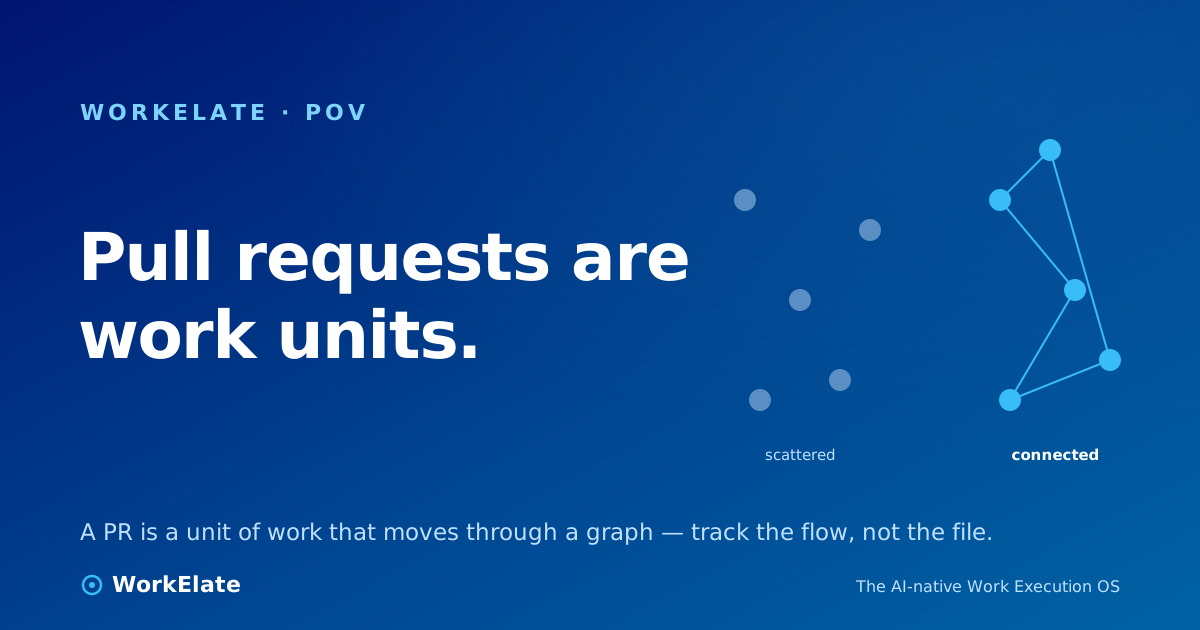
That's the difference worth staring at. A pull request is a unit of work that flows and emits state. A file in a folder is a unit of work that does neither.
Engineers solved a coordination problem decades ago without quite naming what they'd done. They stopped treating code as files and started treating it as units that move through defined states and emit a signal on every transition. The payoff wasn't tidier code. It was that the state of the work became visible without anyone reporting it. You can look at a queue of pull requests and know exactly where everything stands, because the work itself is doing the telling.
Most work in a company never got that upgrade. It's still files in folders — decks, briefs, sheets, proposals — sitting in some state only a human can describe, only by being asked. So we built a whole apparatus to compensate: standups, status columns, "quick syncs," the project tool somebody updates after the fact. All of it exists to manually reconstruct a thing the work could have just emitted — the way a pull request does, for free, every time it moves.
This is the idea WorkElate is built on, and it's not metaphorical. Underneath the eleven apps — weMail, chat, data, docs, ppt, calendar, task, board, form, and the rest — every mutation emits a signal. A form gets submitted, a scheduler slot gets booked, a card moves, a doc gets edited: each action announces itself, the way a PR announces "now in review." The work isn't a file sitting in a folder anymore. It's a unit moving through states, and the movement is the report.
Those signals assemble into one cross-app work-graph keyed to the client and the account — a live picture of what's open, what's waiting, and where the chain went quiet. Most tools infer status by reading whatever a human remembered to type into a box. WorkElate emits it as a byproduct of the work itself. That's the whole difference, and it's the same trick the pull request pulled: stop asking people to describe the work, and let the work describe itself.
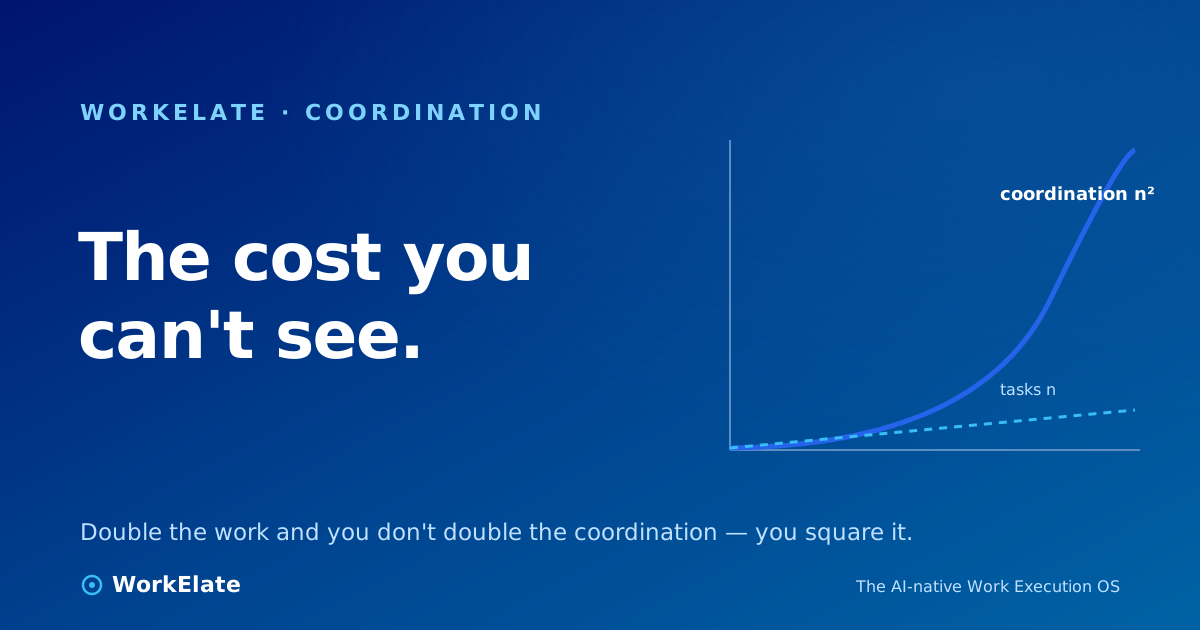
Once work has that shape, the real cost of a task stops being the task and starts being the coordination around it — which the graph can finally see. Your task list stops being a lagging indicator, because it's no longer a hand-typed summary that trails reality. And the manual status update stops being theater, because there's nothing left to perform.
▶ Watch on WorkElate See work units emit state across apps youtube.com/@WorkElate · videoId: TODO — swap when publishedDevelopers already know the feeling of work that reports itself — they get it every time they glance at a queue of pull requests and just know where everything stands, no meeting required. The question is why the rest of the company still runs on files in folders, with a human paid to walk around and ask each one how it's doing.