POV
Small Moves Flow. Big Batches Pile Up.
Frequent small units of work move through a team cleanly; big rare batches accumulate coordination risk and lose context. The flow principle for shipping anything — not just code.
Frequent small units of work move through a team cleanly; big rare batches accumulate coordination risk and lose context. The flow principle for shipping anything — not just code.
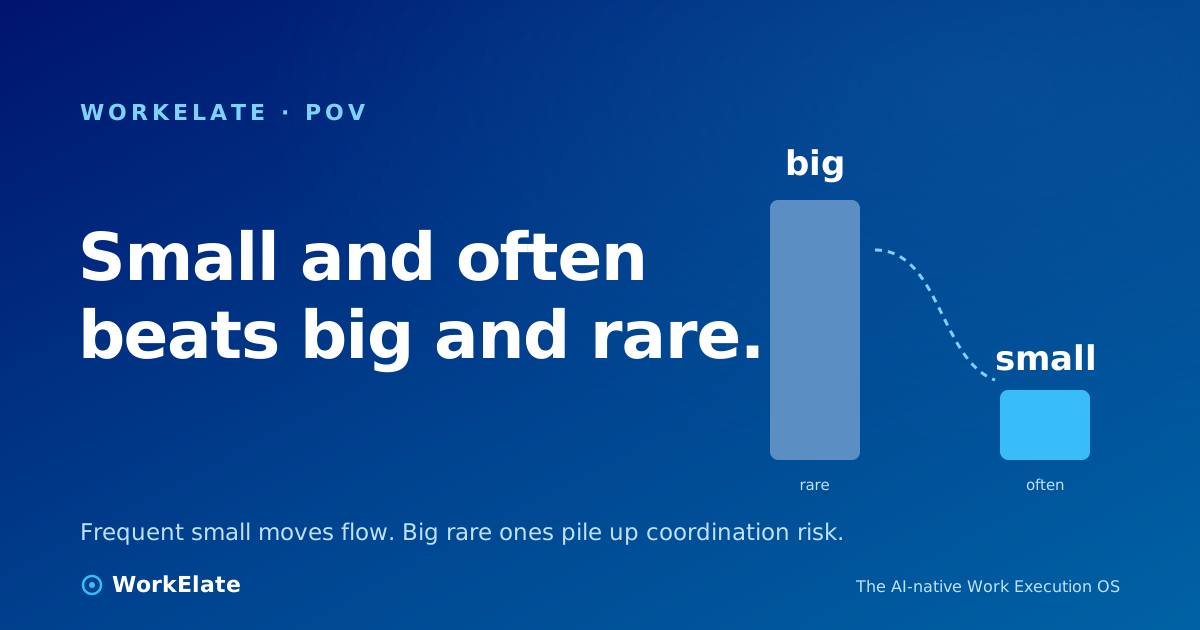
Engineers learned this the hard way, then taught it to everyone else: a release that bundles forty changes is not safer than forty small releases. It's worse. When something breaks, you don't know which of the forty did it. The rollback takes the other thirty-nine down with it. The feedback you needed three weeks ago arrives all at once, too late to act on.
So the best teams stopped optimizing for the size of a release and started optimizing for how often they could release. Smaller units, moving more often. The counterintuitive part is that this is faster — not despite shipping less per push, but because of it.
Here's the thing nobody says out loud: this was never really about code. It's the physics of getting work through a team.
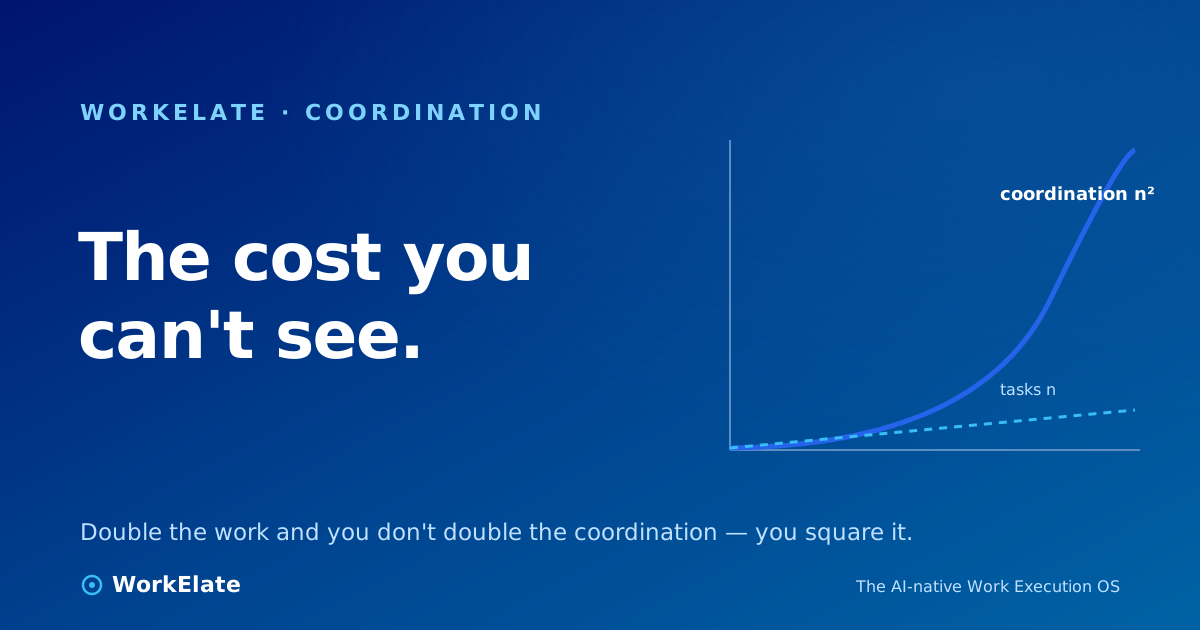
A big batch carries a hidden cost that scales faster than the work inside it. The cost is coordination.
Ten changes bundled together need everyone holding all ten in their head at once — what depends on what, who's blocked on whom, what got decided and why. Hold a batch for three weeks and the reasoning behind half of it has already evaporated. The person who knew why slide 12 mattered is on a different project. The "obvious" priority from the kickoff isn't obvious anymore. That's context loss, and it's not a personal failing. It's what a large batch does to a brain.
A small unit is the opposite. It's testable on its own. If it's wrong, you find out today, while the reasoning is still warm. Nothing else has to unwind to fix it. One thing got validated instead of ten things getting risked. The loop tightens with every pass, and a tight loop is what "moving fast" actually means — not heroics, just a shorter distance between doing and knowing.
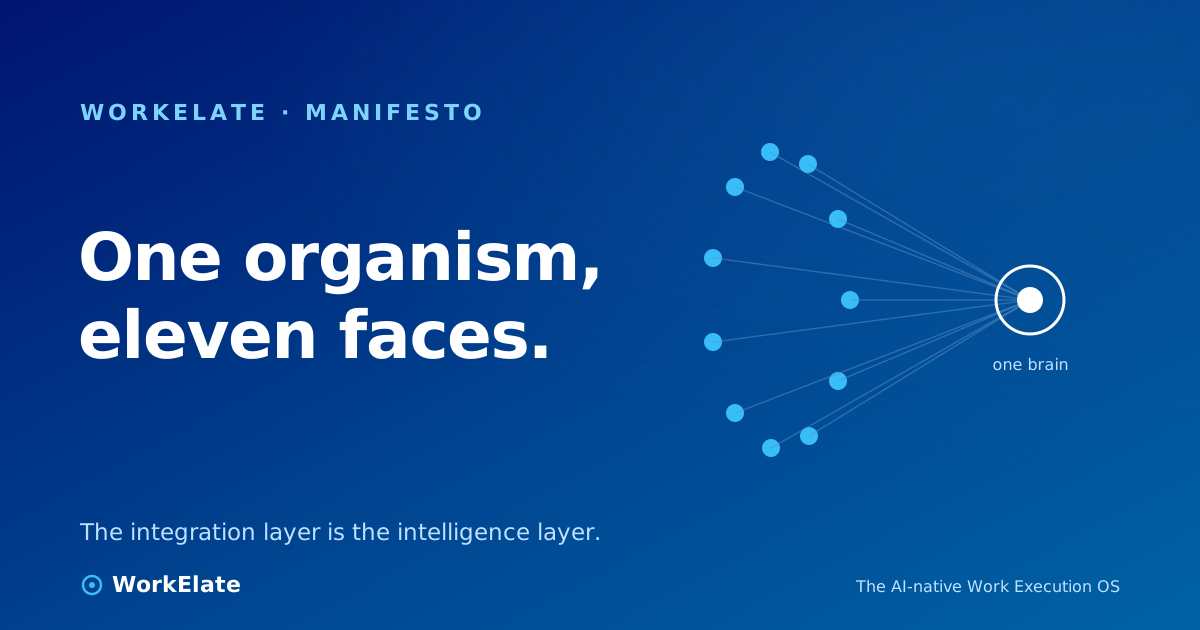
This is the same instinct behind work that feels like flow, not friction: you want the work moving, not stacking.
Frequent small moves create more handoffs, not fewer. Each tiny unit still has to pass from form to task to calendar to the client. If a human carries every one of those handoffs by hand, you've traded big-batch risk for small-batch toil — which is its own way of grinding to a halt. Velocity of motion is not the same thing as velocity of done.
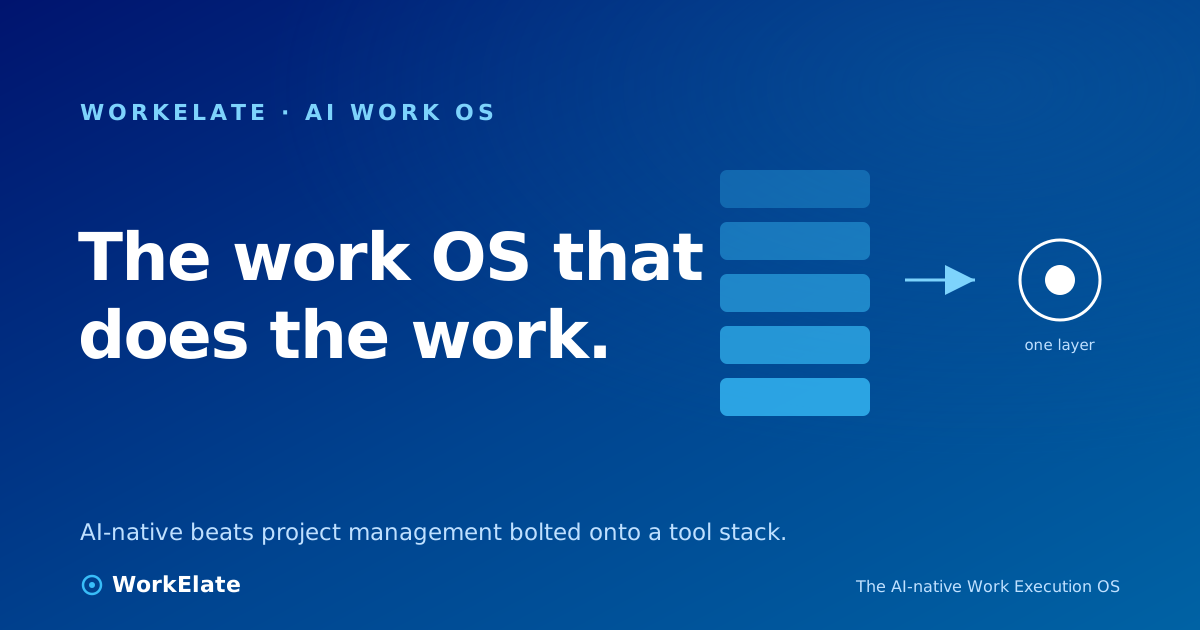
That's the part a work system has to own. At WorkElate, every app mutation emits a signal to one orchestrating brain, so when a small unit moves, the coordination around it — the status update, the dependency, the nudge — travels with it instead of waiting for a human to notice. The point isn't to make people ship more often by working harder. It's to make small, continuous moves cheap enough that they're the obvious way to work. Status the system already knows beats status a person has to chase, which is the same reason capturing tasks doesn't scale but execution flow does.
Big releases feel productive because they look like a lot. But a thing that looks like a lot, held too long, is just risk wearing a costume.
▶ Watch on WorkElate See small units move through every app, coordination attached youtube.com/@WorkElate · videoId: TODO — swap when publishedSo here's the question worth sitting with: how much of what your team calls a "big push" is really a pile of small moves you couldn't afford to make one at a time?